
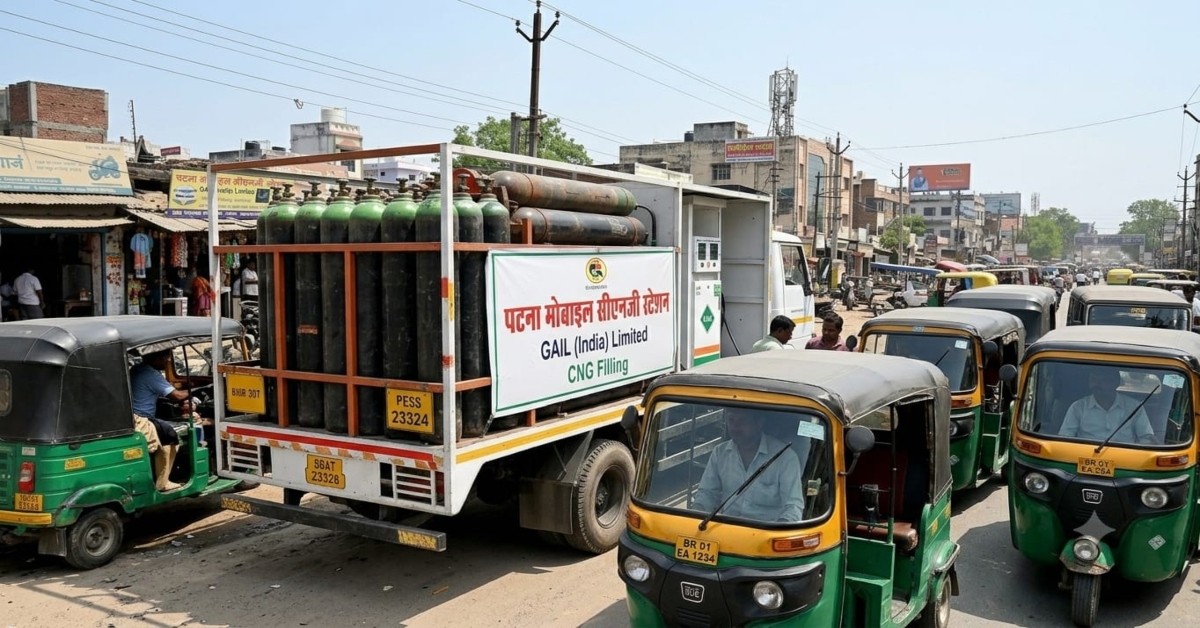
Patna: Long queues at CNG stations in Patna and surrounding areas could soon get a mobile solution, with GAIL India preparing to introduce mobile CNG vans that can be deployed at locations according to demand.

The proposed service is aimed at easing pressure on existing CNG stations and providing an additional supply option in areas where demand is high.
42 CNG Stations, Only Nine Online

Around 42 CNG stations are currently operating in Patna and nearby areas, according to the information available on the plan.
Of these, only nine stations are online, while 33 are offline. Offline stations receive CNG through cylinders.
This supply arrangement can create difficulties when cylinder deliveries are delayed, particularly during periods of heavy traffic or other logistical disruptions.
Delayed Supply Leads To Long Queues
When CNG cylinders take longer to reach offline stations, the available fuel supply can be affected.
This can result in long queues of vehicles waiting for CNG, creating difficulties for auto-rickshaw drivers and other vehicle owners who rely on the fuel regularly.
The proposed mobile stations are intended to provide an additional supply option when pressure on existing stations increases.
Mobile Van Can Carry Up To 1,000 Kg CNG
The proposed mobile CNG vans will be equipped with a cascade and dispenser for supplying CNG to vehicles.
Each cascade is expected to have a capacity of around 600 kg to 1,000 kg of CNG.
The vans are not planned to operate by continuously moving around the city. Instead, they can be deployed at selected locations based on demand.
High-Demand Areas Could Get Temporary Stations
Locations with a large number of vehicles and increased pressure on existing CNG stations could be prioritised for deployment.
The mobile vans would provide a temporary CNG supply facility in such areas, potentially helping reduce the load on regular stations.
Their deployment can also be adjusted according to local demand and supply requirements.
Safety Clearance Needed Before Launch
The proposed mobile CNG service will require the necessary safety and regulatory approvals before it can begin operations.
According to the information available, approval from the Petroleum and Explosives Safety Organisation (PESO) will be required.
The service can be introduced only after the required clearances and other procedures are completed.