
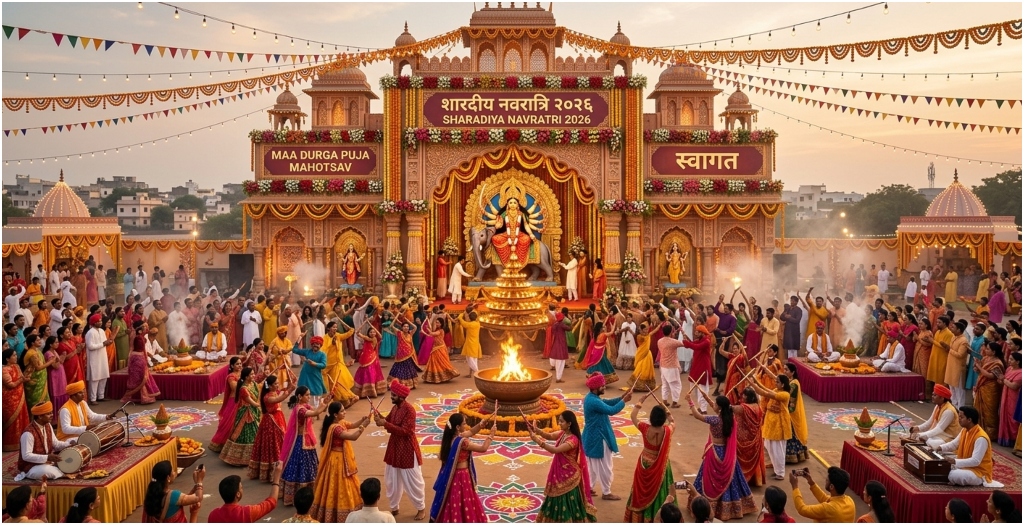
Patna: Sharadiya Navratri begins on Sunday, October 11, with Kalash Sthapana, marking the start of 10 days of worship dedicated to Goddess Durga. This year, Ashtami will extend across October 18 and 19, with the Ashtami tithi continuing until 8.04am on October 19, according to Pandit Rakesh Jha.

Devotees will worship the nine forms of Goddess Durga at homes, temples and puja pandals. Temples dedicated to the Goddess have been decorated for the festival, while recitations of the Durga Saptashati, aarti and bhajans are expected to form part of the celebrations.
Mahasaptami will be observed on October 17, while Mahanavami worship and fasting will take place on October 20.

Ashtami And Navratri Ritual Schedule
Pandit Rakesh Jha said the Ashtami tithi of the Ashwin Shukla Paksha would prevail throughout October 18 and continue until 8.04am the following day.
The extended tithi means devotees will observe the period of Ashtami across two calendar dates. Worship of Goddess Mahagauri, the eighth form of Durga, is an important ritual associated with the day.
According to Hindu astrological beliefs, Goddess Durga’s arrival and departure on an elephant are associated with prosperity, rainfall and general well-being.
Kalash Sthapana: Auspicious Timings
Kalash Sthapana, the ritual installation of a sacred pot, marks the beginning of Navratri worship. The following auspicious timings have been provided for the ritual:
– Pratipada Tithi: Until 8.48pm
– Char-Labh Muhurat: 7.14am to 10.09am
– Amrit Muhurat: 10.09am to 11.36am
– Abhijit Muhurat: 11.13am to 11.59am
– Shubh Yoga Muhurat: 1.03pm to 2.30pm
Devotees traditionally perform the ritual at an auspicious time, following the customs and guidance observed in their families and local religious traditions.
Durga Saptashati And Different Worship Traditions
The Durga Saptashati holds an important place in Navratri worship. Its 13 chapters recount the power of the Goddess and her battles against demons.
Devotees recite the text as part of their prayers, seeking spiritual strength and the ability to overcome fear, ego and negativity.
Worship practices vary across Vedic, Bengali and Shakta traditions, with differences in rituals, offerings and aarti customs. In the Vedic tradition described in the source material, a coconut is placed on top of the Kalash, while some Shakta traditions use a lamp.
Navratri Bhog For Each Day
Devotees traditionally offer different foods to the Goddess on each day of Navratri. According to religious beliefs, these offerings carry symbolic significance.
– Pratipada: Cow’s ghee, associated with good health.
– Dwitiya: Sugar, which is also traditionally donated.
– Tritiya: Milk, sometimes offered with a donation to a Brahmin.
– Chaturthi: Malpua, associated with morale and strength.
– Panchami: Bananas, linked with intellectual growth.
– Shashthi: Honey, associated with beauty.
– Saptami: Jaggery-based offerings, believed to bring relief from sorrow.
– Ashtami: Coconut, offered with prayers for the fulfilment of wishes.
– Navami: Halwa-puri, kheer and pua, associated with happiness and peace.
The offerings and their significance may vary according to regional customs and family traditions.
Markets See Rush For Puja Essentials
Markets in Patna witnessed a rush on Saturday, October 10, as residents prepared for the beginning of Navratri.
Shops selling fruits, flowers, chunris, garlands, coconuts, sweets, incense sticks and havan materials remained busy throughout the day.
The demand for puja essentials typically rises ahead of the festival as households prepare for Kalash Sthapana and the daily worship of Goddess Durga.