
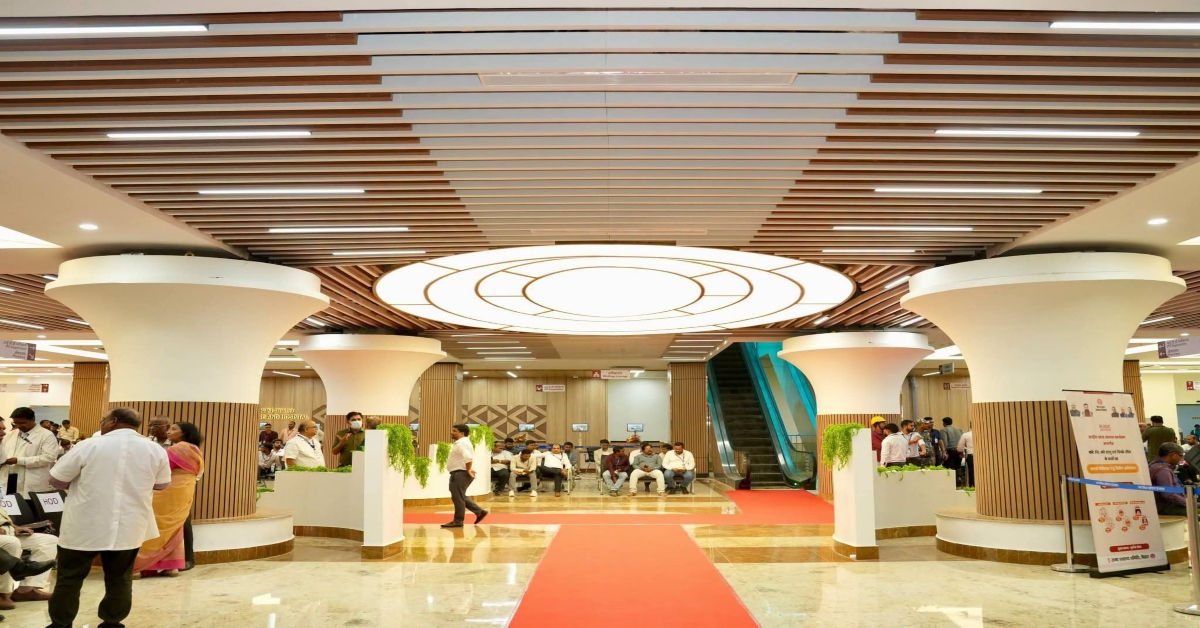
Patna : The Patna Medical College and Hospital (PMCH) is shifting emergency services and operation theatres across its departments to the new Tower 3, aiming to streamline treatment from initial assessment and diagnosis to admission and surgery.

The transition began on Tuesday, October 27, with preparations completed to move emergency services for departments including neurosurgery, general surgery, plastic surgery, ear, nose and throat (ENT), nephrology and orthopaedics to the new building.
The existing emergency building will now be used to admit burn patients. The hospital administration aims to bring departmental emergency services together in Tower 3 to improve coordination and make treatment more organised, particularly for critically ill patients.

New 47-Bed Triage Facility To Prioritise Critical Patients
A major feature of Tower 3 is its expanded triage facility, which will have 47 beds, compared with 17 beds in the previous emergency triage ward.
Triage involves assessing patients when they arrive at the hospital and prioritising treatment according to the seriousness of their condition. Patients injured in road accidents, those with severe bleeding and others requiring immediate medical attention are to be treated on priority.
Patients will be categorised into three groups based on their condition. The red category will include critically ill patients requiring immediate intervention, the yellow category will cover those needing urgent treatment, and the green category will include patients with less serious conditions.
The expanded facility is intended to help medical teams identify critical cases quickly and begin treatment without unnecessary delays.
PMCH Superintendent Dr Rajiv Kumar Singh said bringing departments together in one building would help organise treatment, while smooth functioning of the triage system would be essential to ensure that critically ill patients receive care during the golden hour, the crucial period following a medical emergency when timely intervention can improve outcomes.
Seven OPD Registration Counters Now Operational
Tower 3 will also provide outpatient department (OPD) registration facilities, with the number of operational counters increased to seven.
Initially, registration was being conducted at only four of the 13 available counters. The hospital has since increased the number of counters in operation to seven to facilitate patient registration.
The expanded registration arrangements are expected to help manage patient flow as services move to the new building.
However, the transition will also require clear signboards and guidance for patients who may be unfamiliar with the new locations of departments. Hospital authorities will need to ensure that patients can locate the appropriate services without confusion.
Orthopaedics And Neurosurgery Wards To Remain In Existing Buildings
While the emergency services of several departments are moving to Tower 3, some inpatient facilities will continue operating from their existing locations.
The orthopaedics inpatient ward will remain in the old emergency building and the Rajendra Surgical Ward. Similarly, the neurosurgery inpatient facility will continue functioning from the Rajendra Surgical Ward for now.
These facilities are expected to move to the new building after Tower 4 is handed over to the hospital.
The phased relocation means that patients may need to visit different buildings for emergency treatment and subsequent admission, depending on their department. Clear directions and coordination between medical teams will therefore be important during the transition.
Maintaining Emergency Services During The Shift
The relocation is expected to improve coordination by bringing departmental emergency services and operation theatres together in Tower 3. However, the immediate challenge will be ensuring that the shift does not disrupt treatment or delay care for critically ill patients.
Hospital authorities will also need to guide patients and their attendants to the correct departments, update directional signage and manage the movement of patients between emergency and inpatient facilities.
The effectiveness of the new arrangement will depend on how smoothly triage, registration, emergency treatment and surgical services operate as the hospital adjusts to the new building.