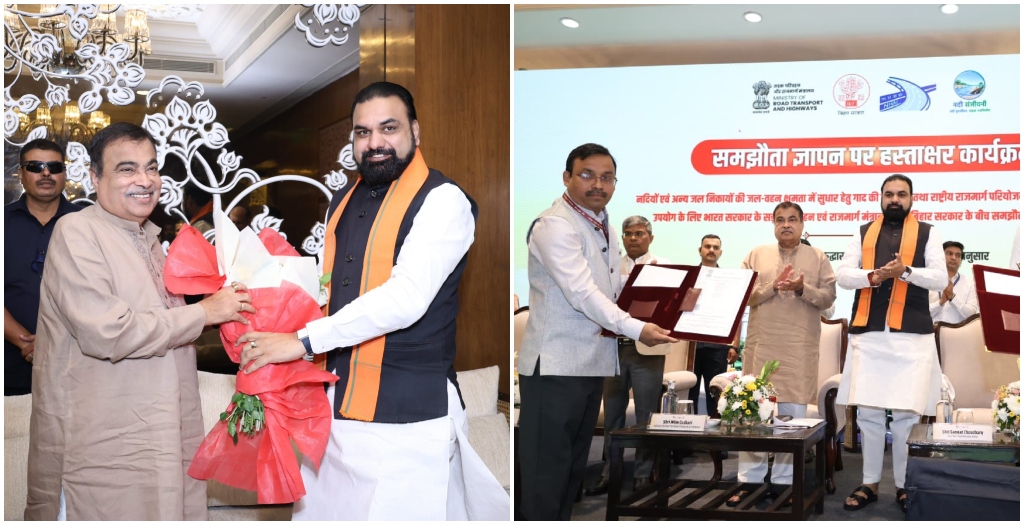
Patna: Bihar has signed a Memorandum of Understanding (MoU) with the Ministry of Road Transport and Highways to remove accumulated silt from rivers and water bodies and use it in national highway construction under the ‘Nadi Sanjeevani’ river rejuvenation programme.

The agreement was signed on November 3, 2026, in the presence of Chief Minister Samrat Choudhary and Union Road Transport and Highways Minister Nitin Gadkari. The initiative aims to improve river flow and water-holding capacity while providing an alternative construction material for road infrastructure.
Under the agreement, 243 lakh cubic metres of silt will be supplied free of cost for 16 ongoing highway projects in Bihar. The state government will facilitate mining licences in accordance with existing regulations wherever the National Highways Authority of India (NHAI) requires the material.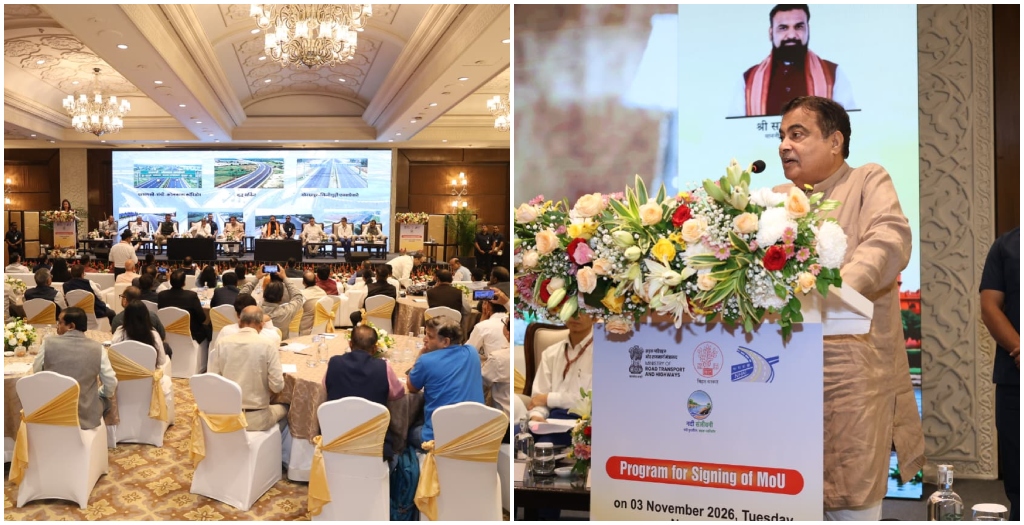

Silt Management To Support River Rejuvenation
The initiative has been formulated under the Bihar Water Resource Restoration and Silt Management Policy, 2026. It seeks to scientifically manage the accumulation of silt in rivers and water bodies, improve their carrying capacity and reduce dependence on naturally extracted topsoil for construction.
Addressing the programme, Gadkari said the initiative would follow the ‘Buldhana pattern’ implemented in Maharashtra. He said silt removal would support river rejuvenation, water conservation and irrigation, while helping reduce annual flood-related damage in Bihar.
Gadkari also stated that the project would not impose any financial burden on the Bihar government, with the Centre not charging the state for the initiative.
Highway Projects Worth Rs 58,340 Crore Underway
According to the information shared at the programme, 39 NHAI projects covering 1,561 km and involving an investment of Rs 58,340 crore are currently under construction in Bihar.
Another 11 projects covering 1,982 km, with an estimated investment of Rs 1,85,200 crore, have been proposed. The state is also constructing 29 new bridges across various rivers to improve regional connectivity.
The extracted silt is expected to be used in highway construction and other road infrastructure projects, accelerating development while addressing river sedimentation.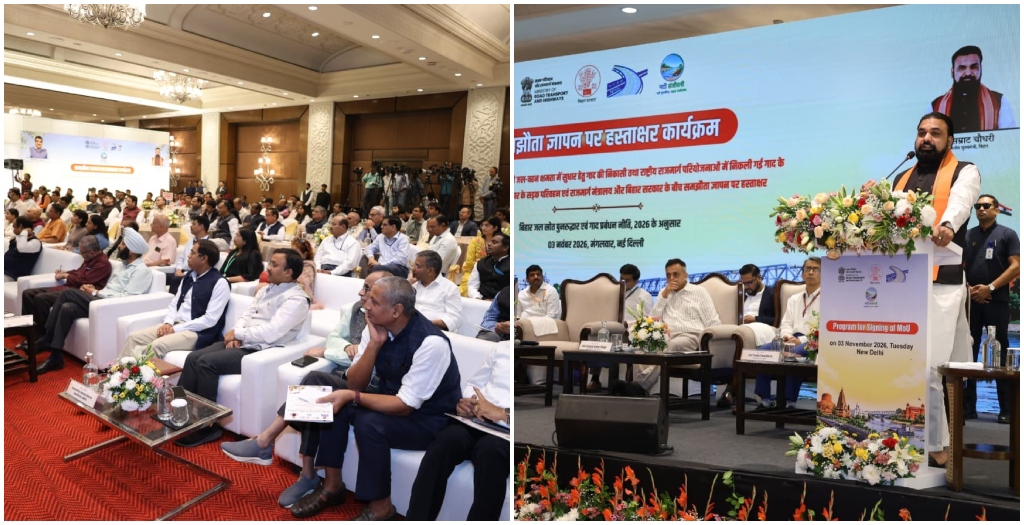
Chief Minister Highlights Bihar’s Flood Challenges
Chief Minister Samrat Choudhary said Bihar was the first state in the country to formulate a dedicated silt management policy.
He said the state faces recurring floods due to heavy rainfall in Nepal and water flowing from neighbouring states. Silt accumulation in the Ganga, which he attributed in part to the Farakka Barrage, remains a major concern.
The Chief Minister said effective silt removal could help reduce flood impacts and improve water management. He described the initiative as an opportunity to turn Bihar’s challenges, including its large population and uncontrolled water flow, into resources for development.
Choudhary also raised the issue of Ganga water sharing with Bangladesh, saying Bihar was not opposed to water sharing but its own requirements must be adequately addressed.
He said the state currently receives access to Ganga water for four months — July, August, September and October — and stressed the need for sufficient water for agriculture, industries and drinking purposes.
Four-Lane Roads Along Ganga Proposed
The Chief Minister urged Gadkari to facilitate the construction of four-lane roads along both banks of the Ganga. He said improved connectivity and infrastructure would support the development of new townships and accelerate Bihar’s economic growth.
Choudhary said the removal of river silt could unlock around 1 lakh acres of land for development, including residential colonies along the Ganga.
He also referred to the development of 12 proposed townships spanning 80,000 acres, including Pataliputra in Patna, Magadh in Gaya, Anga in Munger, Vikramshila in Bhagalpur, Kosi in Saharsa, Mithila in Darbhanga and Tirhut in Muzaffarpur.
The state is also planning infrastructure development involving 10 new airports and 32 medical colleges, with silt expected to be utilised in construction projects.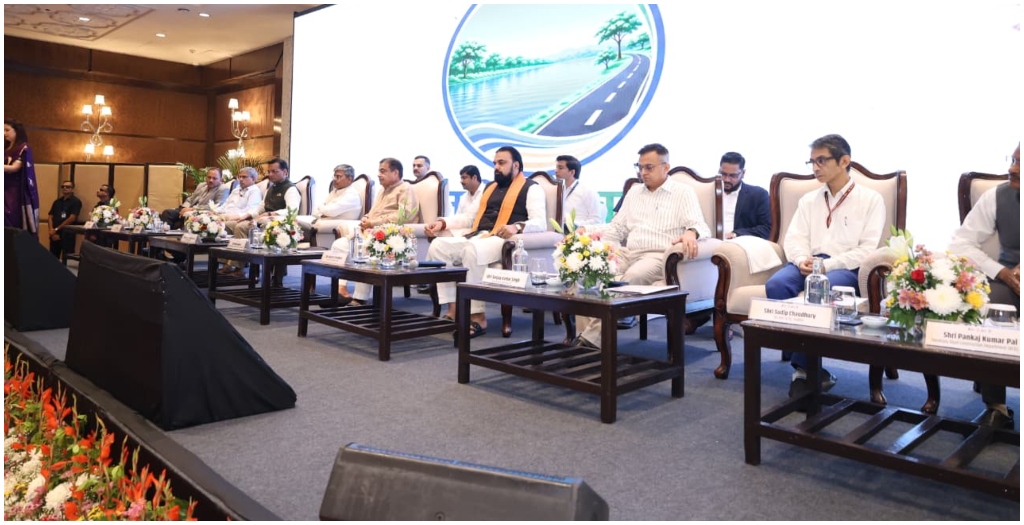
Centre-State Cooperation For Development
Choudhary thanked Prime Minister Narendra Modi and Gadkari for the initiative, saying the programme would contribute to environmental conservation, flood management, water resource restoration and infrastructure development.
He expressed hope that continued support from the Centre would help Bihar achieve further economic growth and contribute to the vision of a ‘Viksit Bharat’.
Bihar Chief Secretary Pratyaya Amrit, Road Transport and Highways Ministry Secretary V Umashankar, NHAI Chairman Santosh Kumar Yadav, Bihar Road Construction Department Secretary Pankaj Kumar Pal, Joint Secretary (Highways) Udit Agrawal and NHAI Member (Projects) Anil Chaudhary were among the senior officials present at the event.