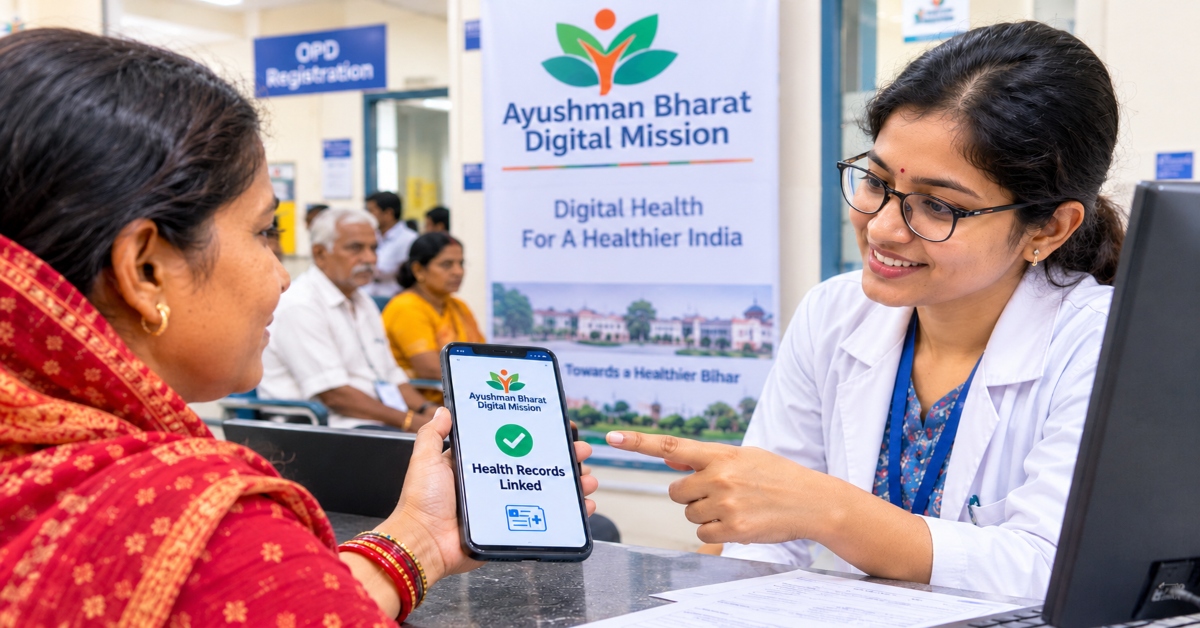
Patna : Patna has secured the top position in Bihar in linking electronic health records (EHRs) under the Ayushman Bharat Digital Mission (ABDM), with more than 1.13 crore health records connected to the digital system so far.

According to the latest district-wise figures, a total of 1,13,31,390 health records have been linked in Patna. Muzaffarpur ranks second with 39,83,403 records, while Saran occupies third place with 35,05,408 records.
The initiative aims to make patients’ medical information available digitally, helping authorised healthcare professionals access relevant treatment histories and diagnostic reports with the patient’s consent.

Patna Leads Bihar With 1.13 Crore Digital Health Records
Patna is significantly ahead of other districts in the number of electronic health records linked under the mission.
The district-wise figures place Muzaffarpur in second position with 39.83 lakh records, followed by Saran with 35.05 lakh. Rohtas has recorded around 34.69 lakh linked records, while Bhagalpur has crossed 34.08 lakh.
The figures highlight the progress of digital health record linking across Bihar, with Patna recording the highest number of linked records in the state.
Ten Districts Record More Than 31 Lakh Linked Records
Several other districts have also made progress in connecting medical records to the digital system.
East Champaran, Madhubani, Gaya, Samastipur and Vaishali have each recorded more than 31 lakh linked health records, according to the reported figures.
Darbhanga, Begusarai and Gopalganj have also registered progress under the initiative.
Meanwhile, Siwan, Sitamarhi and Nalanda have each crossed the 25-lakh mark. The digital record-linking exercise is continuing in the remaining districts as part of the statewide campaign.
Patients May No Longer Need To Carry All Previous Medical Reports
One of the key objectives of digital health records is to make a patient’s medical history easier to access during treatment.
Once records are linked to the digital system, patients may not need to carry physical copies of every previous prescription, diagnostic report or treatment document when visiting another healthcare facility.
With the patient’s consent and appropriate authorisation, doctors can access relevant available medical information. This can help them understand a patient’s previous treatment and make more informed decisions.
The facility could be particularly useful for people who receive treatment at different hospitals or move between cities for medical care.
Digital Records Could Help Reduce Repeated Medical Tests
Access to previous diagnostic reports may also help doctors determine whether a particular test needs to be repeated.
When relevant medical information is already available, healthcare professionals can consider earlier test results while assessing a patient’s condition. This may reduce unnecessary repetition of investigations in suitable cases.
However, doctors will continue to decide whether fresh tests are required based on the patient’s current condition and medical needs.
The system is intended to support continuity of care by making relevant medical information easier to retrieve, rather than replacing clinical assessment.
Patient Consent And Authorised Access Remain Essential
The digital health record system places importance on patient consent and authorised access to medical information.
Doctors and healthcare professionals can view available records when access is permitted through the applicable consent process. This allows medical information to be shared for treatment while maintaining controls over access to personal health data.
The arrangement is expected to make it easier for patients to receive treatment across different healthcare institutions without having to repeatedly collect and submit all their previous medical documents.
Digital Health Record Campaign Underway In All 38 Districts
The Ayushman Bharat Digital Mission is being implemented across all 38 districts of Bihar to expand the use of digital health records.
The latest figures show that Patna is currently leading the state in the number of linked records, while districts such as Muzaffarpur, Saran, Rohtas and Bhagalpur have also recorded substantial progress.
As record linking expands, the initiative aims to improve access to medical histories, support coordination between healthcare facilities and make treatment information more organised.
The next challenge will be to increase participation across districts and ensure that digital records remain accessible, accurate and useful to patients and authorised healthcare professionals.