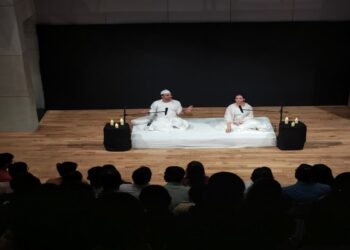
Patna, September 19: Arthshila Patna hosted a special book talk, ‘BadiAayiPatrakaar!’ — On Journalists, Journalism and KhabarLahariya’s New Collective Biography, on Saturday.

The discussion focused on BadiAayiPatrakaar! / The Good Reporter: A Memoir of Journalism in the 21st Century, a collective biography documenting the experiences of women journalists associated with KhabarLahariya.
Journalist and writer Jyoti Yadav moderated the discussion. Lakshmi Sharma, Executive Producer at KhabarLahariya; Geeta Devi, Bureau Chief at KhabarLahariya; and Disha Mullick, writer and consultant, participated in the conversation.

What Does ‘BadiAayiPatrakaar!’ Mean?
The discussion began with the book’s distinctive title, ‘BadiAayiPatrakaar!’. Yadav asked the speakers about the thinking behind the phrase and what it represents in the context of journalism.
The conversation also examined how journalists see themselves when they come from the same social and geographical backgrounds as the communities they report on, and how their personal experiences interact with the demands of professional journalism.
Geeta Devi recalled her early years in journalism, when she would hear people remark, “BadiAayiPatrakaar!” as she arrived to report from different places.
She said the phrase reflected the social attitudes and resistance she encountered as a woman working in the field.
Challenges Faced By Women Journalists
Devi also spoke about challenges she experienced while reporting on the ground. These included uncomfortable physical contact in crowded settings and being judged or humiliated over skin colour and clothing.
She described such experiences as part of the difficulties women journalists can face while working in the field.
Objectivity And Questions Of Bias
Disha Mullick discussed the relationship between journalistic objectivity and perceptions of bias.
She noted that questions of bias can become associated with both a story and the journalist, regardless of how the reporting is conducted. For journalists working on the ground, she said, this can create the additional challenge of repeatedly demonstrating that their work is based on facts and journalistic principles.
Journalism From Rural India
The conversation also traced KhabarLahariya’s journey and its reporting from rural India, along with the participation of women in journalism and the changing media landscape.
The speakers reflected on how ground reporting can bring local issues and voices from communities that are often underrepresented in mainstream discussions to a wider audience.
The discussion brought together themes of identity, gender, social background, objectivity and lived experience, while examining what it means to report from within or close to the communities being covered.
Documenting Women’s Journalism Journeys
Through BadiAayiPatrakaar!, the experiences of KhabarLahariya’s women journalists are documented as both professional journeys and individual stories shaped by their communities, workplaces and the evolving landscape of Indian journalism.
The Patna discussion offered readers and audiences an opportunity to engage with these experiences and consider the role of identity and lived experience in contemporary ground reporting.