Patna: Bihar’s government has announced plans to strengthen its minority welfare framework by appointing Block Minority Welfare Officers (BMWOs) in all 534 administrative blocks by the end of the 2026-27 financial year. The move, officials say, is aimed at improving monitoring and implementation of welfare schemes for minority communities.

The state has created 1,076 posts at the block level, including 487 BMWOs and 524 positions for lower division clerks, according to Minority Welfare Minister Mohammad Zama Khan. Currently, 44 BMWOs are in position, and recruitment for the remaining posts is underway, with preliminary examinations conducted by the Bihar Public Service Commission (BPSC) and requisitions sent to the Staff Selection Commission.
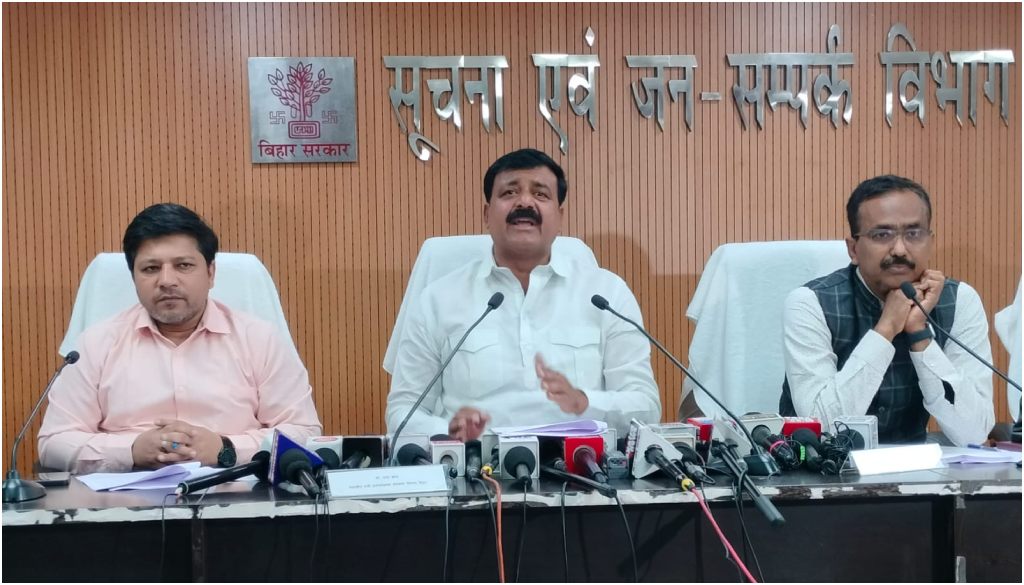
“This is a significant step to establish minority welfare offices at the block level, ensuring better outreach and governance,” Khan said at a press conference at Soochna Bhawan in Patna. The minister was joined by senior department officials, including Secretary Mohammad Sohail and representatives from the Sunni Waqf Board and Haj Committee.

Budget Surge Reflects Government Commitment
The department’s budget has seen a dramatic increase from Rs 3.53 crore in 2005 to Rs 1,041.08 crore for the current financial year. Of this, Rs 803.52 crore – or 77 per cent – has already been spent, with officials expecting full utilisation by March 2026. Last year, the department spent 86.5 per cent of its Rs 728.74 crore allocation.
Khan highlighted several initiatives under Chief Minister Nitish Kumar’s leadership, including scholarships, competitive exam coaching, fencing of graveyards, and the expansion of minority residential schools.
Expansion of Minority Residential Schools
The state has been running the Bihar State Minority Residential School Scheme since 2018-19. At present, two schools operate in Darbhanga and Kishanganj, with five new schools scheduled to open in Katihar, Muzaffarpur, Jamui, Kaimur and Nalanda from April 2026. Each school offers free residential education for Classes 9–12, including boarding, lodging, and books, for meritorious minority students.
Smart Classes and Modern Curriculum for Madrasas
The department is also introducing smart classes in 75 Madrasas in collaboration with Maulana Mazharul Haque Arabic and Persian University, Patna. The initiative, designed to teach modern subjects such as science, maths, English, and social sciences, will eventually be extended to all Madrasas in the state.
Support for Divorced and Abandoned Women
Since 2006-07, the state has provided one-time financial assistance of Rs 25,000 to eligible divorced or abandoned Muslim women under the “Mukhya Mantri Alpsankhyak Muslim Parityakta/Talakshuda Mahila Sahayata Yojana”, benefiting over 16,000 women.
Fencing Graveyards and Resolving Waqf Land Issues
The government has fenced more than 9,000 graveyards to prevent encroachment and communal tensions. On Waqf Board land disputes, the department emphasised adherence to the UMEED Act 2005, ensuring no land is registered as Waqf property until verified by the district administration.
“The reforms in minority welfare reflect a commitment to empowerment, inclusivity and equitable access to education and services,” said Khan.