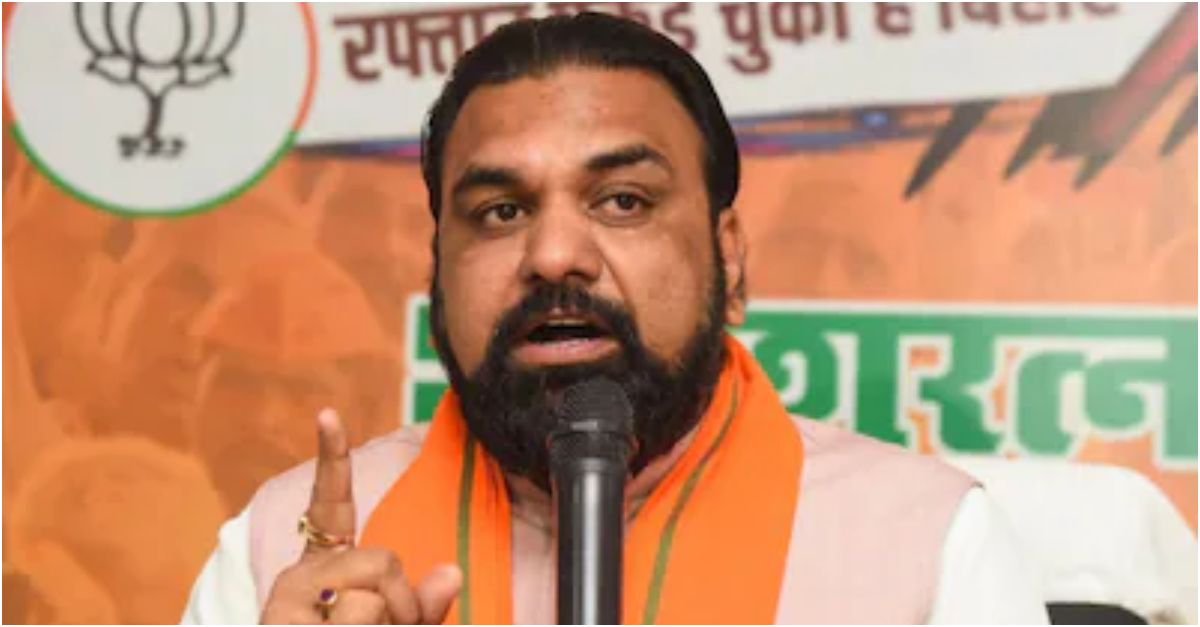
Patna: A long-standing quirk of Bihar’s politics may be on the verge of ending, as speculation intensifies that Samrat Choudhary could become the state’s next chief minister — potentially breaking a 67-year pattern in which deputy chief ministers have failed to secure the top post.

With a steady stream of senior BJP leaders visiting his residence, Choudhary is increasingly being seen as the frontrunner. Political observers say the signals point strongly towards a leadership shift, though no official announcement has yet been made.
If confirmed, his elevation would mark a rare departure from precedent. Since the late 1950s, Bihar has seen multiple deputy chief ministers, but only Karpoori Thakur — often referred to as Jannayak — successfully transitioned from deputy to chief minister.

A Political Rise Decades in the Making
Choudhary, the son of former Bihar minister Shakuni Choudhary, entered politics in 1990 and steadily built his career across party lines. He served as a minister in the government led by Rabri Devi in 1999, though his tenure was cut short following a controversy over his age.
He later won assembly elections from Parbatta in 2000 and 2010, and held a ministerial role again in 2014. In 2018, he switched from the Rashtriya Janata Dal to the BJP, a move that significantly boosted his political standing. Since then, he has served as state president, minister and deputy chief minister, emerging as a key figure within the party.
A Pattern Rooted in Political Balance
The deputy chief minister’s role in Bihar has historically been shaped more by political arithmetic than succession planning. Analysts trace the trend back to 1957, when Anugrah Narayan Sinha was appointed under chief minister Shri Krishna Singh to maintain a balance of power.
Since then, the position has largely been used to manage coalition dynamics and caste equations rather than to groom future chief ministers.
During the tenure of Nitish Kumar, the state saw the highest number of deputy chief ministers — seven in total — including prominent leaders such as Sushil Kumar Modi, Tarkishore Prasad, Renu Devi, Choudhary himself, Vijay Kumar Sinha, and Tejashwi Yadav.
Despite this, none have followed the path taken by Karpoori Thakur.
Breaking the cycle?
In total, Bihar has had 10 deputy chief ministers, but only one has gone on to occupy the chief minister’s office. Sushil Kumar Modi holds the record for the longest tenure in the role, serving from 2005 to 2013.
Whether Choudhary can defy this entrenched pattern remains to be seen. For now, his potential elevation has revived debate over whether the deputy chief minister’s office in Bihar can finally become a stepping stone — rather than a political cul-de-sac — to the state’s highest post.