Patna: The Bihar government has joined hands with United Nations agencies to strengthen disability inclusion in disaster preparedness, acknowledging that effective disaster management cannot be achieved unless it is inclusive by design.

The state’s Disaster Management Department (DMD), in partnership with the United Nations in India and UNICEF, on Tuesday began a two-day capacity-building workshop in Patna on Disability-Inclusive Disaster Risk Reduction (DiDRR). The initiative aims to mainstream disability inclusion across all stages of disaster management in Bihar.
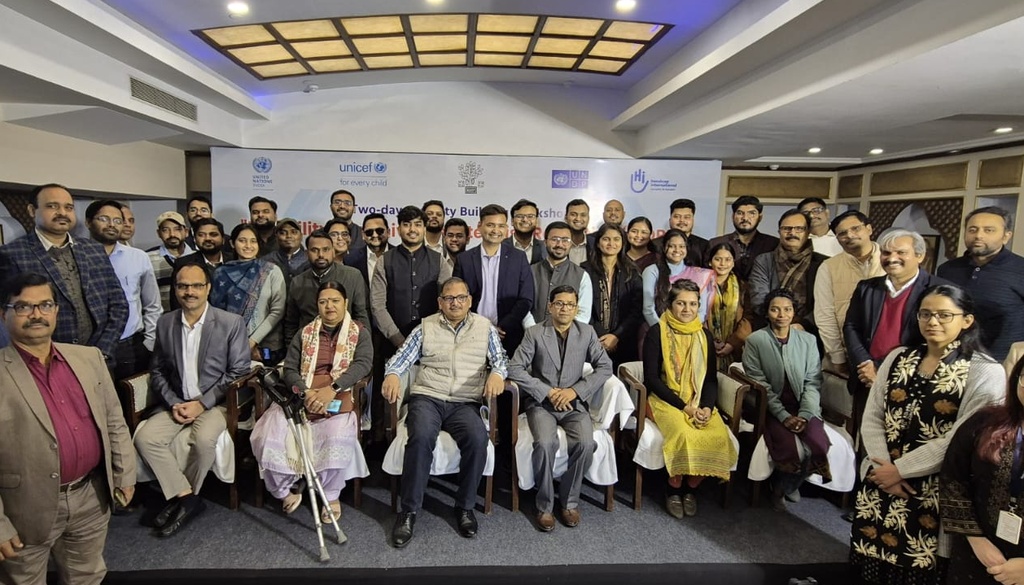

The workshop is being technically led by the United Nations Development Programme (UNDP) and Humanity & Inclusion (formerly Handicap International). Participants include assistant disaster management officers, disaster risk reduction practitioners and representatives of organisations of persons with disabilities. Welcoming the participants, Rajeev Kumar, disaster risk reduction specialist at UNICEF, outlined the objectives and expected outcomes of the programme, emphasising the need for structured capacity-building to ensure inclusive disaster responses.
In his keynote address, Nadeemul Ghaffar Siddiqui, joint secretary of Bihar’s Disaster Management Department, said that while the state had made notable progress in disaster management, significant gaps remained in safeguarding and including persons with disabilities. “Disasters do not discriminate, and hence our response mechanisms must also be non-discriminatory and fully inclusive,” he said, adding that Bihar was aligning its disaster plans with the Sendai Framework for Disaster Risk Reduction.
Md Waris Khan, secretary of the Bihar State Disaster Management Authority (BSDMA), described disability inclusion as a moral and governance imperative, particularly amid intensifying climate-related disasters. He stressed the need for sustained engagement and regular training platforms to embed inclusion as a core principle within state policies and disaster frameworks.
Grounding policy discussions in lived experience, a dedicated session examined the challenges faced by persons with disabilities during disasters, including barriers to evacuation, limited access to early warning systems and the inaccessibility of relief shelters. Facilitated by Kumar Shiwendra of Humanity & Inclusion, the session enabled direct dialogue between officials and disability rights groups.
Geeta, representing persons with disabilities, shared her experience during flood rescue operations, highlighting how gender-based vulnerabilities among persons with disabilities are often amplified during disaster response. She called for preparedness frameworks that explicitly address intersecting vulnerabilities and adopt gender-responsive approaches.
The workshop will combine policy-oriented discussions with practical exercises, covering concepts of disability, identification of at-risk populations, data gaps, inclusive communication, and rights-based approaches. Sessions will also focus on inclusive early warning systems, evacuation and shelter management, rescue techniques, and field-based best practices. A localised tabletop exercise will allow participants to apply inclusive response measures, followed by a concluding session on agreed actions to strengthen disability inclusion across Bihar’s disaster management policies and implementation frameworks.