
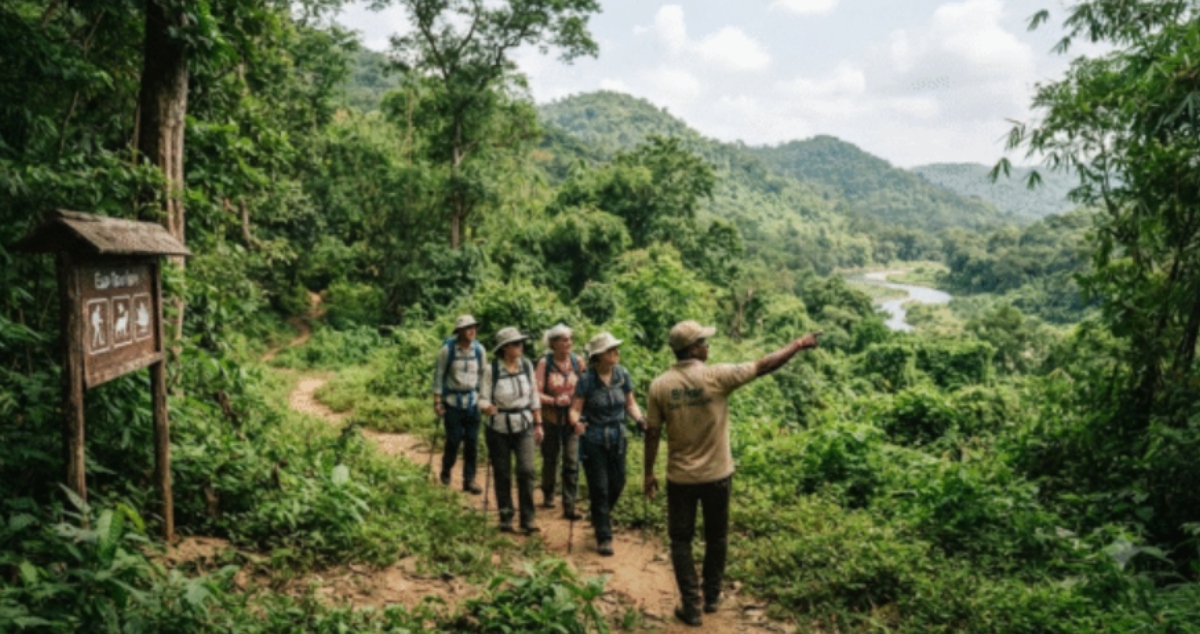
Patna: The Bihar Environment, Forest and Climate Change Department is undertaking a series of initiatives to give eco-tourism a more organised and attractive framework in the state while maintaining a focus on conservation of natural and forest areas.

The department is focusing on developing basic infrastructure and visitor amenities at natural sites, water bodies, hill regions and wildlife areas to improve the overall tourism experience.
BETDS to Drive Eco-Tourism Development

Through the Bihar Eco-Tourism Development Society (BETDS), the process of selecting a transaction advisor, architect consultant and Programme Management Unit (PMU) for the development of eco-tourism destinations is currently underway.
The department has also initiated the process of selecting an agency for branding and strategic promotion of Bihar’s eco-tourism destinations.
Bhimbandh Development Underway
The state is also moving ahead with plans to involve the private sector in the development and operation of selected eco-tourism destinations through Public-Private Partnership (PPP) and Design-Build-Finance-Operate-Transfer (DBFOT) models.
At Bhimbandh in Munger, the Request for Proposal (RFP) process is underway for its development as an eco-tourism destination.
Rajgir, Kaimur and Valmiki Tiger Reserve Among Focus Areas
The department is also exploring the development of tourist facilities at several other prominent natural and eco-tourism locations, including Rajgir, Kaimur, Rohtas, Gaya and Valmiki Tiger Reserve, besides other forest and water-body areas.
In Rajgir, work is also progressing on proposals for facilities such as eco-friendly cottages and a cliff walk at the Nature Safari.
Focus on Conservation and Local Livelihoods
The department said its objective is to strike a balance between nature conservation and tourism development while creating employment and livelihood opportunities for local communities.
The initiatives are aimed at developing Bihar’s natural destinations as environmentally sustainable and quality tourism centres while ensuring that tourism growth remains aligned with conservation priorities.