Patna: Satellite data released by NASA indicates a sharp rise in night-time illumination across Bihar, underscoring the state’s rapid electrification over the past decade.

According to the findings, Bihar’s brightness at night increased by around 3.5 times between 2014 and 2022, outpacing the national average and reflecting expanding electricity access across both urban and rural areas.
Part Of A Wider Global Shift

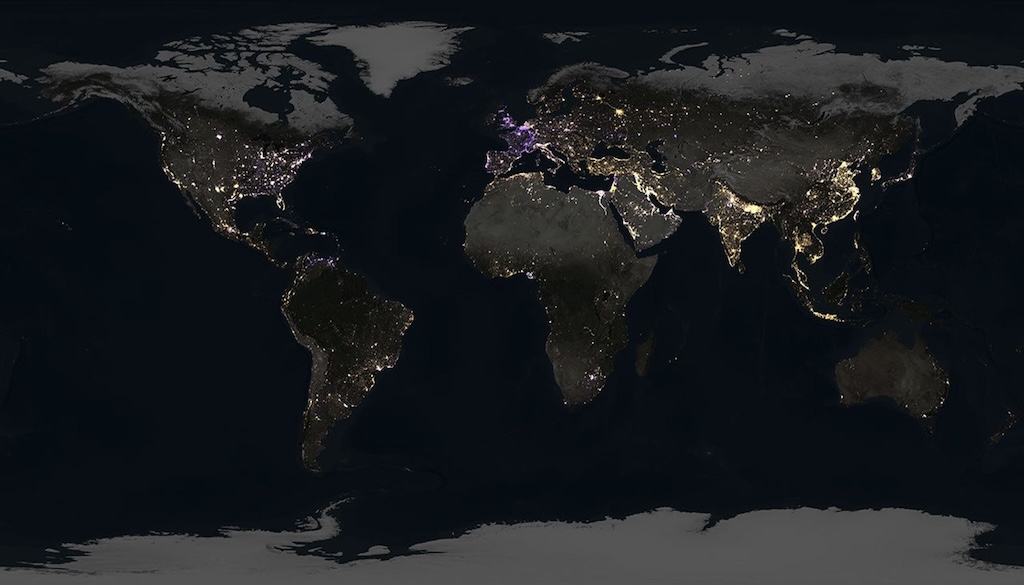
The Bihar trend forms part of a broader global pattern revealed through new NASA-backed night-time maps, which show both intensifying brightness and notable dimming in different parts of the world.
Researchers found that global radiance increased by 34% over the study period, though this overall rise masks regional variations. Rapid brightening was observed in parts of China and northern India, while countries such as France, the UK and the Netherlands recorded significant declines in light levels due to energy conservation measures and increased adoption of efficient lighting.
The study also noted temporary dimming across Europe in 2022 during the energy crisis following the Russia-Ukraine conflict.
“Unlocking energy sector insights is just one way NASA data is advancing national security interests at a critical time,” said Miguel Román of NASA’s Goddard Space Flight Center, adding that night-time Earth observations offer valuable insights into human activity and infrastructure.
How The Data Was Analysed
The research team, led by Tian Li and Zhe Zhu at the University of Connecticut, analysed 1.16 million satellite images collected over nine years using the Visible Infrared Imaging Radiometer Suite (VIIRS).
These sensors, operating aboard satellites jointly run by NASA and the National Oceanic and Atmospheric Administration, capture images of Earth at night with high precision, detecting light sources as small as a toll booth.
Zhu described the continuous monitoring of light patterns as “like watching the heartbeat of the planet”.
Earth isn’t just getting brighter—some areas are brightening and others are dimming because of changes in nighttime lights.
The finding comes from analyzing 1.16 million NASA satellite images taken every night for nine years. pic.twitter.com/1kFso4QE1k
— NASA Earth (@NASAEarth) April 16, 2026
Bihar’s Power Growth Reflected In Data
Within this global context, Bihar’s surge in brightness reflects a marked expansion in electricity access and consumption.
| Indicator | Then | Now |
|---|---|---|
| Total power consumption | ~700 MW (2005) | Over 8,700 MW |
| Per capita consumption | — | Nearly threefold increase since 2011 |
Officials said the state has also transitioned from a power deficit to a surplus, with electricity availability now exceeding demand.
Impact On Daily Life
Bijendra Prasad Yadav, Bihar’s deputy chief minister, said electrification has reached villages and remote areas, enabling economic activity and improving living standards.
He noted that improved power supply has supported small-scale industries and allowed students to study after dark in districts that previously lacked reliable electricity.
Indicator Of Broader Development
Experts say night-time illumination is widely used as a proxy for economic development and infrastructure growth. Bihar’s rapid brightening is therefore seen as an indicator of wider socio-economic change.
Officials added that continued investment in power infrastructure and distribution will be key to sustaining these gains, as the state builds on its recent progress in electrification.