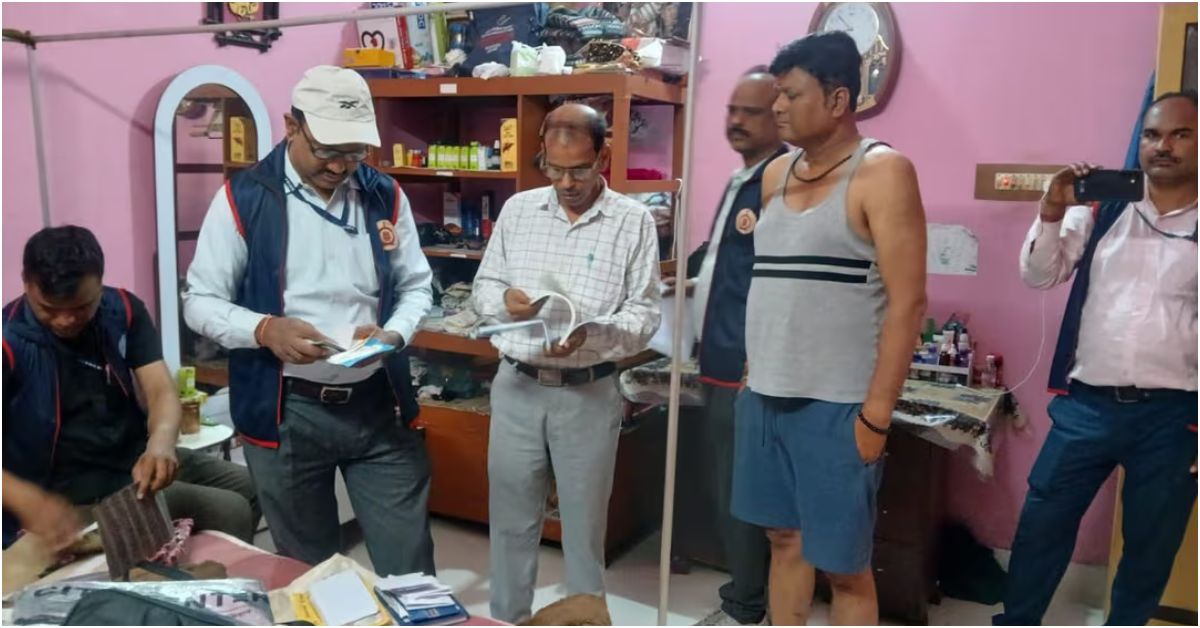
Patna: Bihar’s Economic Offences Unit (EOU) has carried out coordinated raids at 12 locations across the state as part of an investigation into alleged disproportionate assets linked to two public servants, officials said on Tuesday.

The searches, conducted simultaneously in multiple districts, target Gautam Kumar, a sub-divisional police officer (SDPO) posted in Kishanganj, and Vaibhav Kumar, an official with the District Rural Development Agency (DRDA) in Saharsa. Both are accused of amassing wealth beyond their known sources of income.
According to investigators, six premises associated with Gautam Kumar are being searched across Patna, Purnia and Kishanganj. He is alleged to have accumulated assets worth Rs 1.94 crore that cannot be accounted for by his official earnings.

In a parallel operation, the EOU is also raiding six locations linked to Vaibhav Kumar in Muzaffarpur and Saharsa. Authorities estimate that he may have acquired assets worth Rs 2.41 crore in excess of his declared income.
The action forms part of a broader crackdown by the state administration on corruption within public offices. Officials said the searches are ongoing and further details will emerge once the process is completed.
The latest raids follow a series of recent anti-corruption operations in Bihar. On Monday, a nine-member team from the Vigilance Investigation Bureau arrested two employees at the Sadar sub-divisional magistrate’s office in Bhagalpur for allegedly accepting a bribe. The accused, identified as a lower division clerk and a stenographer, were caught in the act and found with Rs 70,000 in cash.
Earlier, on March 24, the Special Vigilance Unit registered a case against Brijesh Kumar, the deputy development commissioner of Shivhar and ex-officio chief executive officer of the district council. He is accused of accumulating illicit assets worth approximately Rs 1.84 crore during his tenure in various official roles.
Officials say the ongoing investigations signal an intensifying effort to curb corruption and ensure accountability within the state’s administrative machinery.