Patna: Bihar Police is preparing for a major change in the way crimes are investigated, with a strong focus on science-based evidence and faster delivery of justice. The state government has decided to strengthen Bihar’s forensic infrastructure almost three times its current capacity. The move is aimed at ensuring that criminals are caught and punished quickly, while investigations become more accurate and reliable. Senior police officials say this step will bring long-term improvements to the criminal justice system in the state.

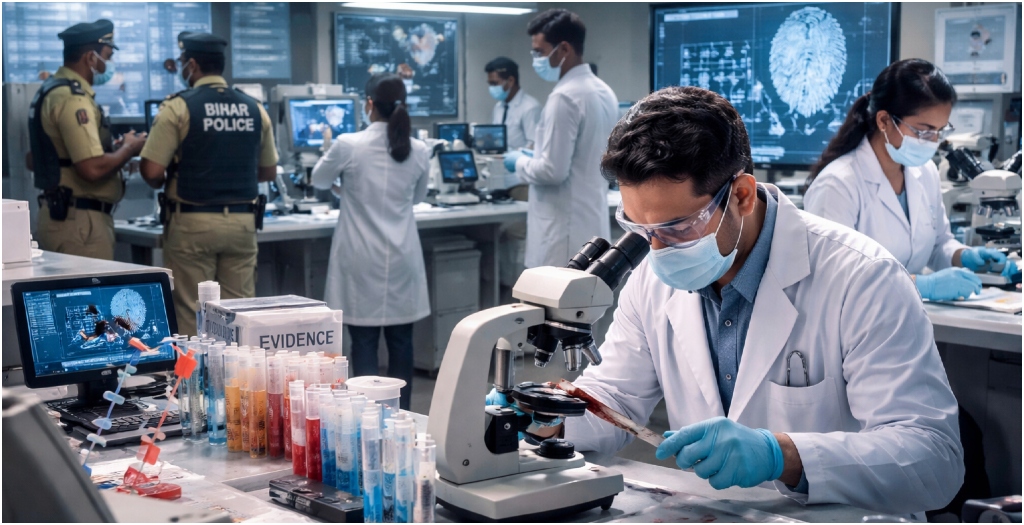
As part of this plan, nine new forensic science laboratories (FSLs) will be set up at different regional levels across Bihar. The regional forensic lab in Purnea is expected to become fully functional from 1 February, marking the beginning of this expansion. Police headquarters have instructed officials to complete the work on priority, with a target to make new labs operational every three months. Once established, these labs will allow police teams to access forensic facilities closer to crime scenes, saving valuable time during investigations.
At present, Bihar faces a serious shortage of forensic resources. Every year, around 40,000 to 50,000 serious criminal cases are registered in the state, but forensic teams are able to reach the crime scene in only about 10,000 cases. This gap has become more critical after the introduction of new criminal laws, which make it mandatory for forensic teams to visit crime scenes in cases where the punishment is more than seven years. The new laboratories are expected to solve this problem and ensure that all serious crimes are investigated using scientific methods.

Currently, forensic science laboratories are functioning in Patna, Muzaffarpur, Bhagalpur and Rajgir. In addition to these, the government has approved the setting up of nine new regional FSLs at range headquarters. An agreement has also been signed to establish a National Forensic Science Laboratory for handling serious crimes, along with two cyber forensic labs to deal with cybercrime cases. These steps show the state’s growing focus on modern investigation techniques.
According to officials, the process of buying modern forensic equipment and hiring around 200 contractual staff has already been completed. All nine new laboratories are expected to be fully operational within the next one to two years. Once functional, they are likely to strengthen evidence in cases related to murder, rape, robbery and organised crime. Police believe this will reduce delays in investigations, improve conviction rates and help build greater public trust in law enforcement.