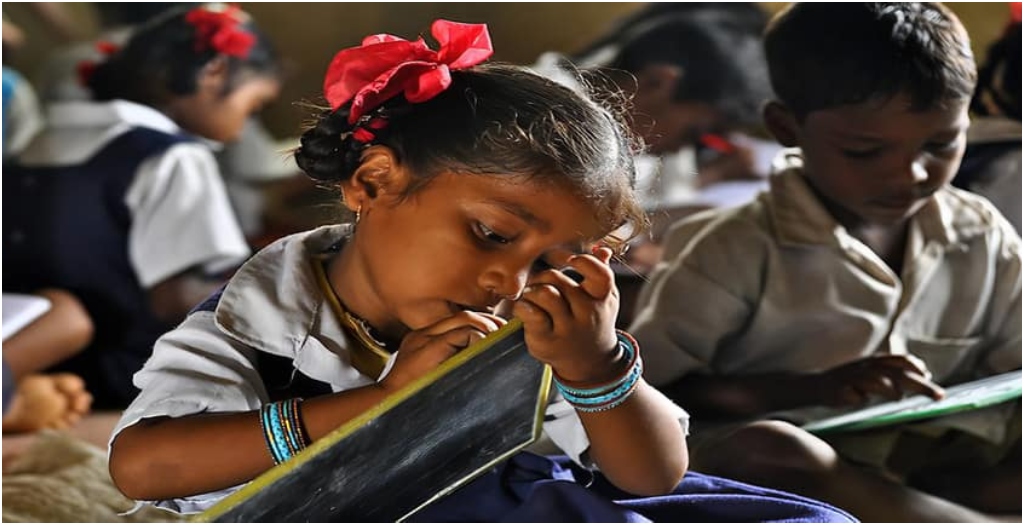
Patna: Around 4 million children studying in Classes 1 and 2 in Bihar’s government schools are set to receive free textbooks in regional languages as part of the state’s plan to promote mother-tongue-based education.

The Education Department is preparing to print approximately 1.2 crore textbooks in six languages – Maithili, Bhojpuri, Magahi, Angika, Bajjika and Surjapuri. The initiative is expected to cost around Rs 250 crore.
The department has issued directions to develop the curriculum and initiate the printing process. The books will cover Hindi, English and Mathematics, with lessons incorporating local languages to help children understand basic concepts more easily.

Mother-Tongue Learning In Early Classes
The initiative follows the emphasis of the National Education Policy (NEP) on teaching children in their mother tongue or local language during the foundational years of education.
According to the Education Department, language barriers often make it difficult for children entering school for the first time to understand classroom lessons.
In several rural areas of Bihar, children primarily speak Maithili, Bhojpuri, Magahi, Angika and Bajjika at home. However, they often encounter standard Hindi and English when they begin formal schooling.
The department believes that introducing familiar languages into classroom learning will improve children’s understanding, participation and retention of lessons.
Education Minister Mithilesh Tiwari said the initiative aims to ensure that young students develop a better understanding of their subjects through languages spoken in their communities.
Which Languages Will Be Used In Which Districts?
The Education Department is developing region-specific learning materials based on the languages spoken across different parts of Bihar.
The proposed distribution of regional-language textbooks includes:
– Bhojpuri: Bhojpur, Buxar, Rohtas, Kaimur, Saran, Siwan and Gopalganj.
– Maithili: Darbhanga, Madhubani, Samastipur, Saharsa, Supaul and Madhepura.
– Magahi: Gaya, rural Patna, Jehanabad, Arwal, Aurangabad and Nawada.
– Angika: Bhagalpur, Banka, Munger, Lakhisarai and Jamui.
– Bajjika: Muzaffarpur, Vaishali, Sitamarhi and Sheohar.
– Surjapuri and tribal languages: Local vocabulary from Seemanchal and tribal regions will also be incorporated, with consideration given to languages such as Santhali and Oraon.
The learning materials will be designed according to the linguistic and cultural characteristics of each region.
Textbooks To Include Folk Stories, Games And Local Culture
The proposed textbooks will go beyond translating existing Hindi lessons into regional languages. The department plans to incorporate local folk stories, nursery rhymes, riddles and traditional activities to make classroom learning more interactive.
Books prepared for the Mithilanchal region will include references to Mithila art and local festivals. Similarly, textbooks for the Magadh and Shahabad regions will feature local folk theatre, seasonal songs and information about indigenous plants.
Around 60-70 per cent of the pages are proposed to contain large, colourful illustrations to make the books more engaging for young learners.
Traditional games and activities, including antakshari, riddles and clay-toy making, will also form part of the learning material.
Mathematics To Be Taught Through Traditional Games
The curriculum will also use familiar activities to introduce basic mathematical concepts.
For instance, addition and subtraction will be explained through examples drawn from traditional games such as Kabaddi and Gilli-Danda.
While the existing approach to teaching English and Mathematics will continue, the lessons will incorporate Hindi alongside the respective regional languages to make concepts easier to understand.
Through the initiative, the Education Department aims to create a learning environment in which children can connect classroom lessons with their everyday experiences and surroundings.