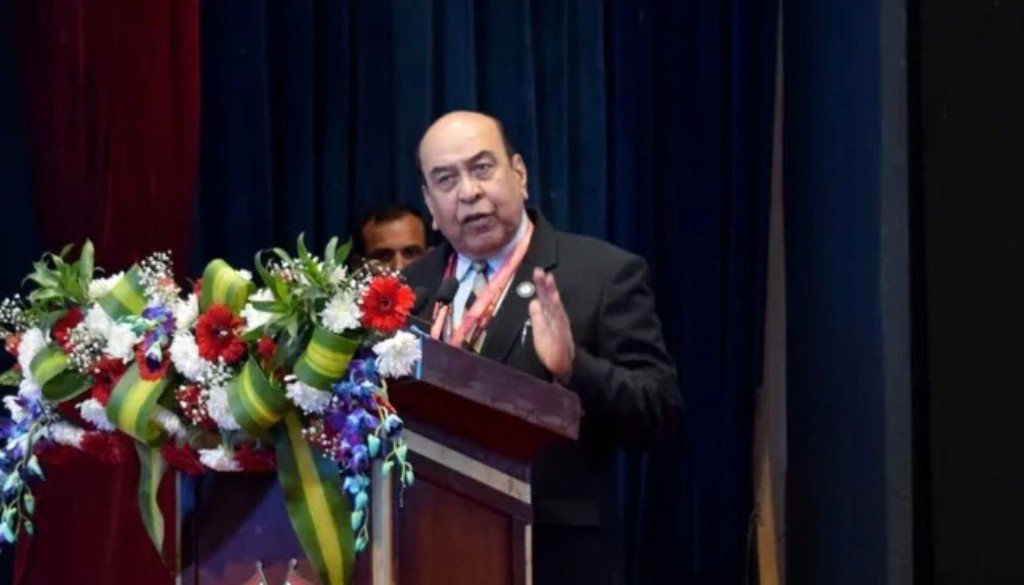
Patna: Bihar Governor and Chancellor Lt Gen (Retd) Syed Ata Hasnain has approved a new National Service Scheme (NSS) syllabus for undergraduate students, paving the way for its implementation across traditional universities in the state.

The curriculum has been prepared on the recommendation of a state-level syllabus committee and is aligned with the National Education Policy (NEP) 2020.
To be offered in fourth semester

The NSS course will be introduced under the Ability Enhancement Course (AEC-4) component of the four-year Choice Based Credit System (CBCS) undergraduate programme.
Students will be able to opt for the two-credit course in the fourth semester. The paper will carry a total of 100 marks, including 70 marks for the End Semester Examination (ESE) and 30 marks for Continuous Internal Assessment (CIA).
State-level committee drafted the syllabus
The syllabus was finalised following a meeting of the state-level committee constituted for curriculum development. The meeting was held at the NSS Regional Directorate in Patna.
According to university officials, Lalit Narayan Mithila University NSS Programme Coordinator Dr RN Chaurasia participated in the meeting as a member of the committee, following directions from Vice-Chancellor Prof Sanjay Kumar Choudhary.
Five-unit structure with theory and practical components
The syllabus comprises five units, including four theoretical units and one practical component.
Classes will be conducted by current and former NSS programme officers and coordinators through online or offline modes.
The curriculum covers topics such as the history and philosophy of NSS, its logo, motto and objectives, special camps, disaster management, sanitation, health awareness, plantation drives, youth leadership, digital literacy, the My Bharat portal, environmental awareness and field-based activities.
Focus on community engagement and leadership
Dr Chaurasia said the new syllabus is intended to strengthen students’ engagement with communities and promote awareness of social responsibility.
He said the course would encourage greater participation in community service and social development initiatives while supporting personality development, leadership skills and character building.
University authorities said the introduction of the curriculum is expected to promote voluntary service activities and foster a stronger sense of civic responsibility and social awareness among students.