Samastipur/Patna: A shortage of commercial LPG cylinders, reportedly linked to disruptions in global gas supply amid the Iran–Israel conflict, has begun affecting daily operations in Bihar, from households and hotels to anganwadi centres and school kitchens. In several districts, cooks are turning to traditional wood- or mud-fired stoves to continue preparing meals for children and customers.

A ground report from Samastipur found that multiple anganwadi centres and schools are struggling to cook meals due to the lack of gas cylinders.
Anganwadi centres forced to use mud stoves

At Anganwadi Centre No. 156 in Ward 19 of Samastipur block, the LPG cylinder has been empty for nearly 10 days. Although a booking was placed earlier, the supply has not arrived.
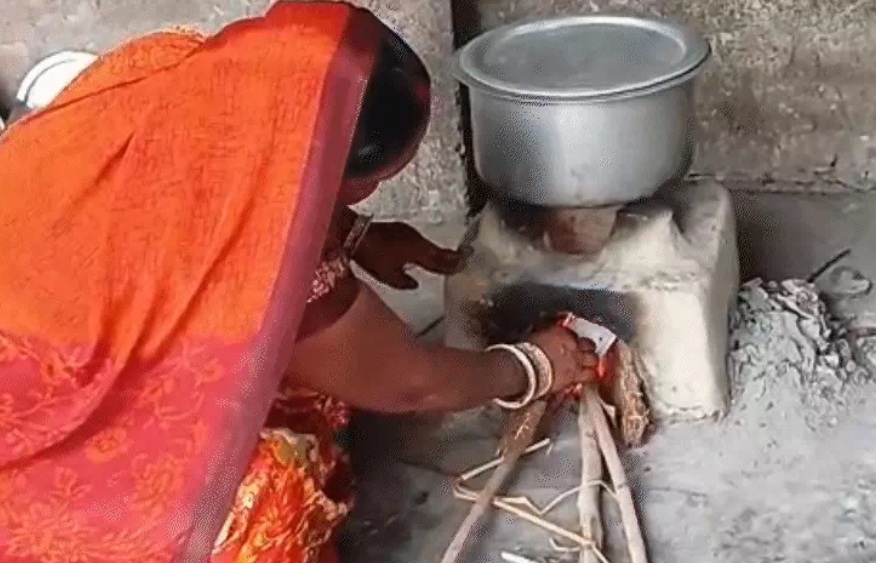
Manju Devi, the cook at the centre, said meals are now being prepared on a mud stove using firewood.
“There are around 40 children at this centre. Due to the shortage of gas, we are cooking food on a wood-fired stove, which is very difficult,” she said. “The booking was placed online about 15 days ago, but the cylinder has not been delivered. The agency staff are not even answering calls. We cannot send children back hungry, so we are somehow managing.”
At another centre, Anganwadi No. 157, worker Radha Devi said the centre currently has one cylinder left, but bookings for new cylinders are not being accepted.
“For now, food for about 40 children has been prepared, but we are worried about the coming days,” she said.
At Centre No. 58 in Jitwarpur Chauth area, assistant Devwati Devi said the centre’s cylinder has already run out. She has brought a cylinder from her home to cook meals for the children.
“If this cylinder also gets empty, I do not know how we will cook food,” she said, urging authorities to issue clear instructions.
Schools preparing alternative arrangements
At Anganwadi Centre No. 55, assistant Poonam Devi said there is enough gas for about a week, after which the centre will follow departmental instructions and may shift to cooking with firewood if needed.
Meanwhile, Jitwarpur Middle School has already run out of gas. A mud stove was being constructed in the school kitchen using bricks and clay to ensure meals can continue.
Headmaster Kaushal Kumar said the school has a commercial gas connection, but despite repeated visits to the gas agency, a new cylinder has not been supplied.
“We have around 660 enrolled students and more than 500 meals are prepared daily. With the shortage continuing, we are building a wood-fired stove and will start cooking on it from tomorrow,” he said.
District Education Officer Kameshwar Gupta confirmed that the shortage is affecting several schools and anganwadi centres.
“We have instructed all institutions to ensure that children’s meals are not stopped. Alternative arrangements should be made wherever required,” he said.
Commercial LPG supply disrupted in several districts
Commercial LPG supply has reportedly slowed or stopped in several districts including Gaya, Samastipur, Darbhanga, Bhojpur, Aurangabad, Muzaffarpur and Purnia. Hotel owners, caterers and banquet hall operators say the shortage is severely affecting their businesses.
In Gaya, restaurant owner Barmeshwar Upadhyay said the problem has persisted for nearly 10 days.
“We are somehow managing through temporary arrangements, but no gas agency is ready to supply commercial cylinders. If this situation continues, we may have to shut down the restaurant,” he said.
Nishant Kumar, director of Ajatshatru Banquet Hall in Gaya, said catering services are already being affected.
“Some dishes are now being cooked on coal stoves. If the shortage continues for a few more days, many hotels and restaurants may have to close, affecting staff as well,” he said.
In Bodh Gaya, a restaurant owner has already shut down one outlet due to the shortage.
Wedding functions affected
In Bhojpur district, a family preparing for a wedding had to cook meals for around 1,500 to 2,000 guests using firewood after failing to obtain a commercial LPG cylinder.
Residents said the demand for coal and firewood has increased sharply as a result.
Business owners fear further disruptions during upcoming wedding seasons. While wedding dates in March have ended due to the start of the Kharmas period on March 14, several auspicious wedding dates are scheduled between April 15 and April 29 and again in early May.
“If the gas shortage continues, managing large wedding catering orders will become extremely difficult,” a marriage hall operator said.
Hospital kitchens also at risk
In Darbhanga, the Darbhanga Medical College and Hospital (DMCH) cafeteria has only three commercial cylinders left, which may last for just one day.
Canteen manager Abhishek Mishra said around 1,700 patients and hospital staff depend on the kitchen daily.
“We can manage meals for today and possibly tomorrow. After that, the situation will become difficult if fresh supplies do not arrive,” he said.
Administration monitoring supply
Officials said commercial cylinder supply has been restricted in some areas.
District Supply Officer Ashok Kumar Chaudhary said commercial LPG supply for hotels, restaurants and banquet halls has been temporarily halted on higher-level orders, while priority is being given to essential institutions such as hostels and hospitals.
Sub-Divisional Officer Dilip Kumar said authorities are closely monitoring distribution at gas depots.
“Gas cylinders will be distributed under the supervision of police and magistrates. Strict action will be taken against black marketing and hoarding,” he said.
Mixed situation across districts
While some districts are facing an acute shortage, others reported relatively normal conditions.
In Aurangabad, a hotel manager said commercial cylinders are still available and operations are continuing without disruption.
In Muzaffarpur, resort manager Abhinandan Kumar said there is no immediate crisis but preparations are underway for alternative arrangements, including mud stoves and wood-fired cooking systems, in case supplies are affected in the coming days.
Restaurant owners in several towns have also put up notices informing customers that service may take 15 to 20 minutes longer due to limited gas availability.