Bettiah: As the second phase of Bihar Assembly elections draws near, the Chanpatia constituency in West Champaran finds itself at the centre of political attention — not for glitzy rallies or celebrity endorsements, but for its stories of migration, joblessness, and unmet promises.

Abha Devi, a resident of Tikulia village in Chanpatia, embodies the struggle of thousands in this border constituency. She and her husband sell pakodas in Bharatpur, Nepal — barely 180 km from their home. “If we could find decent work in India, we wouldn’t go abroad,” she says, her voice weary but resolute. “Our children study there, but that education has no value here. We live in Nepal just to survive. If we had jobs in Chanpatia, we’d work here.”
This year, she has returned home for Chhath Puja and decided to stay until November 11 — to cast her vote. For Abha, the election is personal. “Voting is the only thing left in our hands,” she says quietly.

A Seat in Spotlight
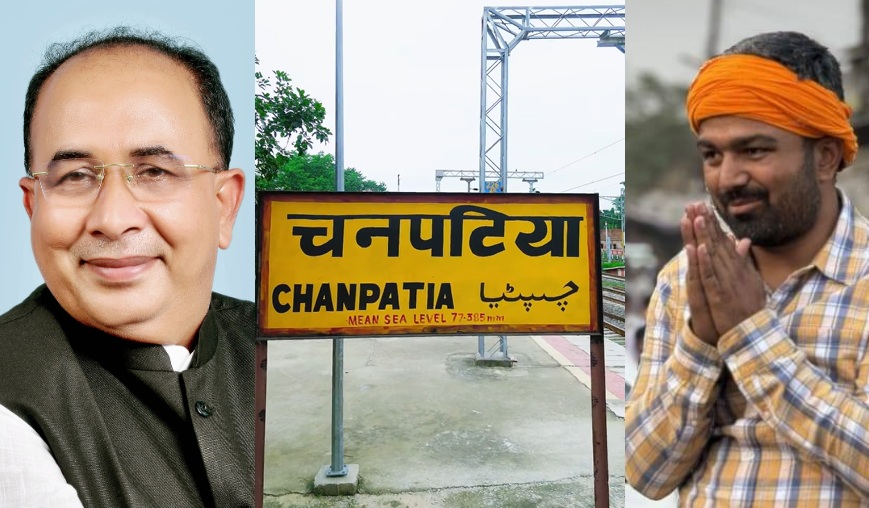
Chanpatia, about 210 km from Patna, is among the 122 constituencies voting in the second phase. The contest here is triangular — BJP’s sitting MLA Umakant Singh from the NDA, Abhishek Ranjan from the Congress representing the Grand Alliance, and Manish Kashyap, the YouTuber-turned-politician contesting on a Jan Suraaj ticket, making his debut under Prashant Kishor’s banner.
The entry of Kashyap has turned Chanpatia into a high-voltage seat. Known for his sharp commentary on social media, Kashyap enjoys massive youth support. For the BJP, however, this seat is a fortress — it has held Chanpatia since 2000.
In the last election, Umakant Singh won by 13,469 votes against Congress’s Abhishek Ranjan. Kashyap, then an independent, secured 9,239 votes. This time, his growing popularity poses a real threat to both traditional rivals.
Decades of Broken Promises
On the ground, the conversation veers quickly from politics to livelihood. Migration and unemployment dominate every tea shop debate.
“The sugar mill here has been closed for 20 years,” says Munindra Jaiswal, a shopkeeper in Chanpatia Bazaar. “Every election, BJP leaders come and say they’ll drink tea made from our mill’s sugar next time. They win, but the mill never reopens. Now we want change.”
Residents also lament the condition of the Startup Zone, once touted as a model for local entrepreneurship, now struggling for survival. The steel plant project remains unfinished.
“People are migrating because there are no jobs,” says Anand Kumar, who runs a stationery store. “No leader has seriously addressed this issue.”
Youth Voices and Divided Opinions
For many younger voters, the choice is between continuity and change.
Amit Kumar, who works in a private firm, supports Chief Minister Nitish Kumar’s governance. “Education, safety, and roads have improved,” he says. “Schools have opened in every village, medicines are available, and hospitals function. Nitish should get another chance.”
But others disagree. Mohammad Arman, a welder working in Gujarat, says he would have stayed if jobs existed locally. “The startup zone is dying, the steel factory isn’t working. This time, we’ll vote for change — for Congress.”
Promises and Plans
BJP’s Umakant Singh lists his achievements from the last five years: roads in every neighborhood, electrification, new schools, health centers, and the GI-tagged Chura Startup Zone. “We have built platforms, completed Chhath Ghats, and worked on major roads like Bettiah–Narkatiaganj. Our work speaks for itself,” he asserts.
On the other hand, Jan Suraaj’s Manish Kashyap offers a populist development pitch rooted in local sentiment. “My first priority is to restart the sugar mill,” he says. “I’ll ensure flood compensation reaches farmers and fertilizers arrive on time. I’ll repair hospitals and schools and provide permanent sheds for local markets. These are not promises — they’re necessities.”
Caste Equations and Political Calculations
The Chanpatia seat is dominated by Bhumihar voters, followed by Yadavs, Brahmins, and Muslims. Analysts say this election could test long-standing caste loyalties.
Local journalist Manoj Kumar Ojha explains, “Manish Kashyap’s entry has changed the game. He’s a Bhumihar, like the BJP’s core voter base. If he attracts even part of that support, the BJP could be in trouble.”
Political analyst Priyadarshi Ranjan agrees: “Chanpatia has been a BJP bastion. If the Bhumihar vote splits, it will be because of Kashyap’s personal charisma. Otherwise, the BJP remains strong.”
The Sentiment on the Ground
For many like Paras Singh, a 65-year-old farmer, this election is about faith in new leadership. “If Prashant Kishor’s Jan Suraaj comes to power, jobs will come. We want Manish to win — he talks about our problems,” he says.
But skepticism persists among older voters. “Every five years we hear promises,” says businessman Munindra Kumar, “but middlemen eat up government funds. The sugar mill is closed, farmers’ money is stuck. This time, people are thinking differently.”
A Vote Between Hope and Habit
As the second phase of voting approaches, Chanpatia’s dusty lanes echo with a blend of hope and cynicism. For migrant workers like Abha Devi, who cross borders for survival, voting represents both duty and defiance.
Whether Chanpatia votes for continuity or change, one truth remains — until factories reopen and jobs return, migration will continue to define this border constituency’s story.