
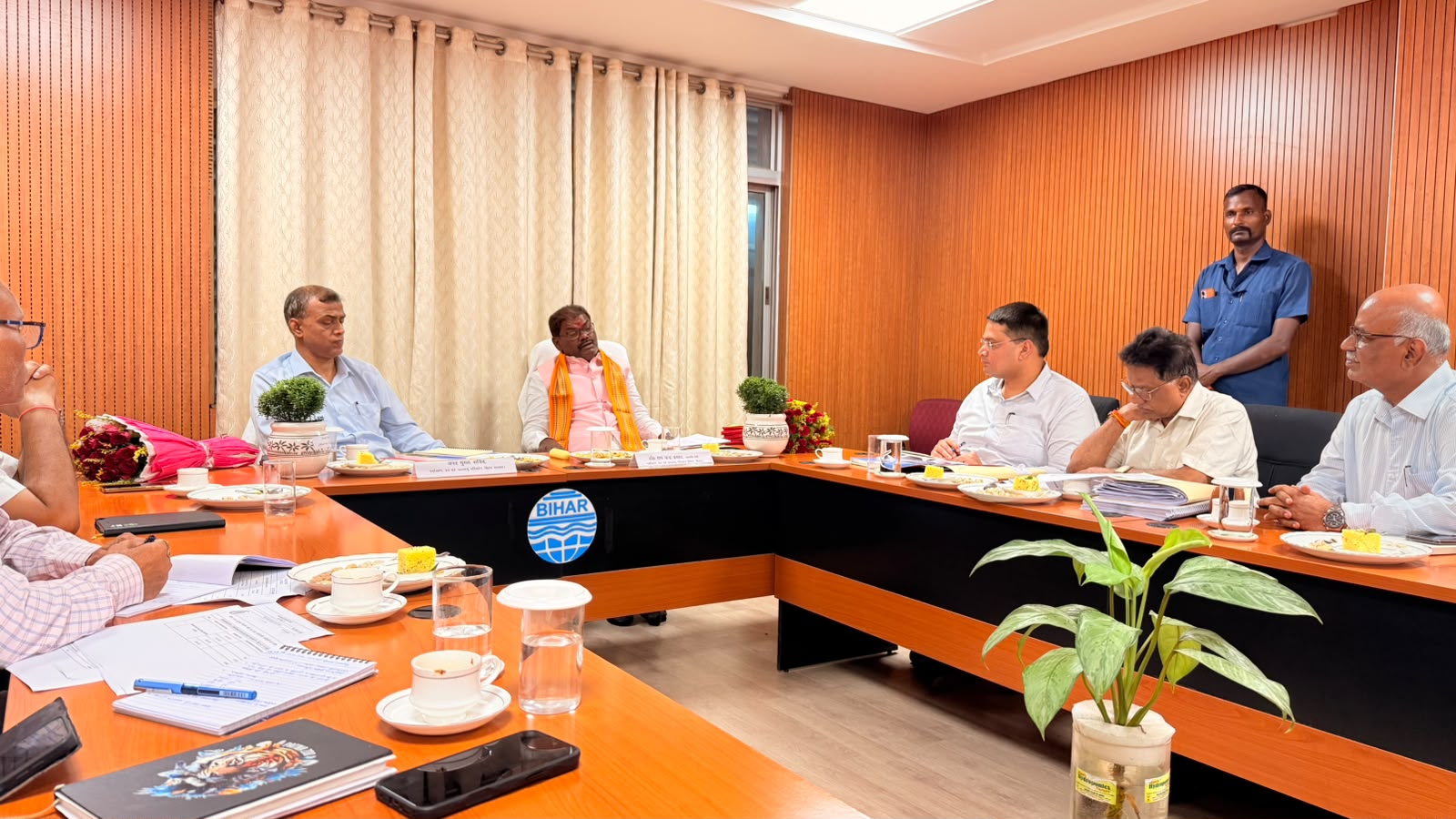
Patna: Bihar environment minister Ram Chandra Prasad reviewed the activities of the Bihar State Pollution Control Board on Tuesday, with officials highlighting reductions in particulate pollution and measures to monitor water and air quality across the state.

Additional chief secretary of the Environment, Forest and Climate Change Department Anand Kishore was also present at the review meeting.
Board member-secretary Neeraj Narayan, scientific adviser S.N. Jaiswal, scientists Naveen Kumar and Arun Kumar, environmental engineers A.K. Gupta and Pappu Kumar, and a technical adviser also attended the meeting.

PM2.5 falls 55.15%
Member secretary Narayan briefed the minister on the board’s activities and said it was constituted in November 1974 under the Water (Prevention and Control of Pollution) Act, 1974.
According to the board, the concentration of PM2.5 declined by 55.15% in 2025-26 compared with 2022-23. PM10 concentration fell by 52.54% over the same period.
The board currently operates 35 Continuous Ambient Air Quality Monitoring Stations across 23 districts to track ambient air quality.
Ganga water quality monitored
The board regularly collects and analyses water samples from the Ganga and its tributaries to monitor water quality.
It said that after Sewage Treatment Plants (STPs) were installed in cities along the Ganga, the average Fecal Coliform level was recorded at 2,199 MPN/100ml, below the prescribed standard of 2,500 MPN/100ml.
PNG supply expanded to 58 industries
The board also highlighted the availability of piped natural gas (PNG) as a cleaner fuel for industrial units.
Supply networks developed by oil companies have enabled PNG connections at 58 industrial units across Bihar, according to the board.
Minister calls for stricter enforcement
Minister Prasad appreciated the work being carried out by the State Pollution Control Board and directed officials to enforce pollution-control standards more rigorously.
Member secretary Narayan thanked the minister and assured that pollution-control provisions would continue to be strictly enforced.