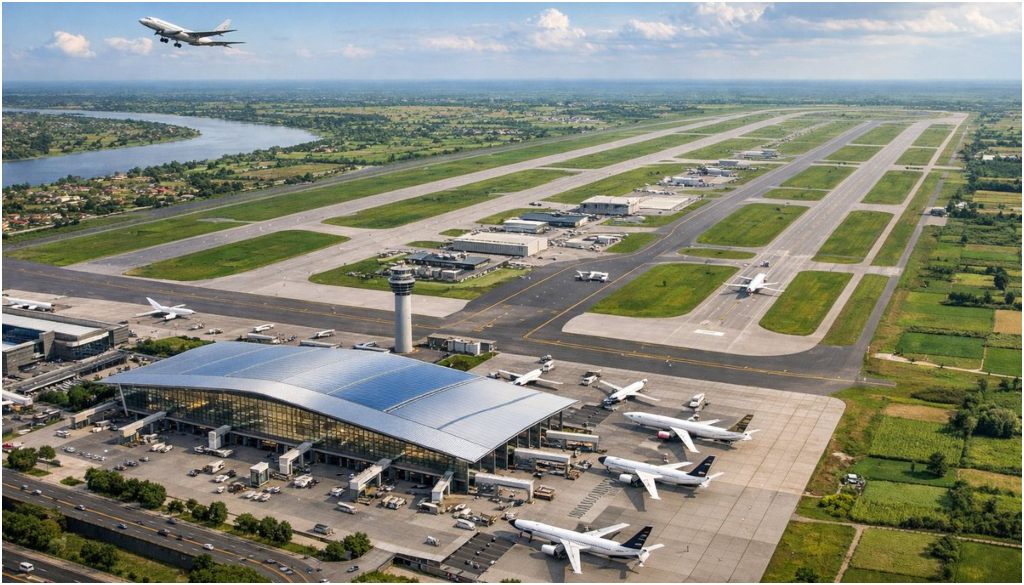
Patna: South Asia’s largest airport is set to be built in Sonepur in the state of Bihar at an estimated cost of Rs 1,302 crore, a proposal that the state cabinet recently approved. Supporters of the project say the greenfield international airport could become one of the biggest aviation hubs in the region, though critics question timelines and economic feasibility.

Speaking to reporters at the state headquarters of the Bharatiya Janata Party, former Union minister and Saran MP Rajiv Pratap Rudy described the approval as a “historic initiative.” He claimed the airport would rank as the largest in South Asia and could be completed within five years on a 4,200-acre site.
Rudy framed the project as a personal and regional milestone, saying it fulfilled a political objective he had long pursued. “This is not only an achievement for Chapra and Patna, but for Bihar. It represents profound change and will become a hub for central India,” he said. He argued that the airport’s long-term value would extend to future generations and eventually serve a population far beyond its initial target of 30 million users.

The proposed airport is planned as a greenfield development connected to multiple road networks, several of which are under construction or in planning stages. Although initial approval dates back to 2020, the project stalled amid delays before receiving renewed momentum. State officials have set land prices at five times the prevailing market rate, a move they say protects farmers’ interests while facilitating voluntary land sales.
Proponents say the airport could expand aviation training opportunities and establish a major air traffic hub linking northeast India with neighbouring regions including Bhutan, Nepal and West Bengal. Located roughly 15 kilometres from Patna, it is also expected to offer direct connectivity to international destinations such as Europe, the United States and Australia.
Supporters describe the initiative as a transformative investment that could reshape the state’s economic identity. The airport is expected to join India’s growing list of major aviation projects, alongside developments at Jewar, Navi Mumbai and Bengaluru. However, questions remain over financing, environmental impact and the broader benefits for local communities.
While the state government and BJP leaders have celebrated the approval, opposition figures and civil society groups are likely to scrutinise implementation and transparency in the coming months. For now, the project represents a bold ambition: to position Bihar as a significant player in national and international aviation networks.