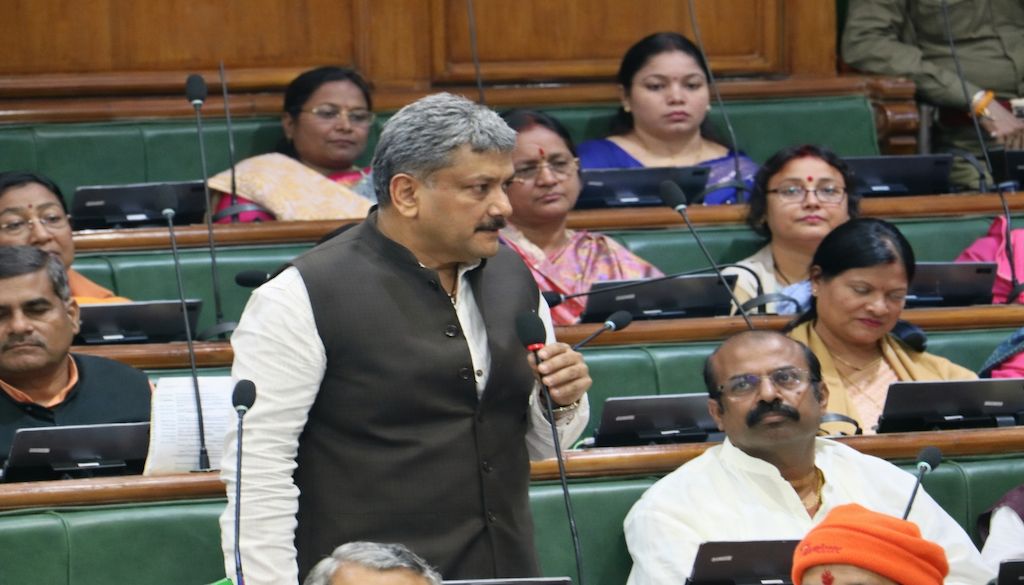
Patna: The Bihar government has signalled a relaxation of its teacher transfer policy, with plans to revive the mutual transfer option that allows educators to swap postings by consent, the education minister Sunil Kumar told the legislative assembly during the budget session.

Responding to concerns raised by legislators, the education minister said the transfer framework was under review and would be made more flexible without creating shortages in government schools. As part of this process, the online portal for mutual transfers is expected to be reopened.
The minister said the education department had already transferred 127,240 teachers in recent phases. These included 690 teachers suffering from incurable diseases, who were given priority. A further 45,677 teachers were transferred under Teacher Recruitment Examination (TRE) Phase 1, and 28,237 under TRE Phase 2.

Teachers appointed through TRE 1 and TRE 2 were placed on a one-year probation, Kumar said. The probation period for those recruited under TRE 3 will end in June–July, after which their transfers will be processed. Distance from home, availability of qualified staff and hardship postings in districts such as Banka, Kaimur and Jamui will be taken into account, he added.
The mutual transfer system allows two teachers of the same category and subject to exchange postings with each other’s consent, subject to departmental approval. The policy is intended to help teachers work closer to their families and improve job satisfaction, while avoiding compulsory relocations.
Under the proposed mechanism, applications will be submitted online through the e-Shikshakosh portal. Teachers will be able to identify potential matches, submit joint requests and upload documents for verification. Once approved, a formal transfer order will be issued by the department.
The education minister said the government was proceeding cautiously to ensure that any easing of transfer rules did not adversely affect staffing levels, particularly in remote and under-served areas of the state.