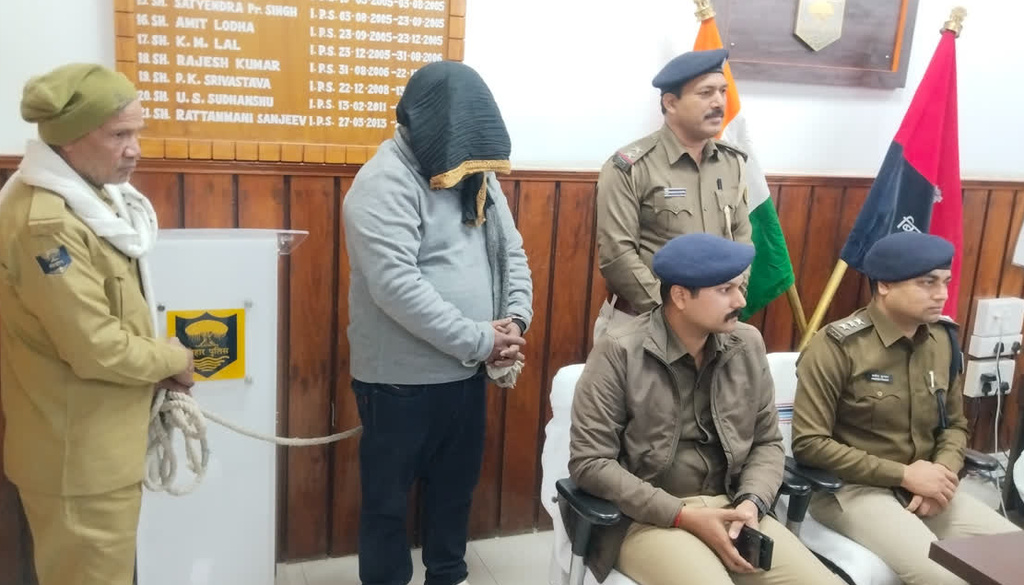
Patna/Bhabua: Bihar police have arrested a man accused of operating a large-scale illegal moneylending racket in Kaimur district, uncovering what officials described as extensive evidence of exploitative lending practices.

The accused, identified as Laxman Shah, a resident of the Kudra police station area, was taken into custody following a complaint from a local resident. Police said they recovered 245 blank cheques, land ownership documents belonging to multiple individuals, Rs.1.70 lakh in cash and approximately 1.754kg of silver from his residence.
According to Kaimur Superintendent of police Harimohan Shukla, the accused allegedly charged borrowers interest rates several times higher than the principal amount. “In one case, the borrower was asked to repay nearly five times the original loan,” Shukla said during a press briefing.

The investigation began after a complaint was filed by Santosh Tiwari, also known as Pankaj Tiwari, who alleged that he had borrowed Rs.1.50 lakh from Shah to fund his sister’s wedding. Police said the lender took signed blank cheques as security and later demanded Rs.5.27 lakh as interest, despite partial repayment by the borrower.
Officers said Shah refused to return the cheques and continued to exert pressure on the borrower, prompting the police complaint. A subsequent search of the accused’s home revealed blank cheques issued by different individuals, along with property documents, raising suspicions of a broader network of victims.
Police have taken the accused to the station for questioning and said he will be produced before a court. Authorities are now examining diaries and financial records recovered during the raid to determine how many people may have been affected by the alleged racket.
The superintendent of police urged victims of illegal moneylending to come forward without fear. “Anyone who has fallen prey to such practices should report it to the nearest police station. Swift action will be taken,” he said.
Illegal moneylending, commonly known as usury, remains a persistent problem in parts of rural India, where access to formal credit is limited, and borrowers are often forced to rely on informal lenders charging exorbitant interest rates.