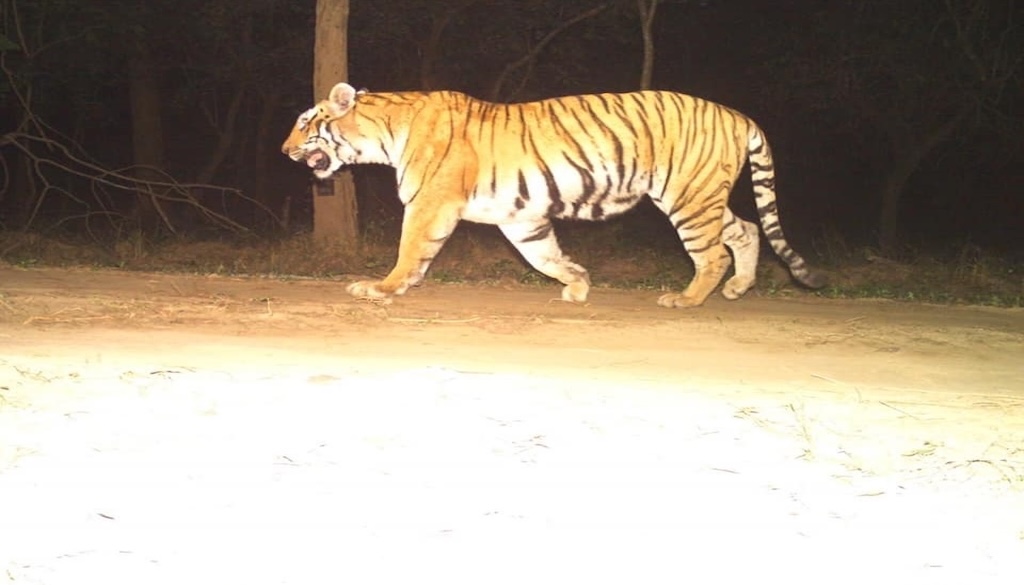
Bettiah: The Valmiki Tiger Reserve (VTR) in Bihar’s West Champaran district has begun its annual tiger census, with forest authorities installing 400 all-weather, night-vision camera traps across the reserve’s 898 sq km landscape.

The cameras will remain operational for around 90 days, generating continuous data on tiger movement while also helping officials assess the availability of prey species within the forest. The exercise forms part of the reserve’s long-term conservation strategy and its effort to build a detailed scientific profile of the tiger population.
A senior forest department official said the camera traps had been placed at carefully selected locations to ensure accurate monitoring. “The data collected will help us understand not only how many tigers are using different parts of the forest, but also whether the ecosystem is supporting them adequately,” the official said.

Nesamani K, conservator of forests-cum-director of VTR, said the exercise would focus equally on prey density. “Along with tracking tigers, we will assess the presence of herbivores such as deer and wild boar, which form the primary food base for big cats,” she said. “This will allow us to evaluate whether food availability is sufficient in different ranges of the reserve.”
Officials said the forest department has developed a dedicated mobile application to analyse the large volume of data generated by the camera traps. The app will help in identifying individual tigers, mapping their movement patterns and correlating these with prey distribution.
The last full tiger census conducted in 2022 recorded 54 tigers in the Valmiki Tiger Reserve, Bihar’s only tiger habitat. While the national tiger census is carried out every four years, VTR supplements it with annual surveys and area-specific monitoring to detect changes early and strengthen protection against poaching and other threats.