Patna: After a brief spell of rain, Bihar is likely to face a prolonged dry phase over the coming week, the India Meteorological Department (IMD) has forecast. The weakening of the monsoon system and a shift in the trough line toward Central India have significantly reduced the chances of rainfall across the state, raising concerns among farmers and increasing the likelihood of oppressive humidity.

Only Light Rain Expected in Select Districts
The IMD has issued a yellow alert for light rain accompanied by strong winds and lightning in eight districts, including Gayaji and Nawada, today (Tuesday). Wind speeds may reach 30 to 40 kmph, but widespread rainfall is not expected.
“Monsoon activity has weakened significantly in Bihar. While some districts in southern and eastern parts of the state may experience light showers, the overall rainfall will not be adequate for agricultural needs,” an IMD official said.

No Torrential Rain for the Next 7 Days
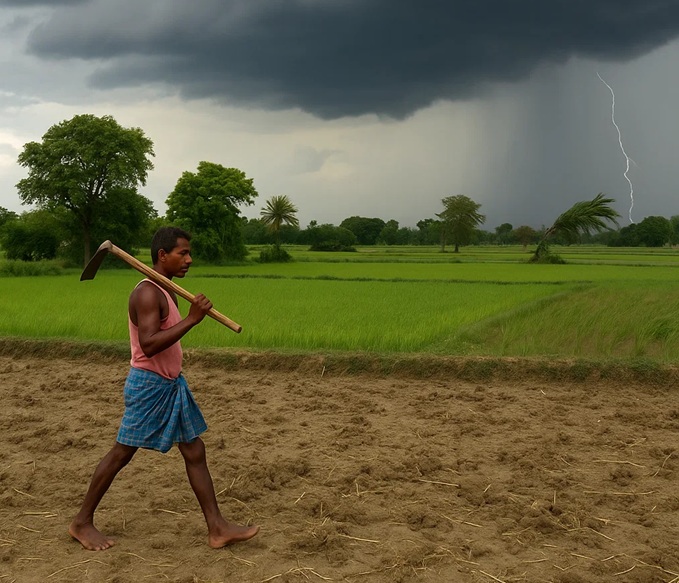
The department has ruled out the possibility of heavy or widespread rainfall for at least a week. This could lead to significant challenges for farmers who depend on monsoon rains for timely transplantation of paddy crops.
“There is little moisture in the air, and unless conditions improve, the dry spell will continue,” the official added.
Farming Under Threat
With water levels in fields depleting and the transplantation of paddy already delayed in several regions, the continuing dry spell may jeopardize crop production. Agricultural experts warn that if rains do not resume soon, it could result in a substantial setback to Kharif farming in the state.
Rising Temperatures and Humidity Ahead
The IMD also forecasts a steady rise in daytime temperatures, with maximums ranging from 34°C to 38°C across most districts, including Patna. Night temperatures are expected to hover between 26°C and 28°C.
Humidity levels are expected to remain high due to moisture in the atmosphere, making the heat more uncomfortable, particularly in urban areas. “The combined effect of hot air and humidity will make conditions oppressive for the general public,” the IMD noted.