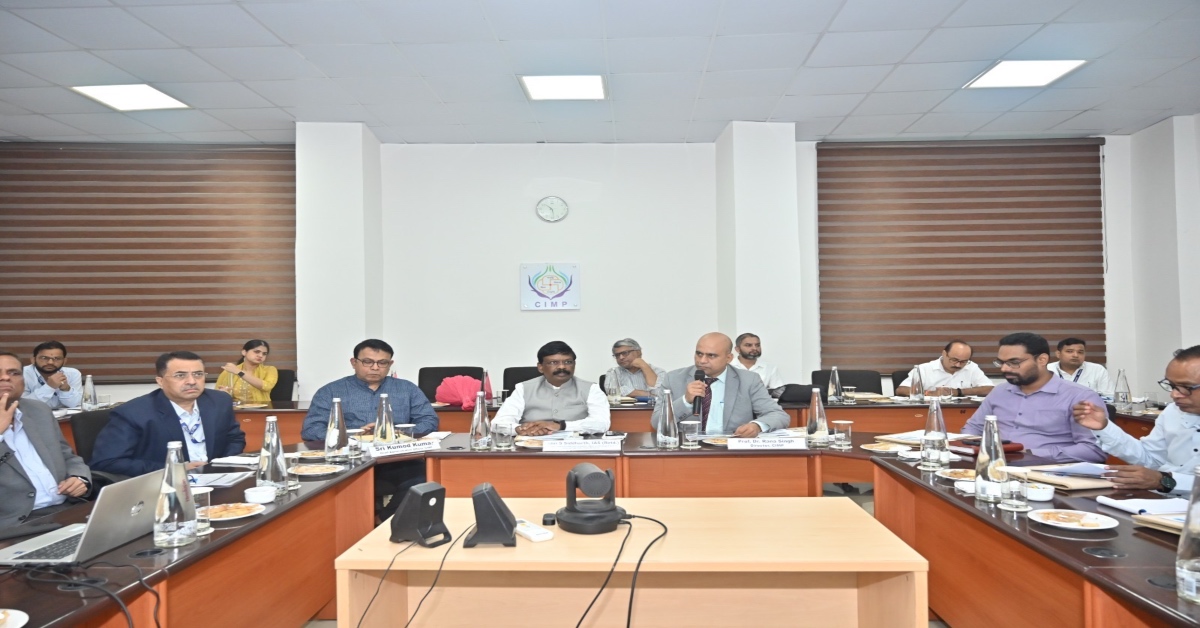
Patna: The CIMP Centre for CSR & ESG Studies Foundation (CIMP Foundation) at Chandragupt Institute of Management Patna (CIMP), in collaboration with WaterAid India, organised a high-level policy dialogue on “Drinking Water Supply for Small Towns: Way Forward for Har Ghar Nal Ka Jal” at the CIMP campus on Friday.

The dialogue brought together senior policymakers, government officials, engineers, development organisations, academic institutions and WASH sector practitioners to discuss the next phase of Bihar’s urban drinking water supply and the challenges faced by small towns.
Focus On Sustainable Urban Water Services

Debi Prasad Mishra, Director, DMI, emphasised the importance of strengthening systems and institutions alongside physical infrastructure to ensure effective and sustainable delivery of urban water services.
S. Siddharth, IAS, highlighted the need to look beyond the creation of water infrastructure and focus on its effective utilisation, sustainability and delivery of services to citizens.
The event also saw participation from engineers and officials of the Urban Development and Housing Department (UDHD), along with senior representatives from BUIDCo, Janaagraha, UNICEF, NIT and IIT.
The participation brought together perspectives from policymaking, implementation, research and development practice.
CIMP Director Highlights Need For Reliable Water Supply
Speaking at the programme, Prof. Dr Rana Singh, Director, CIMP, said Bihar has made significant progress in expanding access to piped drinking water.
He said the next priority should be ensuring that water supply systems translate into reliable, safe and sustainable services for every household.
Singh said platforms such as the policy dialogue are important for bringing government, academia, development partners and practitioners together to identify practical solutions to challenges faced by small towns.
Water Governance And Service Delivery In Focus
Sanjay Sinha, State Programme Director, WaterAid Bihar, highlighted the importance of strengthening water governance and service delivery systems.
He said stronger systems are necessary to ensure that gains made through the expansion of water infrastructure translate into reliable and sustainable services for citizens.
Kumod Kumar, Director, CIMP Foundation, emphasised the need to strengthen institutional capacities, develop sustainable operation and maintenance systems, and improve collaboration among stakeholders.
Key Water Supply Issues Discussed
The discussions covered a range of issues related to urban drinking water services, including service delivery standards, institutional arrangements, operation and maintenance and financial sustainability.
Participants also discussed water quality, source sustainability, climate resilience, digital monitoring and citizen engagement as key areas for improving water services in small towns.
The participation of UDHD engineers and BUIDCo officials provided implementation-level perspectives on the operational and institutional challenges involved in urban water supply.
Focus On Monitoring And Accountability
The dialogue concluded with a policy-oriented discussion on strengthening institutional mechanisms, monitoring and accountability, along with improving the financial and operational sustainability of water services.
Participants also stressed the need to make urban water services more responsive to citizens.
The event reaffirmed the shared objective of moving beyond infrastructure coverage towards sustainable, reliable and citizen-responsive drinking water services under the vision of Har Ghar Nal Ka Jal in Bihar.