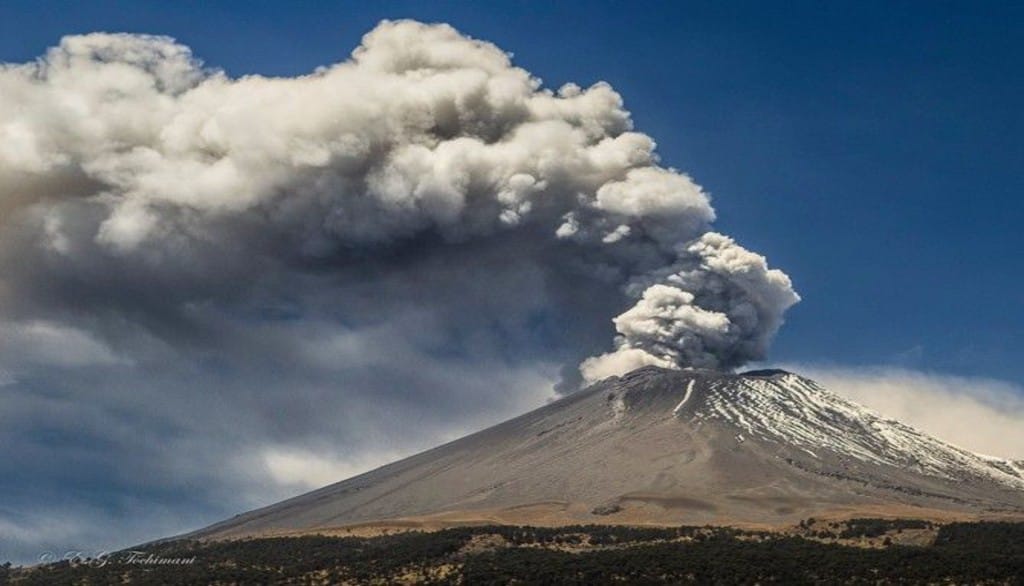
Patna: A huge plume of volcanic ash from Ethiopia’s Haile Gubbi volcano, which erupted for the first time in more than 10,000 years, has drifted into Indian airspace, leading to widespread flight disruptions and heightened concern among aviation authorities.

Officials confirmed late on Monday that the ash mass — travelling at 100–120 km/h — entered India through Gujarat, reaching Delhi around 11pm. The India Meteorological Department (IMD) issued an alert as the plume moved across Rajasthan, Delhi-NCR and Punjab, warning that aircraft operations could face “significant impact” in the coming hours.
Aviation Disruptions Begin as Plume Advances
Authorities said the ash cloud is already affecting aircraft routes in and around Indian airspace.
The IMD reported that the volcanic plume, containing ash particles, sulphur dioxide and tiny rock fragments, is suspended 10–15 km above the ground, posing a direct threat to flight safety.

Airlines began cancelling or diverting flights Monday afternoon as the plume passed over the Red Sea, Yemen, Oman, and then spread across the northern Arabian Sea.
The Directorate General of Civil Aviation (DGCA) has ordered airlines to avoid ash-affected airspace and update routing, fuel estimates and flight planning under a new advisory. Carriers have also been told to report any “unusual ash-related observations”, including engine irregularities, cabin smoke or unusual odours.
Flights to the Middle East Hit First
The disruption hit India-West Asia routes almost immediately. A SpiceJet spokesperson said the airline’s flights to Dubai were among the first to be affected. IndiGo issued alerts to passengers, saying it was monitoring the rapidly shifting plume.
Kochi Airport cancelled two international flights — one to Dubai and one to Jeddah.
At Mumbai Airport, passengers were advised to stay in contact with their airlines as schedules were updated. Officials noted that some flights were being diverted over Pakistan’s airspace, but added that Pakistan’s airspace remains closed to Indian carriers, intensifying route constraints.
A 10,000-Year Dormant Volcano Erupts
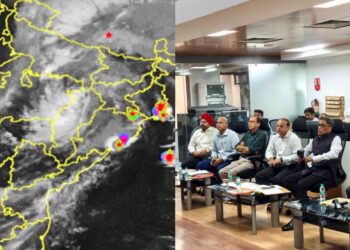
Satellite imagery confirmed that Haile Gubbi, dormant for millennia, erupted violently in Ethiopia. A thick ash cloud surged across the Red Sea before heading towards the Arabian Peninsula and Central Asia, prompting aviation alerts across multiple regions.
Airlines worldwide began cancelling routes as the ash threatened engines and visibility — risks comparable to the 2010 Icelandic eruption that grounded global air traffic.
What the IMD Says
IMD Director General M. Mohapatra said the plume would increasingly affect western and northern India through Monday night and early Tuesday.
“It will begin affecting Gujarat and parts of Delhi-NCR in the next few hours,” Mohapatra said.
“It is at an upper level, so we do not expect major surface-level impact. Cities may experience hazy skies and slightly warmer temperatures.”
He added that changes in air quality remain uncertain but no significant health impact is expected because the ash is circulating at a high altitude.