Patna: A growing international drug trafficking network is using Bihar as a transit corridor to smuggle premium-quality cannabis from Thailand to major Indian metros, including Delhi, Mumbai, Goa, Pune and Bengaluru, investigative findings and enforcement actions indicate.

The highly potent cannabis, commonly referred to as hydroponic weed, has seen a surge in demand in India over the past three years, particularly among affluent users and at high-end parties in metropolitan cities. Investigators say the drug is often consumed at rave parties and private gatherings attended by wealthy individuals and high-profile guests.
Trafficking Route Through Bihar

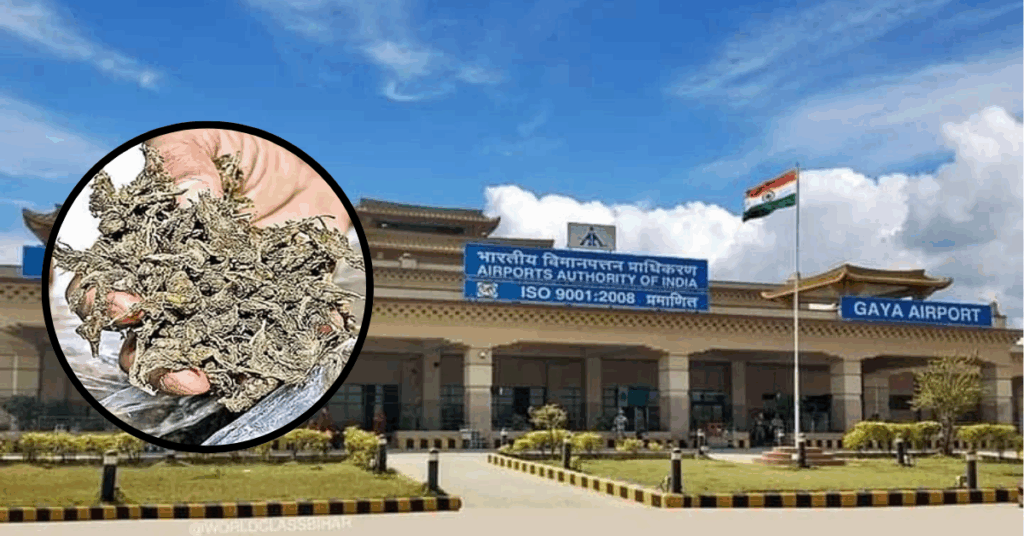
According to enforcement officials, the smuggling network brings the contraband from Thailand by air and routes it through Gaya International Airport in Bihar. From there, the consignments are transported to major cities by train or through other routes to avoid detection.
Investigators say traffickers prefer smaller airports such as Gayaji because security screening is perceived to be less stringent compared to major international hubs like Delhi or Mumbai.
Recent enforcement actions based on intelligence inputs from the Directorate of Revenue Intelligence have confirmed the use of this route. In the past three months alone, customs officials at Gaya airport have seized around 35 kilograms of hydroponic weed in two separate operations.
The seized contraband is estimated to be worth more than Rs 35 crore in the illegal market. Once smuggled into India, the price of this premium cannabis ranges between Rs 80 lakh and Rs 1.2 crore per kilogram, depending on quality.
Smugglers Use Multiple Couriers
Investigators say international trafficking syndicates often employ multiple couriers to transport small quantities of the drug in a single flight to reduce risk.
In one case on January 26, five passengers arriving from Thailand on an AirAsia flight were intercepted by customs officials at Gaya airport following intelligence inputs. The passengers — three men and two women — were travelling on separate tickets.
During the search, officials recovered a total of 25 kilograms of hydroponic cannabis, with each passenger carrying about five kilograms. The drug had been concealed in small packets hidden inside toys to evade detection.
The arrested individuals were identified as Ashwini Kumar Dwivedi, Gaurav Vidhuri and Gulshan Meena from Uttar Pradesh, and Manpreet Kaur and Dilpreet Kaur from Punjab.
Investigators later found that all five were linked to the same trafficking network. Ashwini Kumar Dwivedi is suspected to be the key handler in the group, with possible connections to an international smuggling syndicate. The accused are currently in judicial custody.
Abandoned Consignment at Airport
In another incident on March 4, customs officials received intelligence that traffickers were arriving from Thailand carrying cannabis. When the suspects noticed heightened security checks at the airport, they reportedly abandoned the consignment and fled.
Officials later recovered about 10 kilograms of hydroponic cannabis from an unattended package at the airport. The seized drug was estimated to be worth around Rs 10 crore.
Sources said two individuals, including a woman, had brought the contraband into the country. Investigations are underway to identify the suspects.
Small Consignments to Avoid Severe Punishment
Law enforcement officials say traffickers deliberately divide consignments into smaller quantities to reduce the severity of punishment if caught.
Under India’s Narcotic Drugs and Psychotropic Substances (NDPS) Act, possession of 20 kilograms or more of cannabis can attract a prison sentence ranging from 10 years to life imprisonment.
Legal experts say that by carrying smaller quantities individually, couriers often face comparatively lighter charges and may obtain bail more quickly if arrested.
High Demand in Metro Cities
Investigators say the hydroponic cannabis smuggled through Bihar is rarely consumed locally. Instead, it is transported to major metropolitan cities such as Mumbai, Delhi, Goa, Bengaluru, Chennai and Pune, where demand is significantly higher.
The drug is popular among high-end users and is frequently associated with club culture and rave parties.
According to sources familiar with drug trafficking networks, hydroponic cannabis from Thailand contains significantly higher levels of psychoactive compounds than locally grown varieties. While traditional Indian cannabis typically contains around three to four percent of the active compound THC, hydroponic variants can contain concentrations as high as 30 percent.
Because of its potency and rarity, it is often marketed as a premium product and has become something of a status symbol among affluent users.
Train Routes Used for Distribution
Once the drug reaches Bihar, traffickers rely on rail routes to transport it to other cities. From Gayaji, only a few trains run directly to Mumbai each week, while dozens of trains connect the region to Delhi and other major destinations.
Investigators say traffickers frequently change routes, trains and couriers to avoid detection during transportation.
Trafficking Surge After 2022
Officials believe the international trafficking of Thai cannabis increased after Thailand decriminalised cannabis in 2022, making the drug more easily available there.
Traffickers have exploited the situation to smuggle high-quality cannabis into India, where it can be sold at significantly higher prices.
Enforcement agencies have reported similar seizures in other cities, including Lucknow and Jaipur, where consignments of Thai cannabis brought by international travellers have been intercepted.
Authorities say investigations into the smuggling network are ongoing, with agencies working to identify the larger international syndicates involved in the trade.