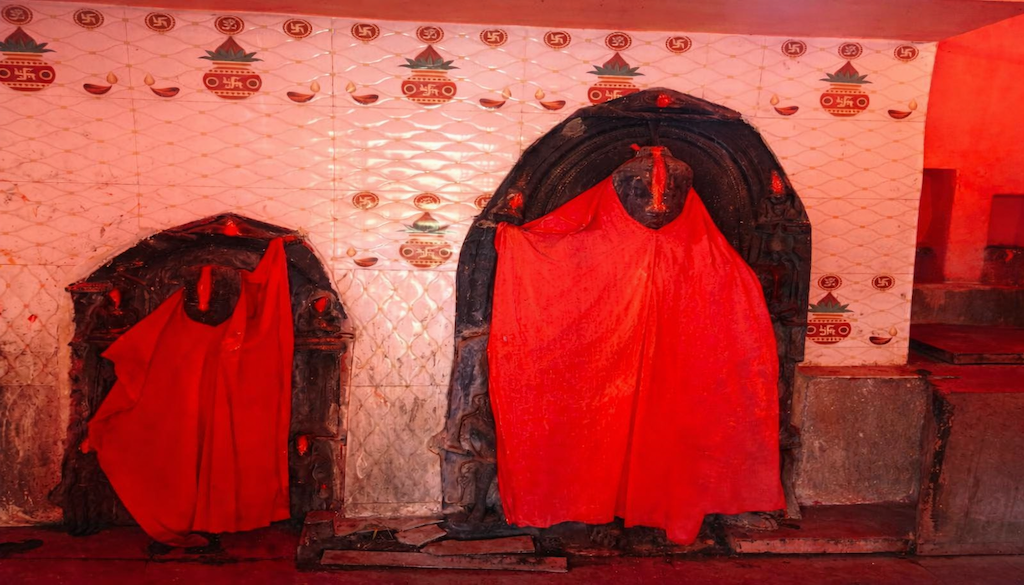
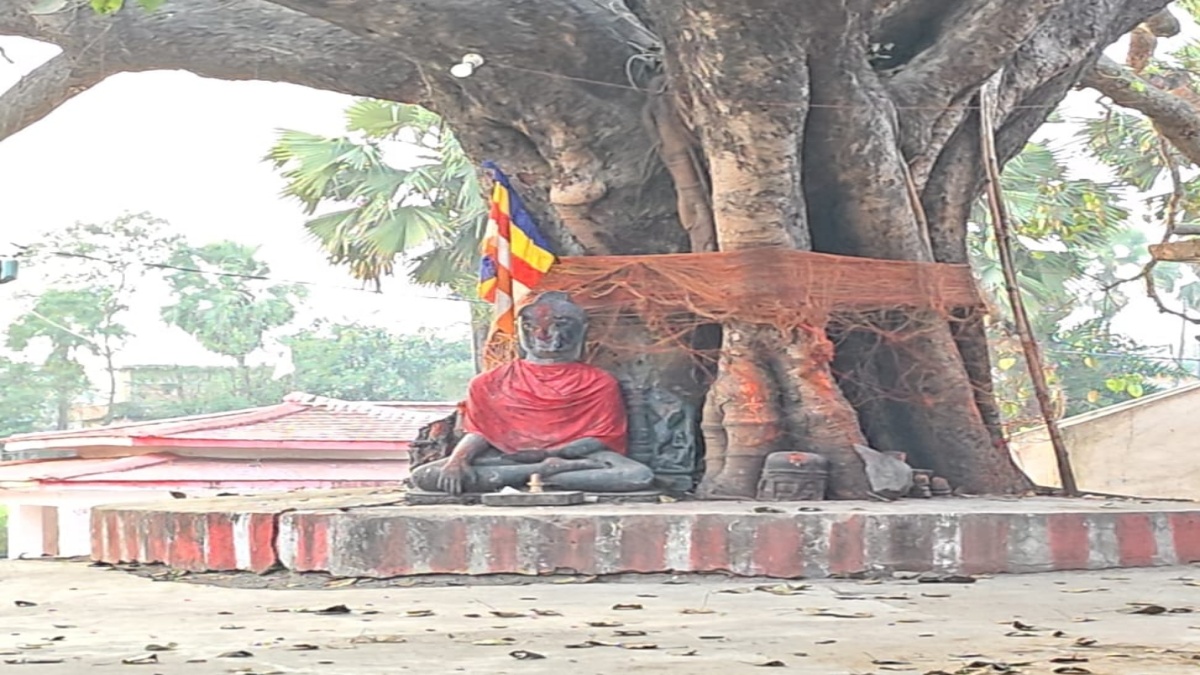
Gayaji: About 35 to 40 kilometres from Gayaji district headquarters, in the adjoining villages of Bhurha and Dubba, two statues of the Buddha sit inside a Devi temple. They are cast in ashtadhatu — an alloy of eight metals — and, for centuries, have been worshipped not as the Enlightened One, but as a goddess.

Women apply vermillion to the idols, whisper prayers and tie threads of hope, believing wishes made here are fulfilled. Seven other goddess idols share the shrine. In some nearby settlements, similar images are venerated as Gauraiya Baba or Goreya Baba. In Bhurha-Dubba, religious boundaries blur quietly, sustained not by doctrine but by devotion.
Local belief holds that after attaining enlightenment, Prince Siddhartha travelled towards Sarnath and rested his first night in the Bhurha-Dubba area. Villagers say there is ample evidence of the site’s Buddhist past, though it has received little formal recognition or development. Over time, relics associated with that heritage have thinned out.

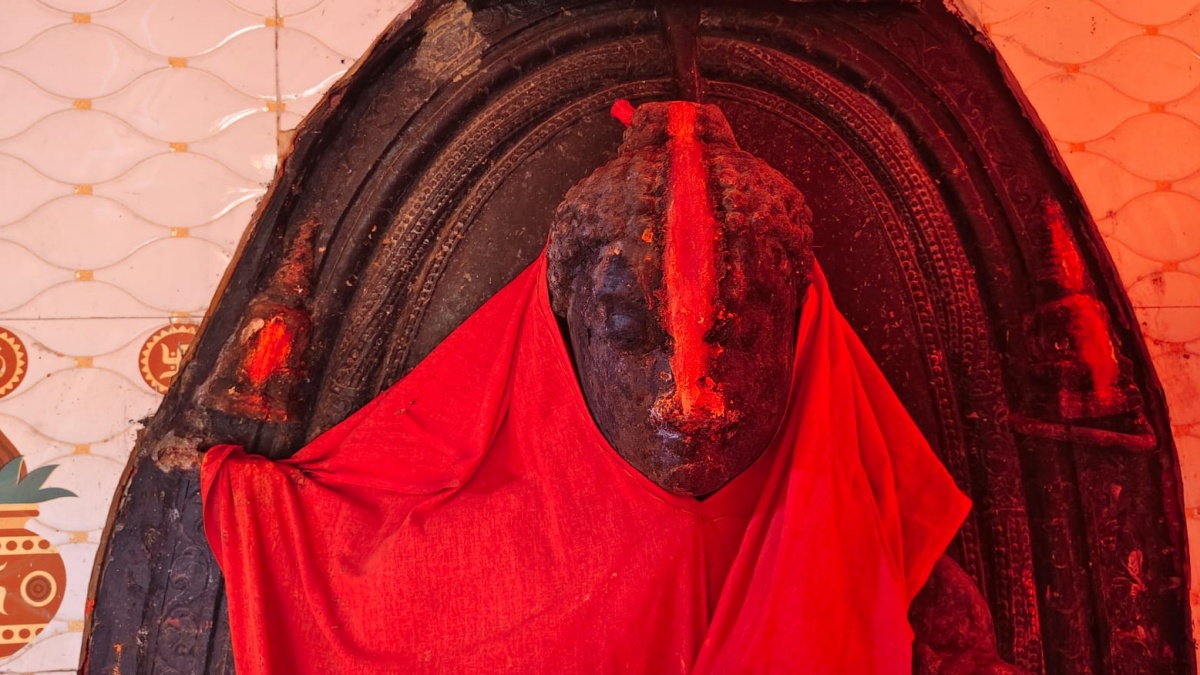
Residents recall that smaller statues once lay outside homes and in open spaces. Gradually, many were stolen; smaller stupas too disappeared. There was, they say, even an attempt to steal the larger Buddha idols from the temple. After that, villagers fixed the statues together with iron rods to prevent their removal.
Today, the two principal Buddha statues remain enshrined in the Devi temple in Bhurha. Around them survives a layered history that scholars say deserves closer attention.
A local argues that the worship of the Buddha as a goddess stems from ignorance of the site’s historical significance. “This was once the fort of the Kol king. There are statues beneath the fort in abundance. If the archaeological department undertakes proper excavation, many important facts could come to light,” he said.
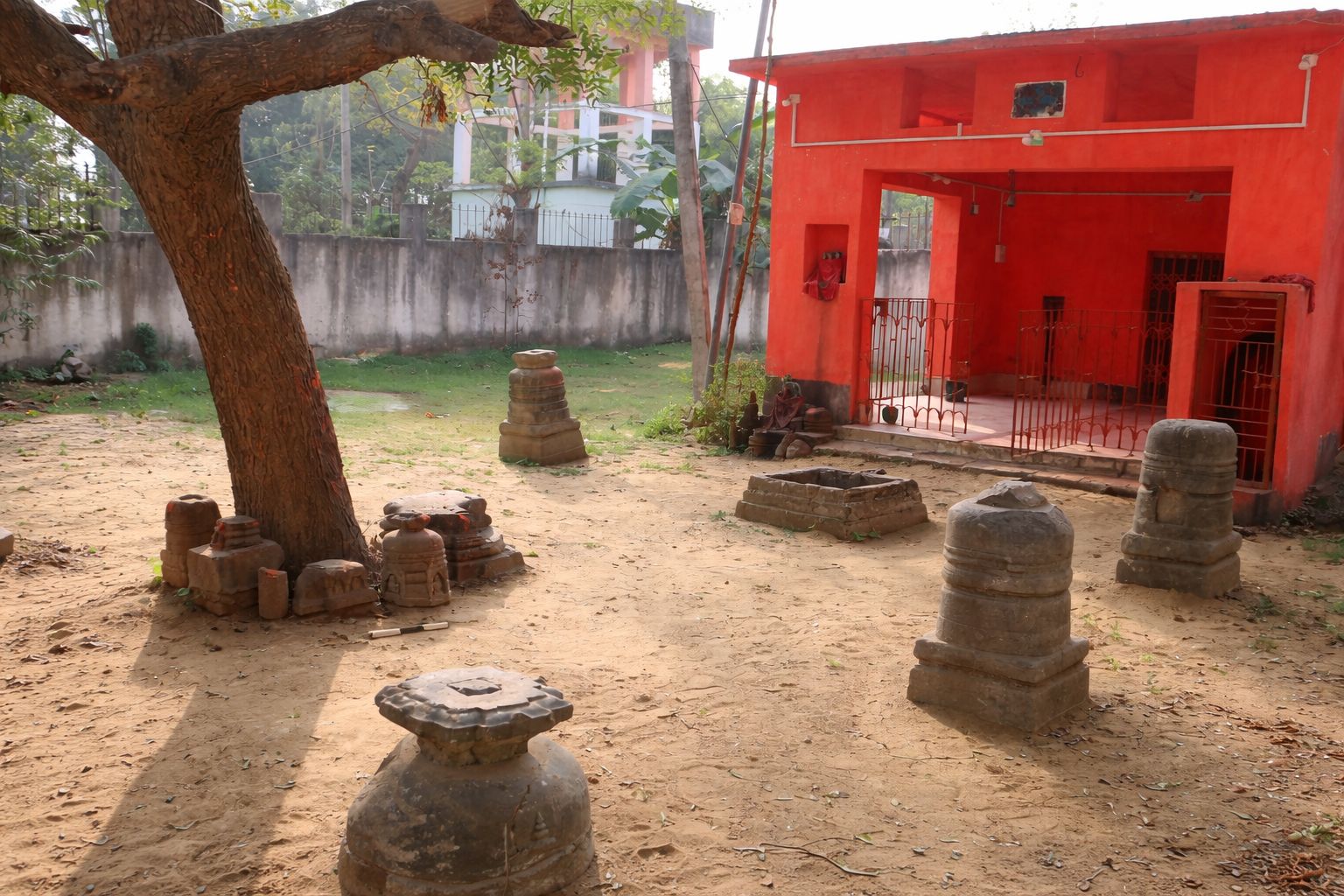
Bihar chief minister, Nitish Kumar, has visited the area and directed its preservation, villagers say. But they argue that no concrete steps have followed. The old fort at Bhurha-Dubba, once central to the settlement’s identity, is gradually deteriorating.
A priest of the Devi temple, sees continuity rather than contradiction. For generations, he says, the statue of the Buddha has been worshipped as the Mother Goddess. The practice, in his view, is an inherited tradition rather than a theological statement.
Archaeological experts have surveyed the area in recent years and identified several important Buddhist relics. “If Bhurha-Dubba is studied archaeologically, many mysteries may be revealed,” an expert said, noting that nearby Guneri — about 5km away — also preserves remnants of ancient Buddhist remains documented since the British period.
For now, however, Bhurha-Dubba remains a place where layered histories coexist without resolution. Beneath the vermillion and incense lies the possibility of a rediscovered Buddhist centre; above it, the rhythms of village faith carry on, untroubled by categories.