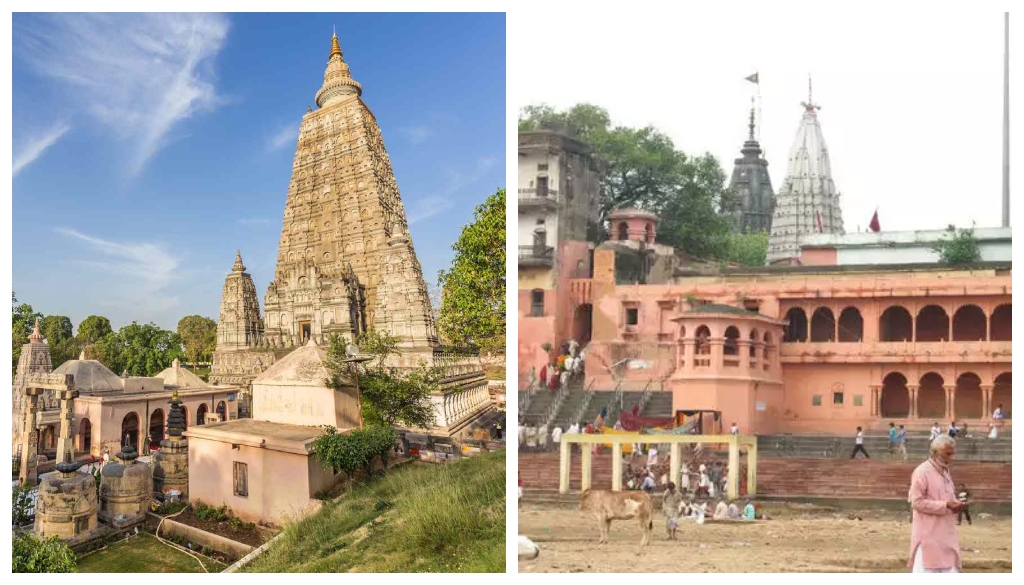
Gaya: A series of major infrastructure projects aimed at improving connectivity between Gaya and Bodhgaya and enhancing facilities for international tourists are progressing steadily, with officials describing the latest updates as “highly encouraging”.

At the centre of the development push is the proposed Mahabodhi Corridor, a Rs 190 crore project designed to create a dedicated spiritual pathway between Gaya Airport and the Mahabodhi Temple.
The final blueprint for the corridor was completed in January 2026. The project includes road widening, a 1.5-metre cycle track, modern vending zones such as the proposed Birla Market, and riverfront development along the Niranjana (Falgu) river.

Plans for the riverfront include the renovation of ghats and the construction of dedicated roads for heavy vehicles on both sides of the river, aimed at reducing congestion on the main Gaya–Bodhgaya route.
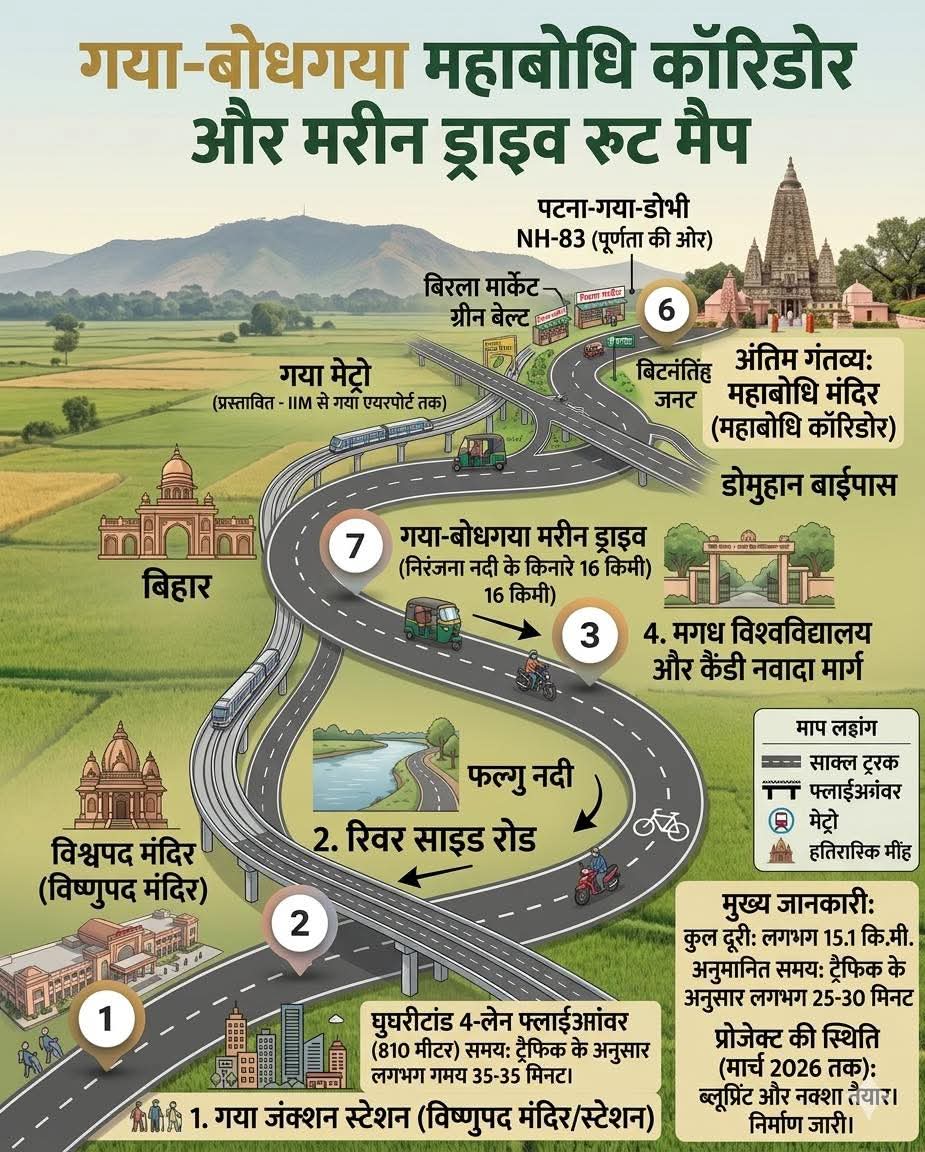
In parallel, authorities have drafted a blueprint for a 16km “Marine Drive” along the Falgu river, modelled on Patna’s JP Ganga Path. The proposed road is expected to provide an alternative route connecting Bodhgaya with other parts of Gaya, easing traffic pressure on the existing New Road.
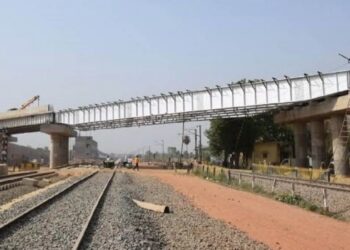
Two flyover projects are also underway to streamline urban traffic flow. An 810-metre four-lane flyover at Ghughritand is expected to improve connectivity between the Vishnupad area and Bodhgaya, while a 2.65km two-lane flyover at Mufassil Mor will provide a direct route for traffic heading towards Rajgir and Bodhgaya.
In addition, plans for a metro system linking Gaya and Bodhgaya are under consideration. The proposed first corridor will run from IIM Bodh Gaya through Domuhan, Gaya Airport and Sikariya Mor into the city centre, with route surveys already completed.
Connectivity has also improved through the Patna–Gaya–Dobhi stretch of National Highway 83, which is nearing completion in most sections. The upgraded four-lane highway offers a smoother and more direct route for tourists travelling from Patna to Bodhgaya via Domuhan.
Officials said the combined impact of these projects will go beyond easing congestion, aiming to transform the journey between Gaya and Bodhgaya into a more structured and visitor-friendly experience by the end of 2026.
Planned features such as improved lighting, green belts and designated no-traffic zones are expected to enhance both mobility and the overall experience for pilgrims and tourists visiting one of India’s most significant spiritual destinations.