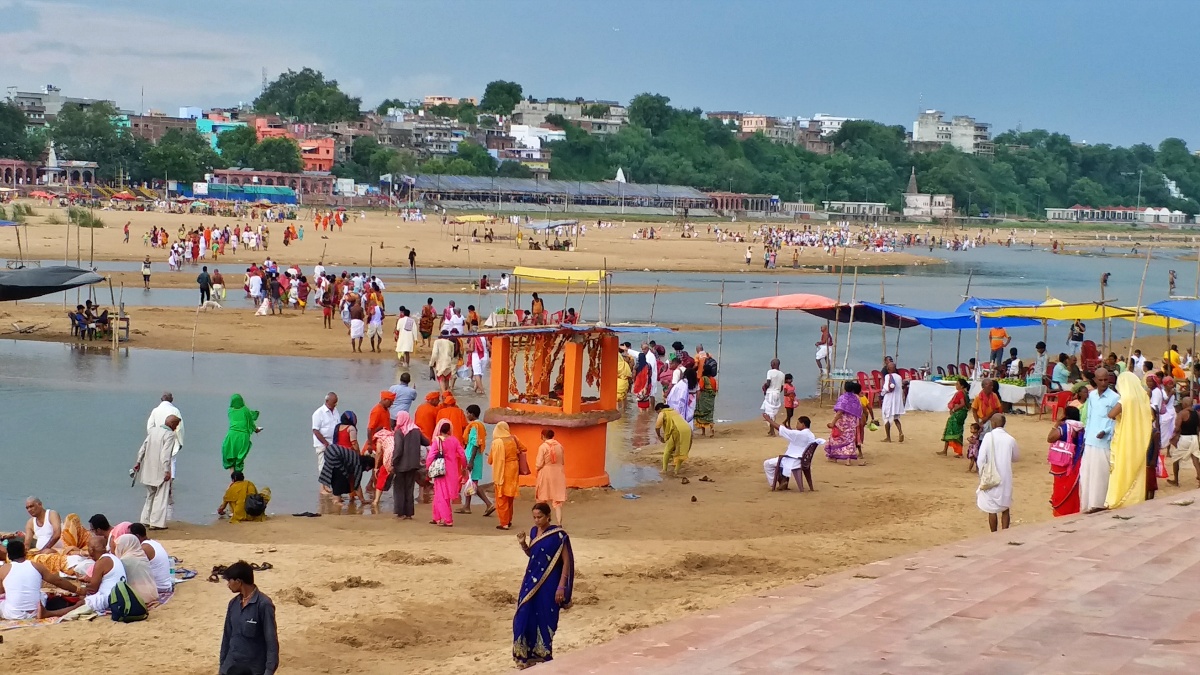
Gaya: The world-famous Pitru Paksha Mela began on September 25, bringing pilgrims to Gaya for rituals dedicated to their ancestors. On Saturday, September 26, the second day of the mela, the traditional Gaya Shraddh begins with rituals on the banks of the sacred Falgu River.

The first day of the mela is traditionally associated with Pind Daan and Tarpan at Punpun. The following day marks the beginning of the Gaya Shraddh rituals at the Falgu River, where pilgrims gather to perform ancestral rites.
For devotees, these rituals are not merely ceremonial. They represent an opportunity to honour departed ancestors and seek their spiritual liberation.

Why The Falgu River Matters
According to the Puranas and scriptures, performing Pind Daan at Falgu Tirtha on the full moon day of Bhadra Shukla is believed to bring salvation to seven generations of a lineage.
The Falgu River occupies a central place in the Gaya Shraddh tradition. It is regarded as being equal in sanctity to the Ganga, and the riverbank is prescribed as an important site for performing Pind Daan during the ancestral rituals.
The offerings made here have a distinctive form: Pinds prepared from Kheer, or sweet rice pudding.
Devotees believe that offering Kheer Pinds on the banks of the Falgu brings liberation to their ancestors and helps them attain Moksha.
From Holy Dip To Kheer Pind Daan
The ritual begins with pilgrims seeking permission from the Gayapal Pandas, the traditional priests associated with Gaya’s ancestral rites.
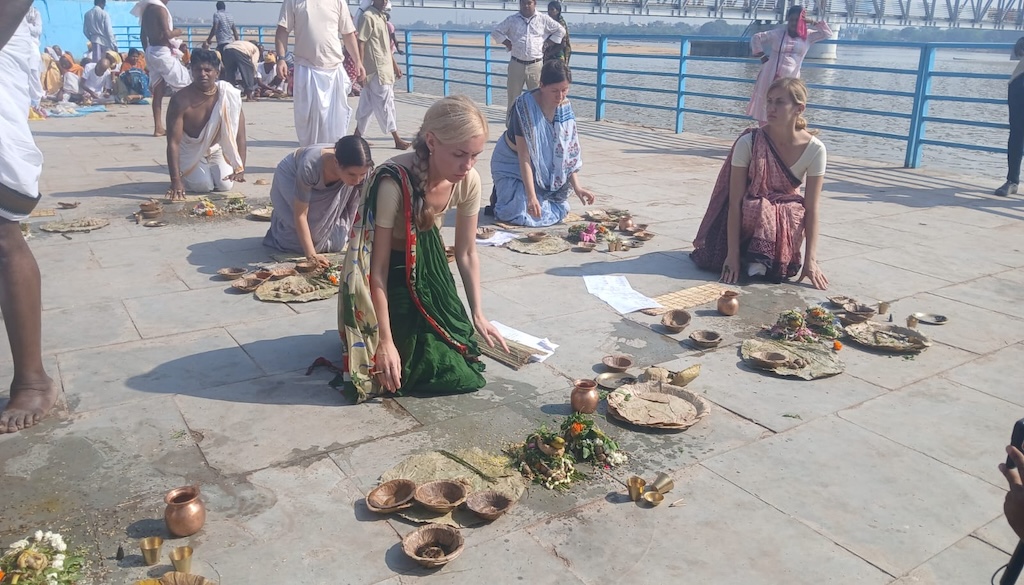
Pilgrims then take a holy dip in the Falgu River before preparing the Kheer Pinds on its banks. These offerings are used for Pind Daan, Shraddh and Tarpan.
The spiritual significance attached to the river is deeply rooted in the traditions surrounding Gaya. According to scriptural beliefs cited by local priests, the Falgu is associated with Lord Vishnu and is regarded as carrying the sanctity of his presence.
Pilgrims Arrive In Large Numbers
With the Pitru Paksha Mela underway, pilgrims have begun arriving in Gaya in large numbers from different parts of India and abroad.
The duration of the rituals varies according to individual traditions. Some pilgrims complete Pind Daan in a single day, while those observing the Traipakshik Shraddh remain in Gaya for 17 days to complete the prescribed rites.
The gathering transforms Gaya into a major centre of pilgrimage during Pitru Paksha, with devotees visiting different sacred sites associated with ancestral rituals.
‘The Falgu Is Considered Equal To The Ganga’
A Gayapal Panda explained the significance of the rituals:
“The Pitru Paksha Mela has commenced. As part of the fair, the first day of the Gaya Shraddh involves a ritual bath in the Phalguna River. Subsequently, the Pind Daan Shraddh is performed on the riverbanks using pinds made of kheer. The Phalguna pilgrimage site holds immense significance; the river is considered equal to the Ganga. Performing Pind Daan and Tarpan rituals in the Phalguna using kheer offerings leads to the salvation of all the ancestors’ lineages and the attainment of Moksha.”
For thousands of pilgrims arriving in Gaya during Pitru Paksha, the Falgu River thus becomes the setting for one of the most important stages of their ancestral pilgrimage — a ritual shaped by faith, tradition and the enduring belief in honouring those who came before.