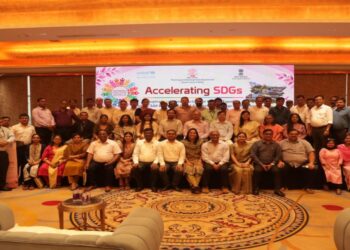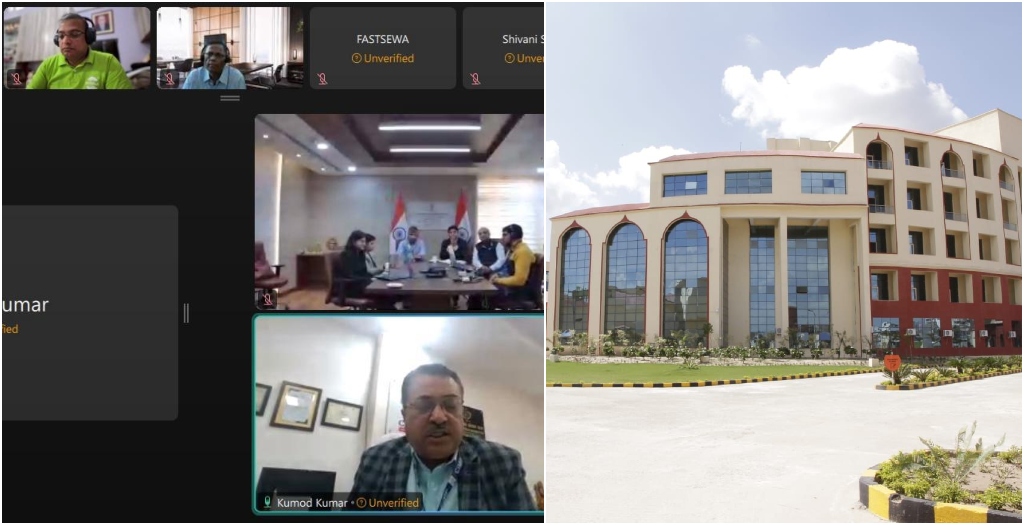
Patna: A national online roundtable titled GI Manthan: Strengthening the Makhana Sector was held today to discuss the future of Mithila Makhana and explore ways to strengthen its market value and global identity. The event was organised by the Office of the Controller General of Patents, Designs and Trade Marks (CGPDTM), Government of India, in collaboration with Pragya Sansthan, the Centre of Law and Critical Emerging Technologies at ASIA, Chandragupt Institute of Management Patna (CIMP), TiE Patna, Startup Bihar, and the Department of Industries, Government of Bihar.

The discussion brought together institutional leaders, industry experts, entrepreneurs and researchers who examined the current situation of the Mithila Makhana ecosystem. The roundtable was held shortly after the Government of India announced the formation of the National Makhana Board, which is expected to play a key role in supporting producers, improving quality standards and strengthening the Makhana value chain. Speakers said that this is the right time for policy makers and industry players to work together to ensure steady growth for the sector.
Participants discussed how Mithila Makhana — which already holds Geographical Indication (GI) status — can receive greater international recognition. They pointed out that global demand for healthy snacks and superfoods is increasing and that Makhana has the potential to become a major export commodity. However, they also stressed that achieving this goal will require strong quality control, transparent production processes and a unified brand identity so that the original GI product is not misused in global markets.

The session also highlighted the need for improved coordination among farmers, processors, traders, researchers and government departments. Speakers said that encouraging innovation, creating better marketing channels, supporting startups and improving storage and processing facilities could help increase the earnings of farmers and businesses involved in the sector. The roundtable concluded with a shared commitment to work together to build a more organised, standardised and globally competitive Makhana ecosystem.