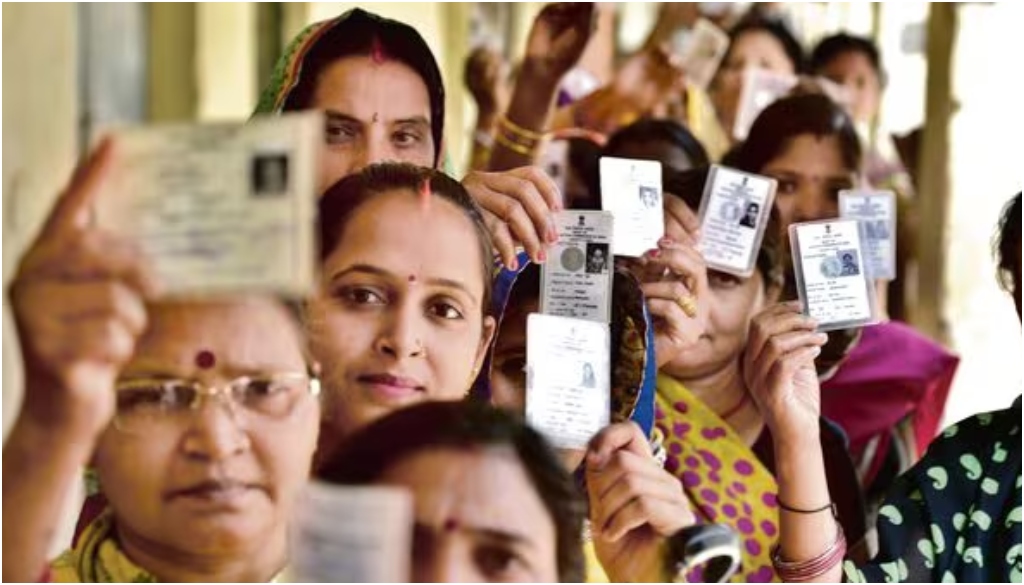
Patna: As Bihar heads toward assembly elections, the issue of the caste census has once again ignited political and social debate across the state. From Saran to Vaishali and Patna, people from different castes—upper, backward, Dalit, and minority communities—are voicing their opinions on whether counting caste will bring justice or deepen divisions.

The caste-based survey conducted in Bihar in 2023 under Chief Minister Nitish Kumar and Deputy Chief Minister Tejashwi Yadav was the first state-level exercise of its kind since Independence. The report revealed detailed caste data, sparking renewed discussion about representation, reservation, and resource distribution. Following public and political pressure, the Central government announced a nationwide caste census on April 30, 2025, to be conducted in two phases in 2026–27 along with the general census.
But as Bihar prepares for polls, opinions remain sharply divided.

Upper Castes Divided: ‘It Won’t Harm Anyone,’ Say Some; Others Oppose It
Among the upper castes, views on the caste census are not uniform.
Saurabh Dubey, 42, who runs a fast-food shop in Patna and belongs to the Bhumihar community, strongly supports it. “A caste census should be conducted so that everyone knows their numbers. It won’t harm anyone,” he says.
Echoing a similar sentiment, Deepak Jha, a daily wage worker from the Brahmin community in Vaishali, says, “Whoever has a share will get a share according to their population. Those opposing it have their own reasons. It doesn’t harm anyone.”
However, Chandan Singh, a 29-year-old Rajput from Saran, disagrees. He believes the exercise is a waste of public money. “Use the ₹500–600 crore to build houses for the poor instead. Reservation should be based on economic condition, not caste,” he says, adding that “reservation has crippled merit.”
Dalits and Mahadalits: ‘Reservation Has Become a Joke; We Want Jobs’
Among the Dalit and Mahadalit communities, the mood is one of frustration and demand for accountability.
Hrithik, a student at Patna University, says, “Reservation has become a joke because there are no government jobs left. When institutions vanish, how will reservation help?”
Dilip Kumar Das, 45, from the Ravidas (Mahadalit) community in Saran, sees the caste census as crucial for development. “It will help create plans for every community. That’s how Bihar will develop,” he says. But he also argues that powerful Dalit leaders who have benefited—like Chirag Paswan and Jitan Ram Manjhi—should step aside for poorer sections within the same category.
OBCs and EBCs: ‘We Have Numbers, But Not Power’
In Bihar, Other Backward Classes (OBCs) and Extremely Backward Classes (EBCs) form a large chunk of the population, and many believe the caste census could strengthen their political voice.
Bhola Prasad Yadav, a 60-year-old farmer from Saran, says, “Those opposing it are the ones already ahead in everything. The caste census is important, but unemployment, migration, and inflation are bigger issues right now.”
From the EBC Teli community, Gautam Kumar, a Patna University student, feels left out despite Prime Minister Modi sharing his caste identity. “PM Modi is from our caste, but we got no benefits. The caste census should help ensure fair representation,” he says.
Suraj Kumar, another OBC student, calls it “a way to improve reservation” but adds that economic inequality should also be considered. Meanwhile, Shiv Kumar, 20, warns that the census could be used politically: “It’s necessary to plan welfare schemes, but parties may use it to divide votes on caste lines.”
From Madhubani, Vijendra Mahato of the Mallah (EBC) community agrees. “The caste census will show who’s unemployed and help fix that. Leaders talk about it during elections but forget later,” he says.
Kurmi-Koeri Views: Support for Census, Anger Against Nitish
In the Kurmi community, to which Chief Minister Nitish Kumar belongs, opinions are mixed.
Ranjan Kumar, a 29-year-old PWD contractor from Saran, supports the caste census but says voters want change. “The system of reservation must be based on population, but people are tired of the same government. We want Tejashwi Yadav or the BJP this time.”
From the Koeri community, Gunjan Kumar, a ration shop owner, asays OBCs have been shortchanged. “We are the largest in number but least represented in jobs. The lower castes get more benefit, and upper castes still dominate.” However, he considers unemployment and poor education bigger election issues than the caste census.
Muslim Voices: ‘Census Becomes an Issue Only During Elections’
Among Muslims, too, there are mixed opinions.
Taslima Arshad, a 25-year-old student at Patna University, calls the caste census “a tool for votes.” She says, “It’s important to know numbers for social justice, but politicians use it to attract votes during elections.”
Auto driver Mohammad Sultan, 35, from Sonpur, believes the census should be an issue for all castes. “Right now, Hindu-Muslim politics dominates everything. But reservation should be given according to population. My children deserve the same opportunity as others.”
Experts Say Parties Compete for Credit
Political analyst Priyadarshi Ranjan explains that all major parties in Bihar now support the caste census—turning it from a divisive issue into a race for credit.
“All parties demanded it. Nitish and Tejashwi conducted the survey, but the BJP has also announced a national caste census. This makes it politically neutral,” he says.
Where Parties Stand
JDU: State spokesperson Anjum Ara says Nitish Kumar’s government has always followed the principle of “development for all with justice.” “He conducted the caste survey in Bihar, and now it will be done nationwide,” she adds.
BJP: Party spokesperson Prabhat Malwar says the BJP has always supported reservation. “We gave constitutional status to the National and State Extremely Backward Commissions. Our candidate list reflects caste balance,” he says.
RJD: RJD spokesperson Ejaz Ahmed says his party has been at the forefront of this movement. “If Tejashwi Yadav’s government is formed, we will increase reservation to 75%, and with EWS quota, total reservation will reach 85%. We will also push to include it in the Ninth Schedule,” he declares.
The Road Ahead
From Patna’s tea stalls to Saran’s fields, one message is clear — caste still shapes Bihar’s politics. For many, it represents justice and representation; for others, it’s a divisive tool exploited during elections.
As Bihar votes, the caste census could influence alliances and voter sentiment—but whether it becomes a decisive election issue or just another campaign slogan will be decided at the ballot box.