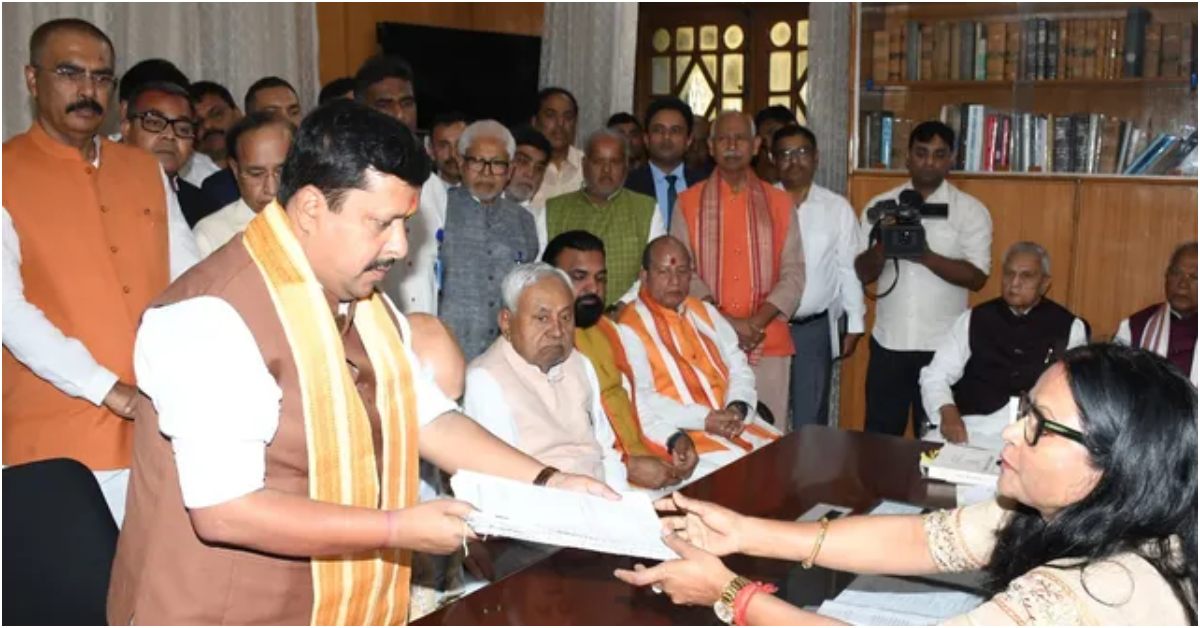
Patna: Thursday marked an unusual moment in the political history of Bihar as the national presidents of three different parties filed their nomination papers simultaneously for the Rajya Sabha elections — a development that underscored the shifting dynamics of the state’s politics.

The nominations were submitted in Patna in the presence of Union Home and Cooperation Minister Amit Shah, adding political weight to the event. It is the first time such a synchronized filing by three party chiefs has occurred in Bihar, marking what observers described as a record in the state’s electoral history.
National Party Leaders in the Fray

Those who filed nominations include the national presidents of the ruling and allied parties: Nitish Kumar, head of the Janata Dal (United) and Bihar’s chief minister; Nitin Nabin, the national president of the Bharatiya Janata Party; and Upendra Kushwaha, president of the Rashtriya Lok Morcha.
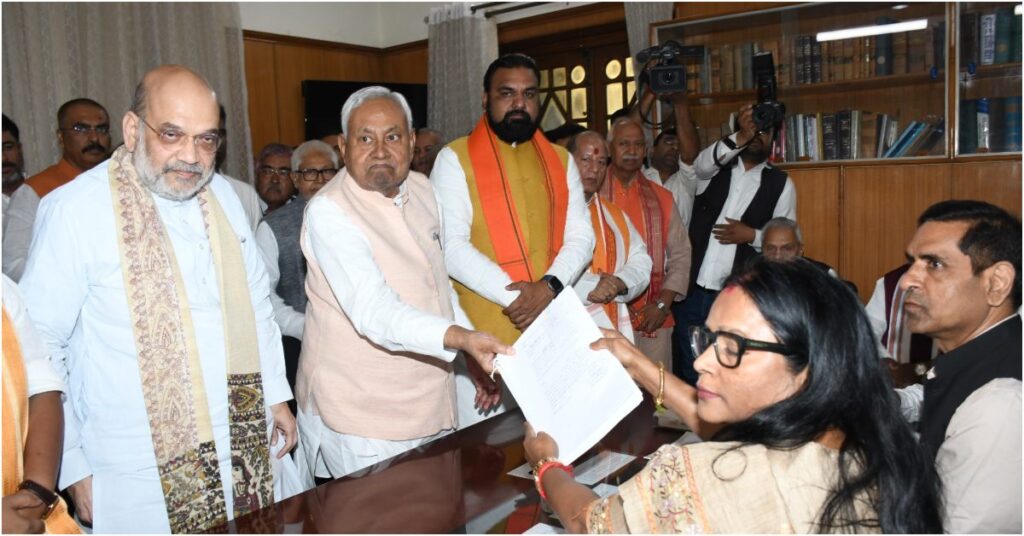
All three leaders arrived at the assembly premises and completed the nomination process. Supporters and party workers gathered in large numbers, creating an atmosphere the alliance described as evidence of internal coordination and political strength.
Political Significance
Analysts noted that the simultaneous candidatures of three national party presidents for the Rajya Sabha seats carry symbolic and strategic implications. The move is likely to be interpreted as an attempt to demonstrate unity within the ruling coalition and to shape political narratives beyond Bihar.
Political commentators suggested that the event could influence discussions at the national level, particularly regarding alliance strategies and electoral positioning ahead of future contests.
Election Timetable
The scrutiny of nomination papers will take place on March 6, while the deadline for withdrawal of candidatures is March 9. If a vote is required, polling will be held on March 16 between 9am and 4pm, with counting scheduled to begin at 5pm the same day.
The developments come at a time of heightened political activity in Bihar, where alliances and electoral calculations continue to reshape the state’s political landscape.