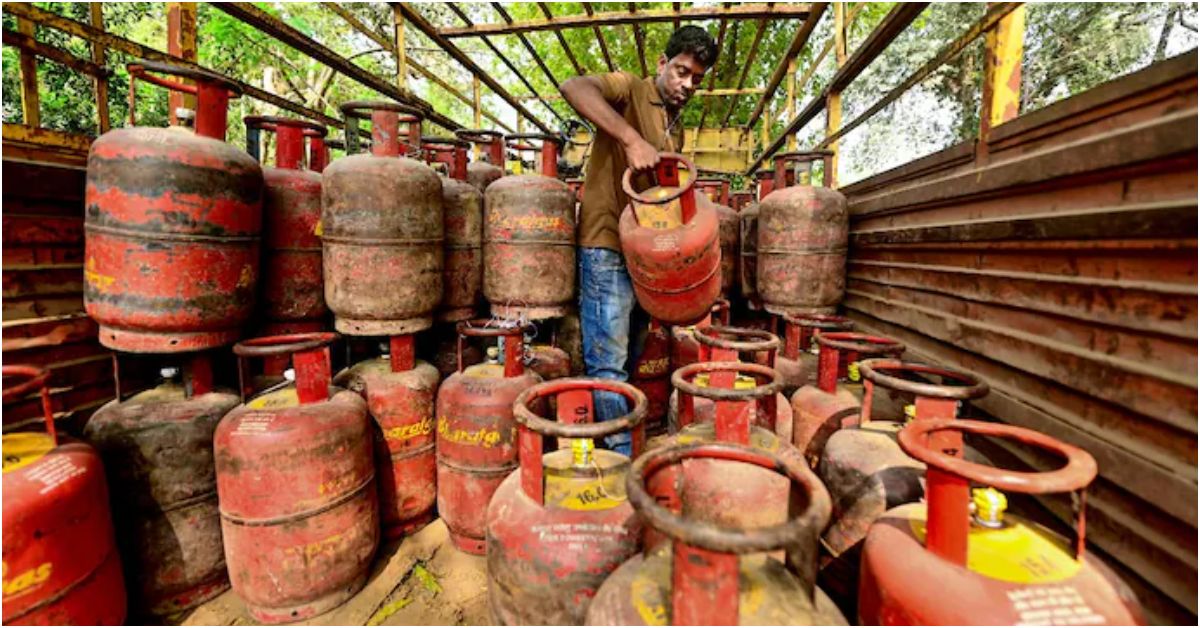
Patna: Households across India could see changes in both liquefied petroleum gas (LPG) prices and booking systems from May 1, as oil marketing companies review rates and consider adjustments to delivery protocols amid volatile global energy conditions.

According to market-linked pricing mechanisms, LPG cylinder rates are revised at the start of each month based on average international crude oil movements and currency exchange fluctuations. Industry sources indicate that both domestic and commercial cylinder prices are under review ahead of the May revision.
The expected update comes after a period of steady upward movement in commercial LPG rates in major cities during April, when 19-kg cylinders saw increases ranging between Rs 196 and Rs 218. Domestic 14.2-kg cylinders have also experienced incremental increases in recent months, including an estimated rise of around Rs 60.

Officials familiar with the pricing review process say final rates will be announced by oil marketing companies — Indian Oil Corporation, Bharat Petroleum Corporation Limited and Hindustan Petroleum Corporation Limited — on May 1, in line with routine monthly revisions.
Alongside price changes, the government and fuel distributors are also evaluating potential adjustments to LPG booking and delivery systems, although no formal policy notification has yet been issued.
One proposal under consideration is making OTP-based verification for LPG delivery a permanent feature nationwide. The system, introduced to curb delivery fraud and improve tracking, is already used in a majority of transactions. Industry data suggests nearly 98% of LPG bookings are now made online, while OTP authentication is used in roughly 94% of deliveries.
Another area under review is the “cooling period” between successive cylinder bookings, currently set at 25 days in urban areas and 45 days in rural regions. Any change to this interval would directly affect household refill cycles, though officials have not confirmed whether revisions will be implemented in May.
The government has maintained that domestic LPG, piped natural gas (PNG) and compressed natural gas (CNG) supplies remain fully stable despite global supply pressures, including ongoing geopolitical tensions in energy-producing regions. Priority allocation continues for key sectors such as hospitals, educational institutions, and industries including pharmaceuticals, steel, automotive and agriculture.
At the same time, supply of smaller 5-kg free trade LPG cylinders for migrant workers has reportedly been expanded in several regions to improve accessibility for low-consumption users.
Policy direction also continues to favour a gradual shift towards PNG in urban areas. Commercial establishments in major cities are being encouraged to transition to pipeline gas connections, with restrictions in place preventing dual expansion of new LPG and PNG connections for the same premises. In certain cases, LPG connections may be deactivated if compliance requirements, including documentation and verification, are not completed within prescribed timelines.
Aadhaar-linked eKYC remains mandatory for beneficiaries under the Pradhan Mantri Ujjwala Yojana, as part of broader efforts to streamline subsidy targeting and reduce duplication.
While no official confirmation has been issued regarding sweeping regulatory changes, industry officials suggest that any announcement in May is likely to focus on incremental adjustments rather than a structural overhaul of the LPG distribution system.
For now, consumers are expected to watch closely for the May 1 price notification, which will determine whether household fuel costs rise further after a period of gradual increases.