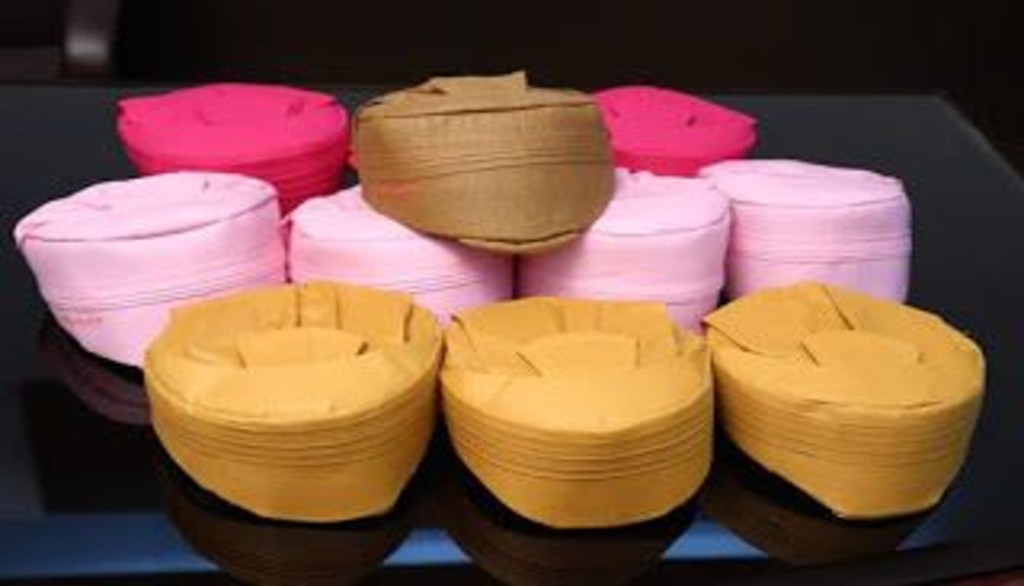
Patna: In the heart of Bihar’s Mithila, the traditional Paag stands tall as a timeless emblem of honour, tradition, and cultural identity. For centuries, the Paag—a regal headgear—has been an indispensable part of the region’s social and spiritual fabric. Whether welcoming guests, conducting weddings, or honouring dignitaries, no ceremony in Mithila is considered complete without it.

Whenever a President, Prime Minister, or distinguished visitor arrives in the region, they are adorned with the Mithila Paag—a gesture that reflects deep-rooted respect and pride.
But beyond its ceremonial value, the Paag also tells a story of religious harmony. For generations, its makers have been Muslim artisans from villages across Madhubani—Ranti, Chakdah, Pilkhiwar, and Rajnagar—who have inherited this art through their families. Their work stands as a living testament to Mithila’s inclusive spirit, where faith and culture coexist seamlessly.

The craft and care behind the Paag
Creating a Paag is no simple task. It requires patience, precision, and devotion. The process begins with a sturdy mould made of paper and thin plyboard, followed by layers of red or white paper that give the headgear its structure. Artisans then wrap it in bright fabrics—red, yellow, or cream—embellished with Mithila painting motifs and golden borders.
The more ornate Paag, used in weddings and rituals, is often adorned with velvet and zari work, known locally as the Makhmali Paag. Each piece takes nearly three hours of meticulous handwork.
Women behind the scenes
In many artisan households, women play a crucial role in shaping and decorating the Paags. “We’re homemakers and artisans,” says Zubeda Khatun, another craftswoman from Madhubani. “We work together as a family because poverty doesn’t allow rest. Every piece we make keeps our culture—and our homes—alive.”
Struggles and fading recognition
While Bihar’s government promotes handicraft schemes, many Paag artisans say they are yet to receive any formal support. “It’s disheartening,” Mustakim notes. “We keep the culture alive, but we get neither recognition nor fair pay.”
Still, the community remains resilient. During the wedding season, demand for Paags surges, with artisans working late into the night. Despite limited earnings, they see the craft as a sacred responsibility to preserve Mithila’s identity.
A symbol of unity and pride
Cultural scholars, say the Paag has evolved into “a living emblem of Mithila’s pride and unity.” Institutions across the region now celebrate ‘Paag Diwas’, honouring the artisans who keep this tradition alive.