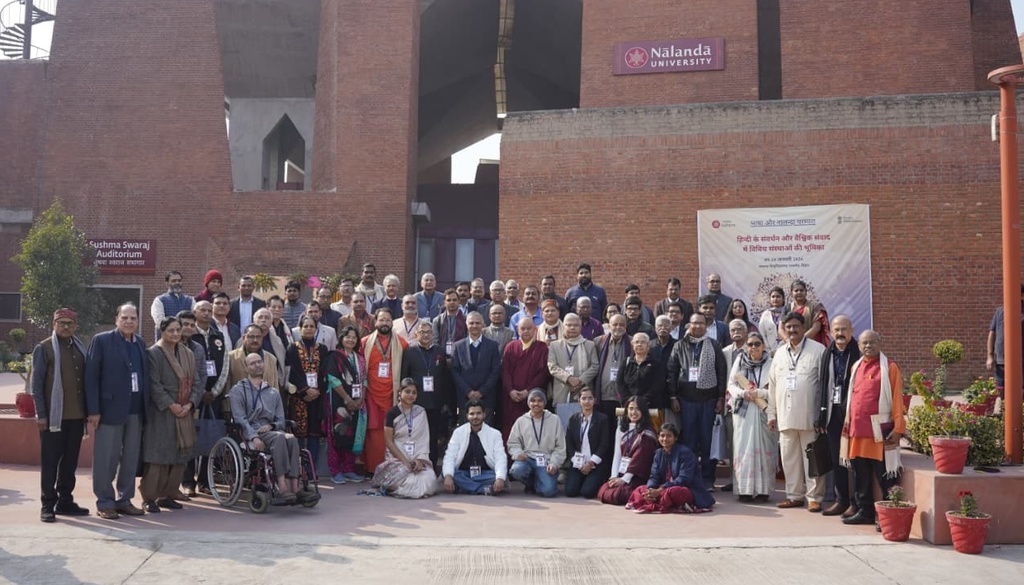
Patna/Nalanda: A national seminar at Nalanda University has concluded with a renewed push to recognise Hindi as an official language of the United Nations, positioning the language not only as a symbol of cultural identity but also as a growing force in global governance and diplomacy.

The two-day conference, titled Promotion of Hindi and Global Dialogue, was held in Rajgir and brought together scholars, linguists and policy experts to debate the institutional, diplomatic and financial steps required to elevate Hindi within the UN system. Organisers described the university as an emerging academic platform for structured discourse on the issue.
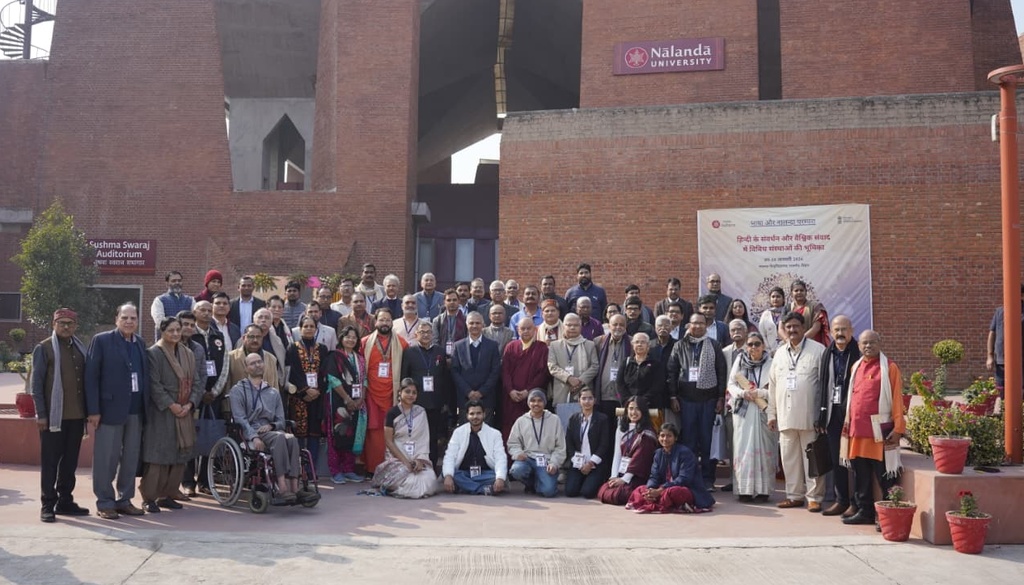

The final day featured intensive deliberations on the role of higher education institutions and Hindi-promoting bodies in expanding the language’s global footprint. Speakers stressed that universities, cultural organisations and policy institutions shared a collective responsibility in advancing Hindi through research, teaching, translation and international collaboration.
The concluding academic session focused on Hindi as an Official Language of the United Nations: A Proposed Roadmap. Professor Vinod Kumar Mishra, former secretary general of the World Hindi Secretariat in Mauritius, presented a detailed framework, while Professor Shiv Kumar Singh of the University of Lisbon argued strongly for Hindi’s inclusion as a UN language.
Speakers pointed to historical precedent, noting that the UN initially adopted five official languages in 1945 and added Arabic in 1973 after sustained diplomatic engagement and financial commitment from member states. That process, they said, offered a model for how Hindi could follow a similar path through multilateral consensus.
The discussions highlighted Hindi’s growing presence across Asia, Africa, the Caribbean and among the Indian diaspora, along with its expanding digital reach and cultural influence. Special attention was given to the Hindi @ UN initiative, which has enabled Hindi content on UN digital platforms, radio broadcasts and news services, creating what participants described as a “de facto” presence within the organisation.
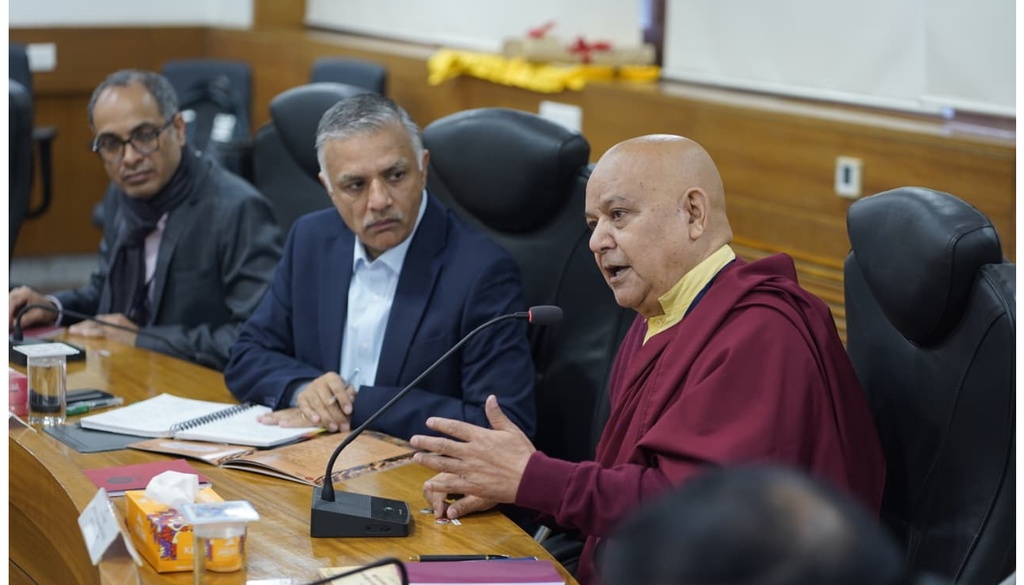
Addressing the gathering, Nalanda University’s vice-chancellor, Professor Sachin Chaturvedi, said the proposal went beyond linguistic pride. “The recognition of Hindi as an official language of the United Nations is not merely a question of linguistic pride. It represents India’s civilisational presence and growing intellectual confidence,” he said, adding that achieving this objective would require sustained institutional preparedness and a long-term strategic approach.
Chaturvedi also linked the proposal to the rising importance of the Global South, arguing that a more inclusive linguistic framework at the UN would better reflect contemporary geopolitical realities.
On the sidelines of the conference, Nalanda University signed a memorandum of understanding with the Central Institute of Higher Tibetan Studies (CIHTS), Sarnath, to strengthen academic collaboration. The agreement, signed by Chaturvedi and CIHTS vice-chancellor Professor W D Negi, aims to promote research exchange and foster dialogue between diverse knowledge traditions.
The conference concluded with a commitment to advance Hindi as a language of global governance, diplomacy, knowledge production and cultural dialogue, drawing inspiration from Nalanda’s historical role as a centre of transnational learning and intellectual exchange.