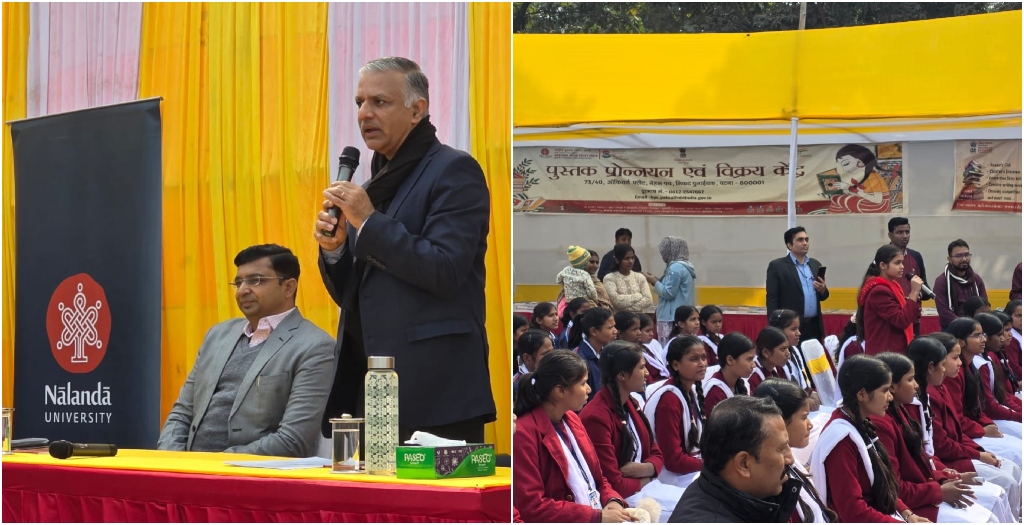
Nalanda: Nalanda University on Thursday opened a book exhibition at its City Campus in Rajgir, creating a lively space for reading, learning and community interaction. The campus holds deep historical importance, as it was the first academic base of the university, provided by the Bihar government. The exhibition was formally inaugurated by the vice-chancellor of Nalanda University, Sachin Chaturvedi, along with the Nalanda district magistrate, Kundan Kumar, who lit the ceremonial lamp. More than 200 students attended the event, along with teachers, schoolchildren, local residents and university staff.

The exhibition has been organised jointly by the Nalanda University Library and the National Book Trust. It is being held in the open lawn of the City Campus and will remain open to the public from 26 to 31 December, between 10am and 5pm. A wide range of books on different subjects is on display, making the event accessible to readers of all ages. Organisers said the aim was to encourage reading habits and make knowledge available beyond classrooms, especially for children and young people from nearby areas.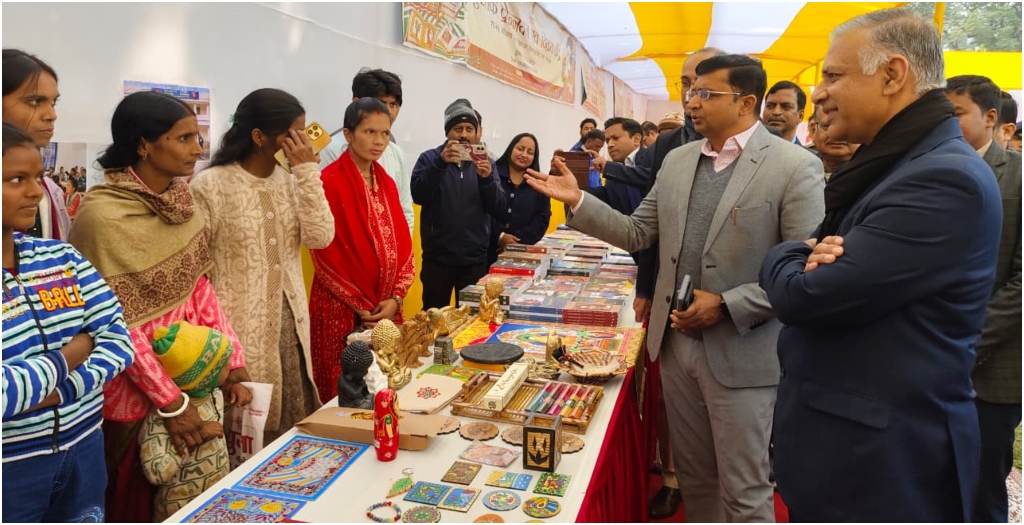
Speaking at the event, Chaturvedi said the exhibition was meant to spark curiosity about India’s rich cultural and intellectual traditions. He explained that the university wants to develop the City Campus as a centre for learning and skill development under its Sahbhagita initiative. He highlighted three main areas of focus: learning programmes for schoolchildren, support for self-help groups involving local women, and IT and skill development centres for students and working youth. He also stressed the importance of learning foreign languages, especially those spoken in southeast Asia, saying this could help local youth benefit from tourism in Rajgir, Gaya and nearby heritage sites.

District magistrate Kundan Kumar praised the initiative and encouraged students to think creatively and innovatively. He spoke about Nalanda’s long knowledge tradition and reminded students that the concept of zero, which forms the base of today’s digital world, originated in India. He said book exhibitions play an important role in widening thinking and building curiosity. Kumar also assured full support from the district administration to work with Nalanda University on skill development programmes for students, self-help groups and local communities.
The exhibition also features several special stalls that attracted strong interest. Nalanda University’s Common Archival Resource Centre is displaying rare documents, including handwritten notes and a diary of India’s first president, Dr Rajendra Prasad. The archaeology department has put up artefacts and fossils showing the history of human and animal life, and visitors can even get their names written in Egyptian hieroglyphs. Schoolchildren are being given Harappan seal–impression bookmarks as souvenirs. Stalls run by local self-help groups showcase handmade products, highlighting the link between education and livelihoods. The opening day ended with colourful cultural dance performances by schoolchildren, reflecting local traditions and adding a festive touch to the academic event.