
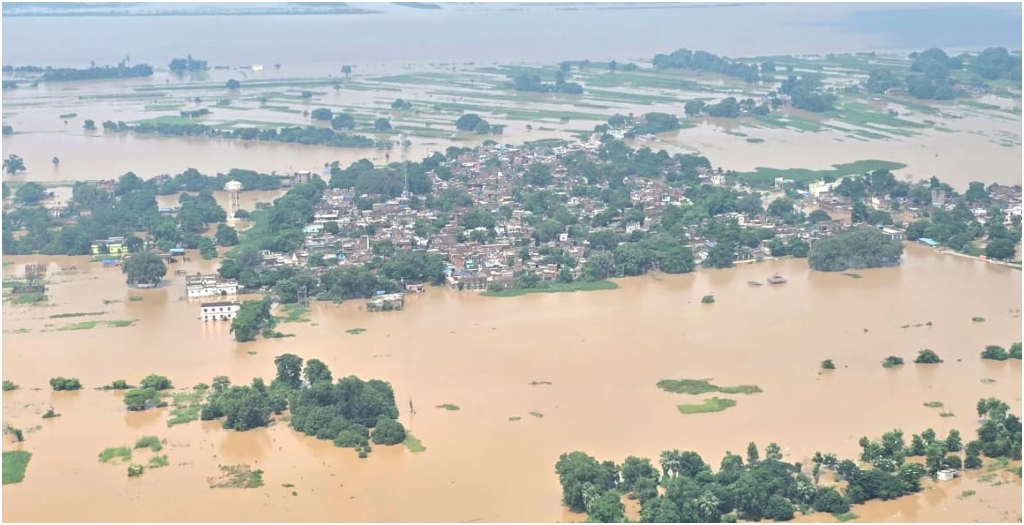
Patna: Continuous heavy rainfall in Nepal has increased inflows into Bihar’s major rivers, prompting the Water Resources Department to place its field machinery on high alert.

The Gandak and Kosi rivers have recorded rising discharge, increasing pressure on barrages and raising concerns for low-lying and riverine areas.
Rising Pressure On Gandak And Kosi

Large volumes of water from Nepal’s catchment areas are flowing into the Gandak and Kosi river systems. Officials have been directed to closely monitor barrages, embankments and vulnerable locations.
The department has ordered round-the-clock vigilance, including night-time patrolling of embankments, sluice gates and low-lying areas.
Gandak Barrage Discharge Rising
At the Gandak Barrage in Valmikinagar, West Champaran, around 1.72 lakh cusecs of water was recorded at 10pm on Friday, according to the Water Resources Department.
Departmental projections indicate that the discharge could rise to around 3.81 lakh cusecs by the night of September 27.
Kosi Barrage Under Watch
The Kosi Barrage is also witnessing a significant rise in discharge. The department has projected discharge of around 3.53 lakh cusecs by the morning of September 26.
Around 2.6 lakh cusecs of water was released from the barrage early on September 26, increasing concerns in low-lying areas.
Embankments Under Close Monitoring
Officials and field personnel have been instructed to ensure adequate manpower, lighting and communication facilities at vulnerable points.
The department has also directed teams to act immediately if they detect seepage, erosion, overtopping or other irregularities along embankments.
Administration Asked To Remain Prepared
District administrations have been asked to remain prepared for possible evacuation from vulnerable areas and to maintain communication with residents.
Chief Minister Samrat Chaudhary has directed officials to remain in contact with the public and ensure preparedness. Authorities have urged residents to remain alert and follow official advisories.
The Water Resources Department has indicated that the next 24 to 48 hours will require close monitoring as rainfall and river discharge conditions evolve.