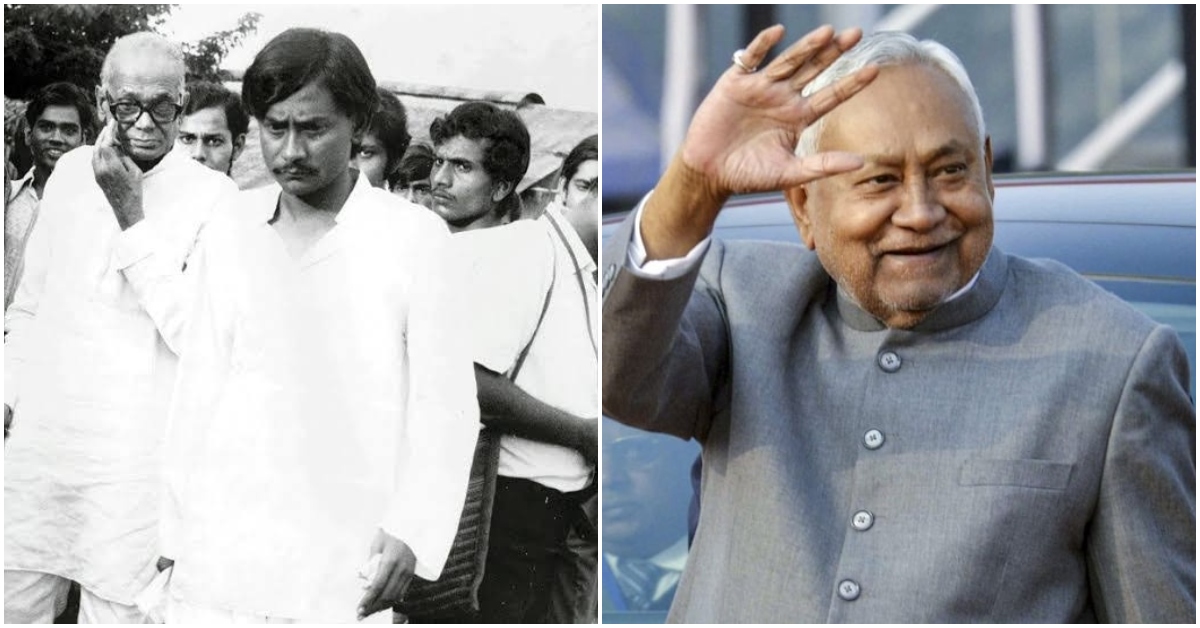
Patna: The political journey of Nitish Kumar, one of the most influential leaders in Bihar, has spanned more than four decades, evolving from student activism to the highest levels of state governance. The veteran leader recently announced his decision to move to the Rajya Sabha, signalling a new phase in a career that has shaped Bihar’s politics for nearly two decades.

The announcement triggered emotional reactions among workers of Janata Dal (United) at the party’s Patna office. Some supporters expressed disappointment, while others were visibly moved, highlighting the deep political and personal connection the chief minister has built with his party cadre over the years.
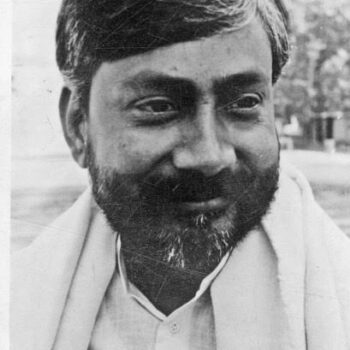 Born on March 1, 1951 in Bakhtiyarpur in Patna district, Nitish Kumar grew up in a modest family with roots in Kalyan Bigha village of Nalanda. His father, Ram Lakhan Singh, an Ayurvedic practitioner with links to the Indian National Congress, exposed him early to political discussions. He later pursued electrical engineering at Bihar Engineering College in Patna, now known as National Institute of Technology Patna.

During his college years, he became increasingly involved in student politics. In 1972, he helped establish the Bihar Engineering College Students’ Union and was elected its president, marking his first step into leadership. He later left a trainee engineer’s job in Ranchi to join the mass movement led by Jayaprakash Narayan, which called for sweeping political reforms.
His political activism intensified during the The Emergency in India (1975–1977), when he went underground before being arrested in 1976 and spending several months in jail. After the Emergency ended, he contested the Bihar assembly elections from Harnaut in 1977 and again in 1980, losing both times. Disillusioned by the setbacks, he briefly considered leaving politics.
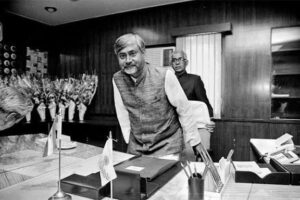 His fortunes changed in 1985 when he won the Harnaut assembly seat, a victory that marked a turning point in his career. Four years later he entered national politics, winning the Barh Lok Sabha seat and later serving as a cabinet minister in the government led by Atal Bihari Vajpayee, where he held key portfolios including railways and agriculture.
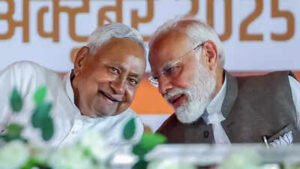 Once close allies emerging from the JP movement, Nitish Kumar and Lalu Prasad Yadav eventually became political rivals. In the 2005 Bihar assembly elections, the alliance between JD(U) and the Bharatiya Janata Party defeated Lalu Yadav’s party, enabling him to become Chief Minister for the first time. He later cultivated an image as “Sushasan Babu”, focusing on improving law and order, strengthening the Arms Act and establishing fast-track courts.
Despite criticism from opponents for switching alliances between the BJP and the Rashtriya Janata Dal, he remained a dominant figure in Bihar politics. Apart from the brief nine-month tenure of Jitan Ram Manjhi, he has led the state for nearly 20 years. His move to the Rajya Sabha now marks another turning point in a political career that has significantly shaped Bihar’s modern political history.