
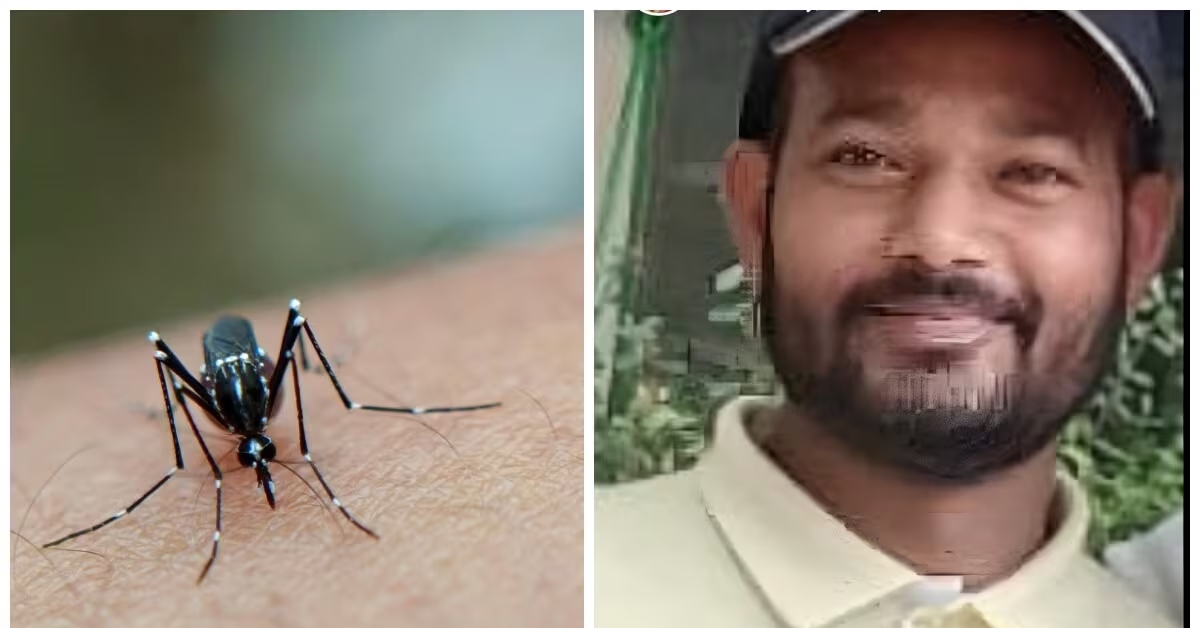
Patna: Patna has recorded its first suspected dengue-related death of the season, with a 30-year-old man dying during treatment on Tuesday. The deceased has been identified as Indradev Das, a resident of Kurji and an employee of Loyola High School. He was originally from Simdega district in Jharkhand.

Das had reportedly been unwell for around five days before being admitted to Kurji Hospital, where tests confirmed dengue. His platelet count subsequently continued to fall. Despite efforts to improve his platelet levels, he died during treatment on Tuesday afternoon.
More than 170 dengue cases reported

More than 170 dengue cases have been reported in Patna so far this year, including three new cases in the past 24 hours.
However, Civil Surgeon Dr Yogendra Mandal said he had not yet received official information regarding Das’s death. He said the health department would conduct an inquiry to establish whether dengue was indeed the cause of death.
If confirmed, the death would be the first recorded dengue fatality in Patna this year.
September and October remain high-risk months
According to health officials, dengue transmission generally intensifies during September and October, prompting the department to step up preventive measures.
Dr Mandal said dengue cases have been declining over the years, which he attributed partly to awareness campaigns conducted by the Health Department.
Health workers are conducting mass fever surveys and spreading awareness about seasonal diseases. Fogging operations are also being carried out in areas where dengue cases are detected.
How dengue spreads
Dengue is transmitted primarily through the bite of an infected mosquito. Mosquitoes can breed in containers holding stagnant water, including water tanks, coolers, flowerpots and other vessels around homes.
The mosquito acquires the virus by biting an infected person and can subsequently transmit it to another person through a bite. Mosquito populations can increase during and after the rainy season when water accumulates in and around residential areas.
How to reduce the risk
Residents are advised to take precautions to prevent mosquito breeding and reduce exposure to mosquito bites.
Key measures include:
- Do not allow water to stagnate in or around homes.
- Keep water tanks and other containers properly covered.
- Empty and clean water containers regularly.
- Wear full-sleeved clothing to reduce exposure to mosquito bites.
- Install mesh screens on doors and windows.
- Seek medical attention if symptoms of dengue or other seasonal illnesses develop.
With the peak dengue months approaching, health officials are urging residents to remain particularly vigilant and eliminate potential mosquito-breeding sites around their homes.