
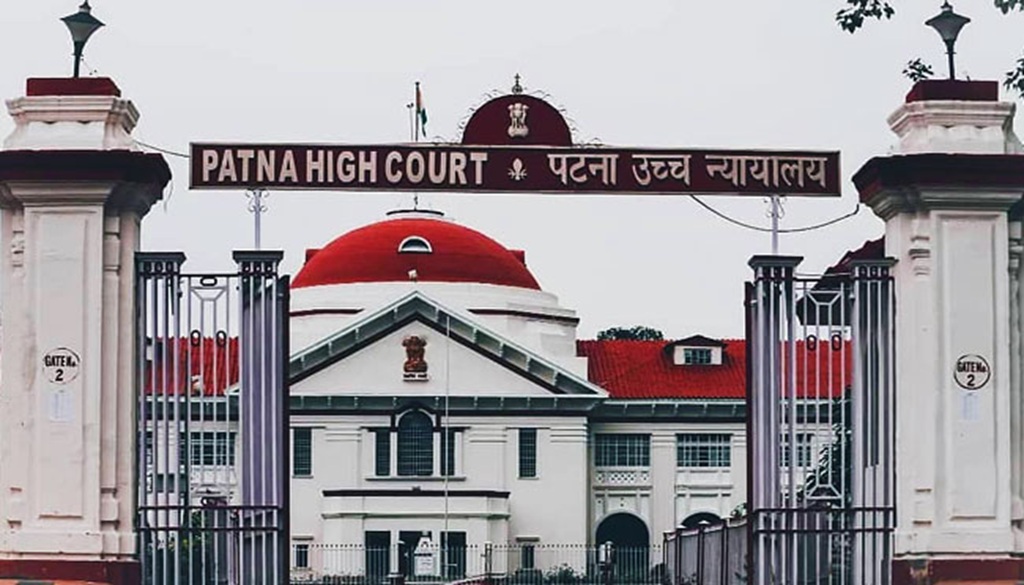
Patna: The Patna High Court has ruled that authorities cannot declare a person an “anti-social element” under the Bihar Control of Crime (BCC) Act, 2024 solely on the basis of past criminal cases, holding that such action violates fundamental rights guaranteed under the Constitution.

In a significant judgment, the court quashed an order passed by the Nalanda District Magistrate and directed the Bihar government to pay the petitioner Rs 1 lakh as compensation and Rs 10,000 towards litigation costs within one month. The court also ordered that the amount be recovered from the officials responsible for the unlawful action.
Court Finds District Magistrate’s Order Illegal

A division bench comprising Justice Rajeev Ranjan Prasad and Justice Kumar Manish delivered the ruling while allowing a criminal writ petition filed by Rajesh Kumar.
The bench held that proceedings under the BCC Act can be initiated only if police reports have been filed before a court in at least two cases covered under the Act during the 24 months preceding the initiation of proceedings.
Since no fresh criminal case had been registered against the petitioner after 2021, the court held that declaring him an “anti-social element” was contrary to the provisions of the law.
‘Fundamental Rights Cannot Be Curtailed On Old Cases’
The High Court observed that branding a person as an “anti-social element” carries serious consequences for their reputation as well as their right to life and personal liberty under Article 21 of the Constitution.
It said such powers must be exercised with extreme caution and only after an independent examination of the available evidence.
The bench added that severe restrictions on an individual’s liberty cannot be imposed merely on the basis of unverified and general allegations made by police authorities.
Police Recommendation Accepted Without Independent Verification
The court found that the District Magistrate had directed the petitioner to report to Silao Police Station every Monday and Friday solely on the basis of a police recommendation.
The petitioner, however, was a resident of the Giriyak Police Station area.
According to the judgment, the administration failed to verify the facts independently before issuing the order, rendering the action legally unsustainable.
Entire Process Completed In One Day
The bench also expressed concern over the manner in which the proceedings were conducted.
It noted that the entire process—from the recommendation of the Station House Officer to its approval by the Superintendent of Police and the final order of the District Magistrate—was completed within a single day without any independent scrutiny.
The court observed that this raised serious doubts about the fairness and impartiality of the decision-making process.
Compensation Ordered
Setting aside the March 20, 2026 order of the Nalanda District Magistrate, the High Court directed the Bihar government to pay the petitioner Rs 1 lakh in compensation and Rs 10,000 as litigation costs within one month.
The bench further ordered that the compensation be recovered from the officials found responsible for the unlawful action, underscoring the accountability of public authorities when constitutional rights are infringed.