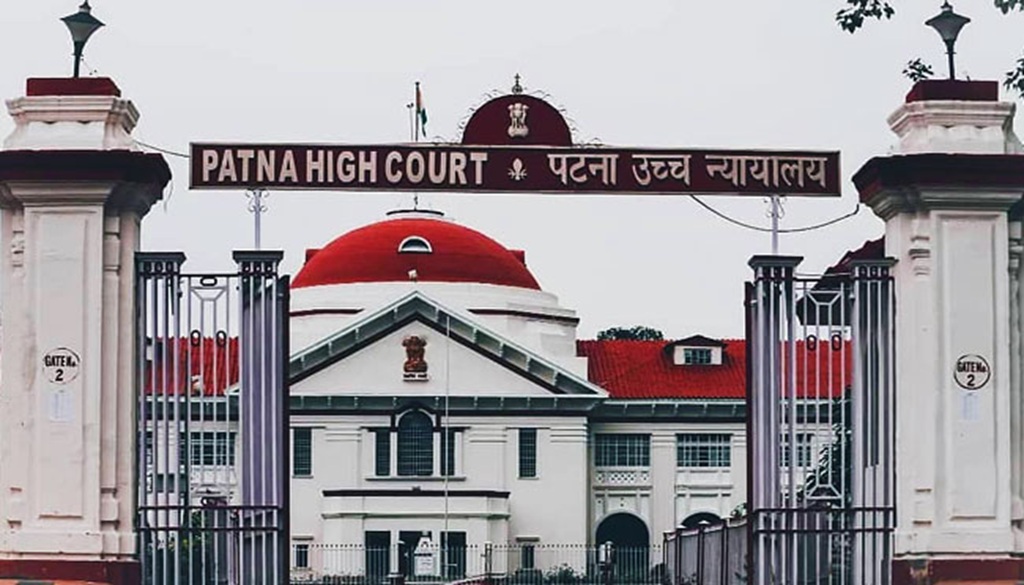
Patna: The Patna High Court has ruled that a government employee cannot be held guilty and punished solely on the basis of an uncorroborated newspaper report.

A single bench of Justice Kumar Manish quashed the departmental proceedings initiated against Pankaj Kumar, then Principal-cum-Centre Superintendent of the Government Industrial Training Institute (ITI) at Mahkar in Gaya.
The court set aside the departmental charge memo, the subsequent punishment order and the order rejecting Kumar’s review petition. It also directed the authorities to restore his service benefits and pay salary arrears, including withheld increments, within three months.

Dispute followed 2018 trade test
The case concerned the All India Trade Test conducted in July 2018 at the government ITI.
Before the examination, Kumar had informed the department about the lack of basic infrastructure at the examination centre.
The examination was conducted on July 24, 2018. Reports submitted by the magistrate and observer deployed at the centre described the examination as peaceful and fair.
However, a newspaper report published the following day alleged delays and mismanagement during the examination.
The department sought an explanation from Kumar on July 26, 2018, and subsequently issued a charge memo on March 8, 2019.
The High Court noted that the charge sheet listed no witnesses. No journalist, photographer or examinee was cited to substantiate the allegations reported in the newspaper.
Newspaper report cannot replace evidence
The court, relying on Supreme Court precedents, observed that a newspaper report by itself cannot constitute concrete evidence of departmental charges unless its contents are corroborated through independent testimony or other admissible material.
The court also found that Kumar had sought access to technical standards, inspection-related documents and video recordings to defend himself against the allegations. The department rejected his request as unjustified.
According to the court, denying the material sought by the employee amounted to a violation of the principles of natural justice.
Department failed to hold proper inquiry
The court further held that where allegations are factual and are specifically contested by a government employee, a proper departmental inquiry is required.
In Kumar’s case, the department did not conduct such a formal inquiry and also failed to properly consider material that could support his defence.
This included the reports submitted by the magistrate and observer, both of which had described the examination as peaceful and fair, as well as the institute’s store register.
The store register indicated that a gas cutter was not available at the institute, a point relevant to the allegations concerning the examination arrangements.
Court orders restoration of benefits
The High Court consequently quashed the charge memo dated March 8, 2019, the penalty order dated November 11, 2019, and the review order dated September 6, 2021.
The authorities have been directed to restore Kumar’s consequential service benefits and pay the outstanding salary arrears, including withheld increments, within three months.
The ruling reinforces the requirement that departmental action against government employees must be based on properly established evidence and follow due process rather than relying solely on an unverified media report.