Patna: Prime Minister Narendra Modi’s embrace of the Bihar gamchha has proved one of the most enduring images of this election cycle—an aesthetic choice turned political messaging tool that has resonated from packed rallies to the oath-taking of the new NDA government.

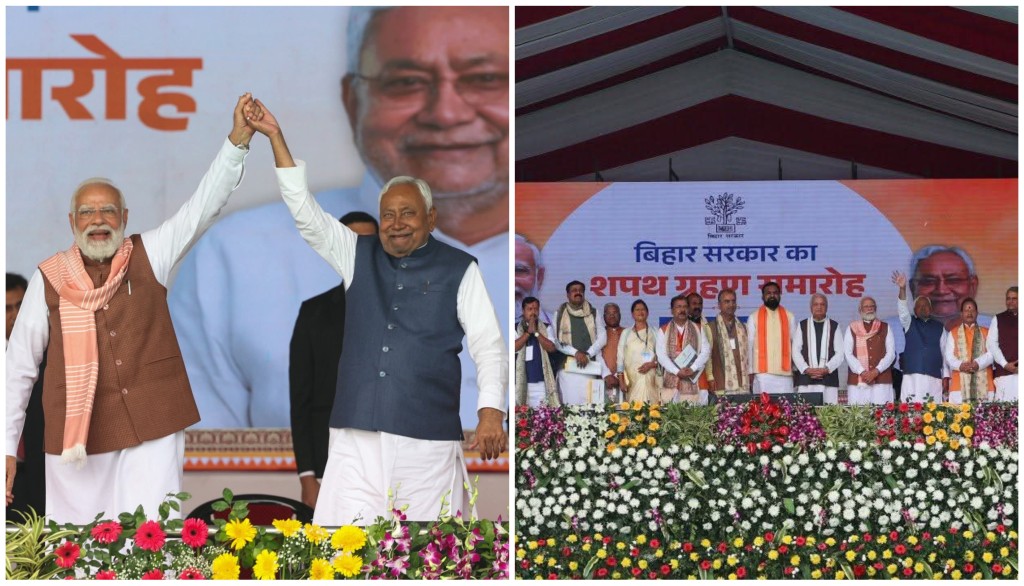
At Gandhi Maidan, moments after the new cabinet was sworn in, Modi once again lifted the signature red-yellow gamchha high above the stage. The crowd erupted—chants of “Jai Bihar”, “Har Har Mahadev” and “Nitish Kumar zindabad” rolling like a wave through the grounds. For many in the audience, it was more than a gesture; it was a reaffirmation of identity.
A symbol that travelled from rallies to results to the oath stage

This was not the first display.
On 14 November, once NDA’s victory was assured, Modi addressed the nation from Delhi and punctuated his speech by swinging the gamchha in the air, thanking the people of Bihar for their mandate. Earlier, during a campaign rally in Begusarai and at the inauguration of a new bridge in the region, the PM’s public wave of the gamchha drew thunderous applause.
Across events, the response was the same—heaving crowds, raised fists, rising slogans.
View this post on Instagram
Why the gamchha matters
In Bihar, the gamchha is more than cloth; it is workwear, identity, memory and belonging—used by labourers, farmers, elders and young men alike. Political analysts note that when a leader dons or waves it, the message is unmistakeable: I see you, I am one of you, I respect your culture.
Modi appeared to understand the emotional weight of this symbol. His team wove it into a strategy of cultural connection, turning the gamchha into what one observer called “a shorthand for grassroots rapport”.
A cultural cue turned political strategy
At the oath ceremony, Modi’s gamchha gesture reinforced a carefully built narrative of proximity to Bihar’s cultural ethos. The visual cut through the formalities, drawing cheers even from the last rows of the sprawling grounds.
Political commentators say this “gamchha politics” now functions as a high-impact communication tool—simple, local, relatable and instantly recognisable. NDA strategists reportedly see it as a successful template for outreach beyond conventional political messaging.
A fabric that now carries political weight
Wednesday’s ceremony underlined one thing clearly:
In Bihar today, the gamchha is not just a garment—it is a political language.