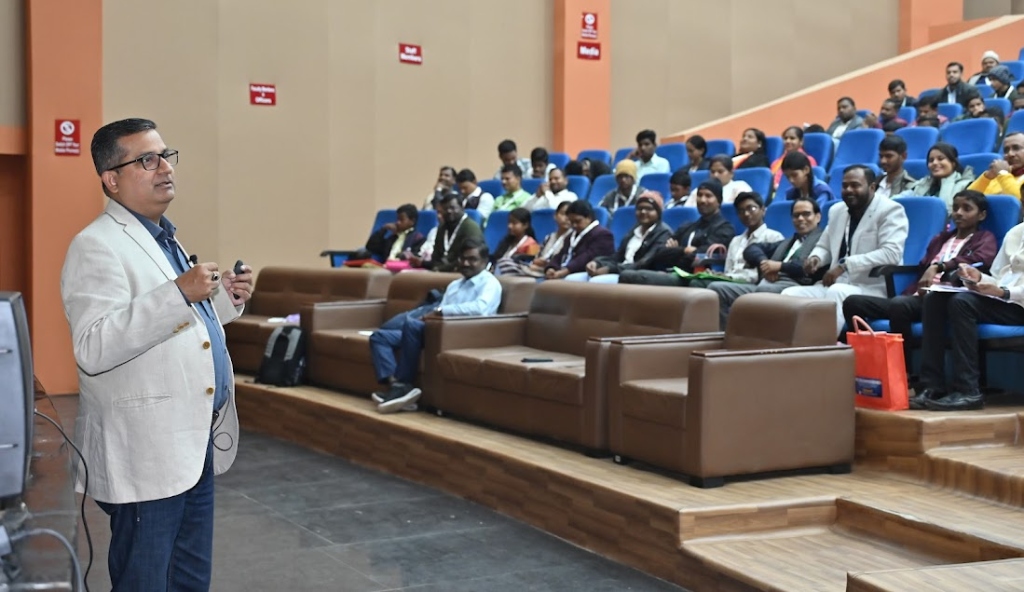
Patna: A regional mentoring session aimed at fostering innovation among teachers and students from PM SHRI schools continued on Thursday at the Chandragupt Institute of Management Patna (CIMP), bringing together policymakers, educators and young innovators for a day of practical learning and guidance.

The three-day programme, part of the national School Innovation Contest, is being organised in collaboration with the All India Council for Technical Education (AICTE), the Ministry of Education’s Innovation Cell (MIC), the Department of School Education and Literacy, the PM SHRI Schools of Innovation Council and the Wadhwani Foundation. The initiative seeks to create an ecosystem where schools can nurture creativity, entrepreneurship and problem-solving skills among students.
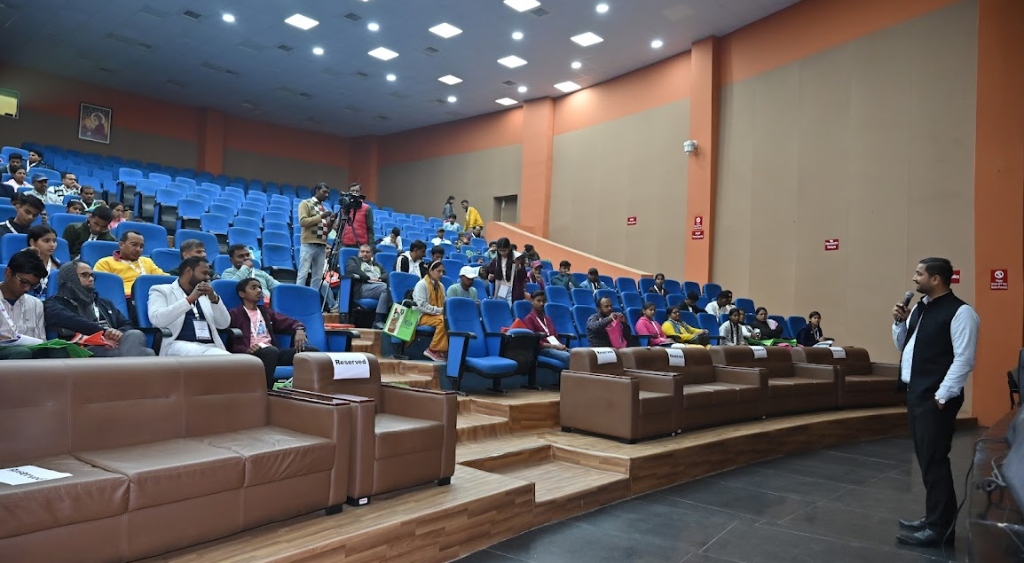 The day began with a session led by Abhishek Ranjan, nodal head of the Innovation Cell at AICTE, who outlined government-backed schemes supporting school-level innovation. Addressing participants, he described the School Innovation Council (SIC) as central to building an innovation culture, enabling institutions to conduct monthly activities, encourage student entrepreneurship and convert ideas into proof-of-concepts and business models. He also highlighted the KAPILA (Kalam Programme for IP Literacy and Awareness) scheme, which offers financial assistance and reimbursement for filing patents to protect students’ intellectual property.

 Participants were introduced to national platforms such as the Smart India Hackathon (Junior edition), IDE bootcamps and other mentoring opportunities designed to showcase student prototypes. The session aimed to connect the “design thinking” approach introduced on the first day with practical government support systems that help move projects beyond the classroom.
 Later workshops were conducted by Gauri Gopinath, Sourandra Chatterjee and Prof Rajasshrie Pillai, focusing on refining ideas into workable solutions and building early-stage prototypes. Sessions also explored the role of artificial intelligence in school innovation, including its ethical and security considerations, and offered practical tools that institutions can adopt.
The day concluded with a visit to the incubation centre and Centre of Excellence at the Aryabhatta Knowledge University campus, where students gained first-hand exposure to entrepreneurial ecosystems and saw how concepts can be developed into real-world ventures. Organisers said the programme aims to equip young learners not only with ideas but also with the structure and support needed to turn them into tangible outcomes.