Patna: The Janata Dal (United) is witnessing a steady exodus of its prominent leaders ahead of the Bihar Assembly elections, raising questions about Chief Minister Nitish Kumar’s control over the party and the loyalty of his traditional vote base — the Luv-Kush and upper caste communities.

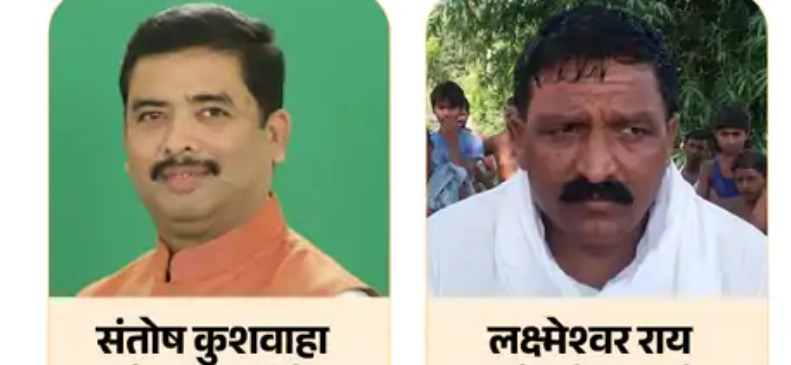
Former MP Santosh Kushwaha and former minister Laxmeshwar Rai, both considered part of JD(U)’s core team, have joined the Rashtriya Janata Dal (RJD). Their resignations follow similar moves by former MLA Rahul Sharma and sitting MLA Dr. Sanjeev Kumar, making it the fourth high-profile defection from JD(U) in just a week.
“Party hijacked, Nitish Kumar destroyed”: Ex-JD(U) leaders lash out
While joining RJD, Santosh Kushwaha launched a scathing attack on his former party, saying, “I am now in RJD. JD(U) has slipped out of Nitish Kumar’s control. The entire party is mortgaged to three individuals. Luv-Kush and backward-extremely backward communities were once its core base. After this hijack, that vote bank will no longer remain. Workers are being humiliated, and Nitish Kumar is being destroyed.”

Echoing him, former minister Laxmeshwar Rai alleged that Chief Minister Nitish Kumar no longer runs the party. “Sanjay Jha is running everything and has sidelined the Chief Minister. Workers are not being heard,” he said.
The big questions
With several loyalists switching sides, three key questions now dominate Bihar’s political chatter:
- Why are prominent leaders leaving JD(U)?
- Why are questions being raised about Nitish Kumar’s core team?
- What impact could this have on JD(U)’s electoral prospects?
Why are leaders quitting JD(U)?
Most of the defectors have joined RJD, led by Tejashwi Yadav, which is attempting to expand its social coalition ahead of the 2025 Assembly polls.
On October 10, Santosh Kushwaha — a two-time MP from Purnia and one of the few JD(U) candidates to win in the 2014 “Modi wave” — joined RJD. Despite losing narrowly to Pappu Yadav in 2024 by just 23,847 votes, Kushwaha remains a significant face of the Koeri community, part of the Luv-Kush bloc. He is expected to contest from Dhamdaha, currently represented by JD(U)’s Lesy Singh.
Former MLA Rahul Sharma, son of veteran leader Jagdish Sharma, also joined RJD. Representing the Bhumihar community, he is likely to contest from Ghosi, a traditional stronghold of his family.
Meanwhile, Laxmeshwar Rai, who led JD(U)’s Extremely Backward Classes Cell, quit on October 9 after being denied a ticket. Rai had won from Laukha (Madhubani) in 2015 but lost in 2020 to RJD’s Bharat Bhushan Mandal.
Dr. Sanjeev Kumar, MLA from Parbatta, was accused of voting against the NDA government during the floor test. The son of five-time MLA Dr. Ramanand Prasad, he too joined RJD after being sidelined in the party.
Nitish’s shrinking core team
Political observers say JD(U)’s internal functioning has alienated long-time workers. Senior journalist Santosh Kumar commented, “Nitish Kumar is surrounded by BJP and Congress-origin leaders like Sanjay Jha, Ashok Choudhary, and Vijay Choudhary. Except Lalan Singh, most are outsiders. This has angered the old JD(U) cadre.”
He added that many leaders are shifting allegiance to secure tickets elsewhere, sensing uncertainty about JD(U)’s seat distribution.
Rural Development Minister Shravan Kumar dismissed the crisis, saying such movements are “common before elections”. “Those not getting tickets look for other options. This happened during the Lok Sabha elections too,” he said.
Caste equations and political impact
The latest desertions could dent JD(U)’s traditional Luv-Kush base — comprising Kurmis (2.87% of Bihar’s population) and Koeris (4.21%). Both communities have been instrumental in Nitish Kumar’s rise to power.
The Amat community, represented by Laxmeshwar Rai, and the Bhumihars (2.86%) — represented by Rahul Sharma — also influence several seats in north and central Bihar.
RJD leader Tejashwi Yadav appears to be capitalizing on this opportunity. In the 2024 Lok Sabha elections, RJD fielded eight Kushwaha candidates — two of whom won — signaling a strategy to erode JD(U)’s base. The party is also preparing to field more Bhumihar candidates this time, further consolidating upper caste support.
Internal churn and seat-sharing confusion
Sources said Nitish Kumar has been holding daily review meetings at his 1 Anne Marg residence, discussing seat-sharing within the NDA and potential candidates. The talks are yet to conclude.
During a meeting on October 7, acting president Sanjay Jha had said a decision on seat sharing would come “within two to three days.” By October 9, the list of likely candidates was finalized, but many sitting MLAs and second-place contenders were dropped — triggering further exits.
What internal surveys reveal
An internal JDU() survey reportedly shows the party polling around 18% vote share, a slight rise from 15.7% in 2020, but still below its 2010 peak of 22.6% when it won 115 seats. The leadership hopes to offset losses through young and fresh candidates.
Nitish Kumar has directed that disloyal MLAs or those who “betrayed the party” will not be renominated. He is said to be relying on a mix of youth and experienced leaders.
Likely JD(U) candidates in 2025
- Nikhil Mandal (44) – May contest again from Madhepura.
- Santosh Nirala (51) – Former minister, expected to be fielded from Rajpur (Buxar).
- Shalini Mishra (51) – Sitting MLA from Kesaria (Motihari), confirmed as NDA’s face from the seat.
The road ahead
The wave of defections underscores a growing unease within JD(U) as it negotiates power equations within the NDA and faces an aggressive RJD determined to expand its social base.
With the Luv-Kush and upper caste segments now split, Nitish Kumar faces the toughest electoral challenge of his career — not from his rivals, but from dissent brewing within his own party.