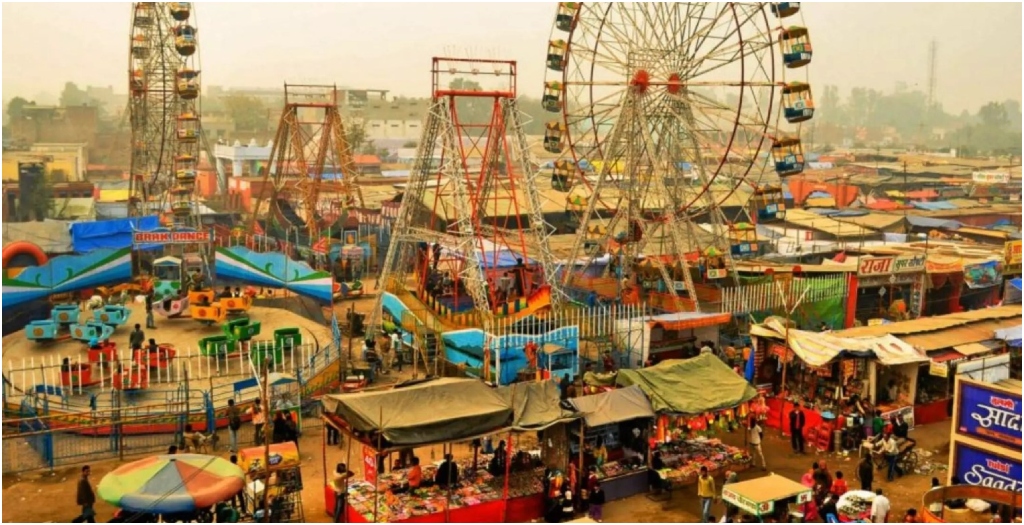
Sonepur: The bright lights of the historic Sonepur Mela are struggling to hide the worries behind its bustling façade this year. With shop rents hitting record highs, vendors say they are on the brink of heavy financial losses. From theatre owners to jalebi makers and chole-bhature sellers, more than 1,000 business owners are burdened by soaring land rates — and slow returns.

“I have spent Rs 55 lakh to set up the theatre. The land rent alone is Rs 32 lakh. I paid dancers in advance too. If the fair doesn’t run longer, my money will sink,” says Pappu, owner of New India Theater in Nakhas Lane, looking anxiously at his near-empty ticket counter. The theatre has been operating here for three decades — but this is the first year he fears shutting down in losses.
Vendors and performers across the 300-acre fairground share his fears.

Sonepur Fair rents 5 times higher than Delhi’s Connaught Place
A 5-foot space to sell chole-bhature in Nakhas costs Rs 1.65 lakh for just a month of business. In comparison, a street-level shop in Delhi’s Connaught Place — one of India’s most expensive commercial zones — costs about Rs 6,000 per month for similar space.
Prime spots at the Sonepur Mela are being rented at Rs 30,000– Rs 33,000 per square foot for the season. According to market figures, this is nearly five times the monthly rental value of India’s top retail districts.
Despite paying for a full year in the bidding process, stalls at the Mela operate only during the fair — roughly 30 days.
How are these rents calculated?
Fair contractor Akshay Kumar, who leases government land and sub-rents it to shopkeepers, explains the pricing mechanism.
“This year, the bid was Rs 3.58 crore for 4 acres of prime land in Nakhas,” he says.
“Rent depends on location — theatres, circus zones, and rides attract the costliest spaces. Railways and private landowners also lease land at their own rates.”
The fair, spread across government, railway, and privately held plots, draws thousands of visitors daily — at least when crowds show up.
Rs 1.65 lakh just for chole-bhature
Rohit, a local vendor selling chole-bhature in Nakhas, breaks down his expenses:
“The rate is Rs 33,000 per foot. I took 5 feet — that’s Rs 1.65 lakh. We pay daily. If the crowd is low, we lose.”
Behind the counter, he stretches dough while glancing nervously at the thinning crowd. “Every day matters,” he says.
Theatres losing charm, cinema owner backs out
The New India Theater — 70 feet wide and 96 feet long — is one of the fair’s most iconic attractions. But according to Pappu, crowds just aren’t arriving like before.
“Earlier, people stood in line for shows. Now interest is going down. Elections delayed the fair. Weddings are keeping crowds away.”
He is not alone. Suraj, who sells sweaters outside the theatre on a small cot, says he pays Rs 1.5 lakh in rent for barely 5 feet of space.
Out-of-state vendors push harder to survive
Irfan, a biryani seller from Moradabad, Uttar Pradesh, remains cautiously optimistic.
“The rent rises every year. I paid Rs 1.50 lakh for my stall. If sales stay good, I earn Rs 3,000–Rs 5,000 per day. Being in a prime spot helps,” he says.
But not everyone is as lucky.
Away from Nakhas, rent drops — but profits too
Near the famous Chidiya Bazaar, rent falls to Rs 10,000 per foot — but so does customer traffic.
Sweet-shop owner Jogir Rai spent more than Rs 4 lakh preparing his shop.
“I rented 15 feet — Rs 1.5 lakh rent. No crowd yet. Harvesting work has kept villagers busy,” he says, staring at trays of untouched sweets.
Jalebi stall pays Rs 3.8 lakh rent — still no buyers
Near Sangat Grand, Ritesh from Hajipur fries jalebis in boiling oil — but customers remain scarce.
“I paid Rs 3.8 lakh for 35 feet of space. Sales are very low. I’m in loss right now,” he admits.
Manish, selling jackets nearby, hopes the cold weather will bring shoppers later.
Will extension of Sonepur Mela save businesses?
This iconic fair — known globally for its mix of culture, trade, rides, and food — is usually a season of earnings. But this year, the combination of inflated stall rents and delayed visitor turnout has turned celebration into a gamble.
Shopkeepers now hope the administration will extend the fair beyond its scheduled closing — otherwise many fear bankruptcy.
As Pappu says before turning back to the empty ticket window:
“If the fair ends on time, we are finished.”