
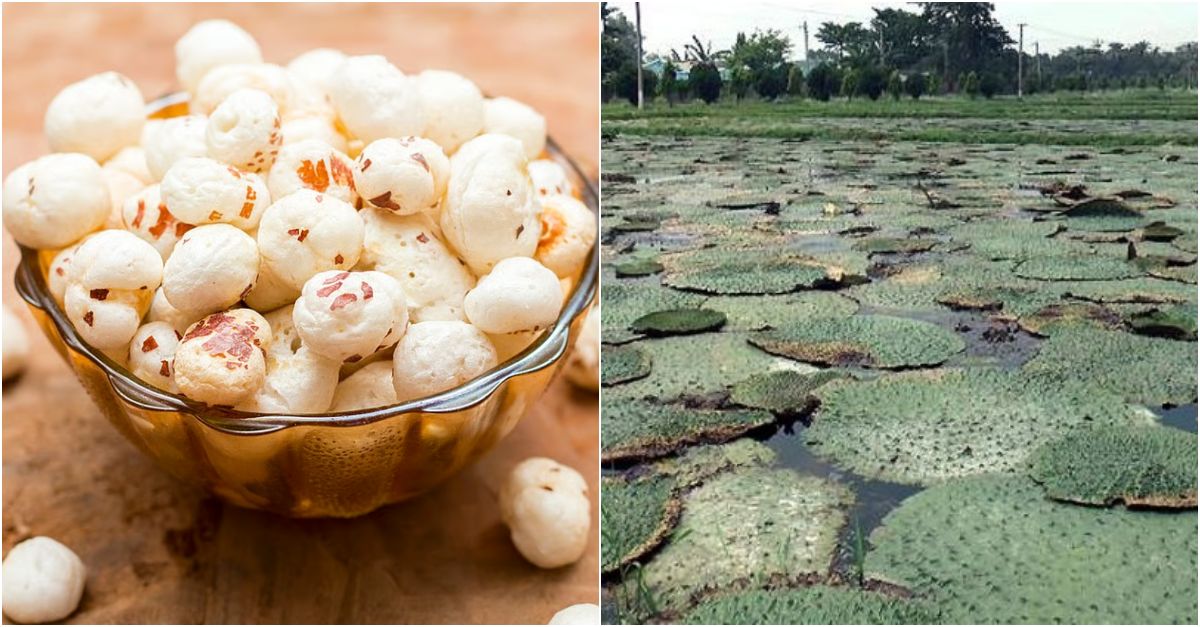
Patna: In a major breakthrough for Bihar’s signature superfood makhana (fox nut), scientists are working on developing a thornless variety of the crop that is expected to significantly reduce cultivation risks, lower costs, and improve farmers’ earnings.

The research is being led by Dr Reema Kumari at Bihar Agricultural University, Sabour, who has received a central government research grant for the project. The aim is to remove the sharp thorns present on makhana plants through advanced genetic research.
At present, makhana cultivation is a highly labour-intensive and risky process. Farmers and labourers often suffer injuries while harvesting and cleaning the crop from pond fields due to the sharp thorns on stems and leaves. These challenges have also limited the use of machinery in harvesting.

Dr Kumari’s project focuses on identifying the genes responsible for thorn development in the plant. Once mapped, scientists plan to modify the genetic structure of makhana using laboratory-based DNA technology to develop a thornless variety.
According to researchers, the development of a thornless strain could be a game changer for the sector. It is expected to make harvesting safer, reduce dependence on manual labour, and open possibilities for mechanised farming in the future.
Experts also believe that production costs could come down significantly as harvesting is currently the most expensive stage of makhana cultivation. With improved efficiency and reduced losses, farmers’ income is likely to increase, strengthening Bihar’s position in the global makhana market.
Bihar is the largest producer of makhana in the world, contributing around 80 per cent of global supply. The crop is mainly cultivated in districts such as Darbhanga, Madhubani, and Purnia, where it serves as a key source of livelihood for thousands of rural families.
In recent years, demand for makhana has grown rapidly in international markets, including the United States, Europe, and the Middle East. The crop also received a Geographical Indication (GI) tag as Mithila Makhana in 2022, giving it a stronger global identity.
Officials say the new research could further boost Bihar’s agricultural economy by making makhana cultivation more scalable, safer, and commercially viable.
If successful, the thornless makhana variety could mark a major shift in how the crop is grown and processed, benefiting both farmers and exporters across the state.