Muzaffarpur: “I shouldn’t have gone to the police. I should have handled it myself. Maybe my son would still be alive,” says Ratan Singh, his voice heavy with anguish that has not faded in 24 years. “My son’s body was found in five pieces. Even today, the thought makes my heart tremble.”

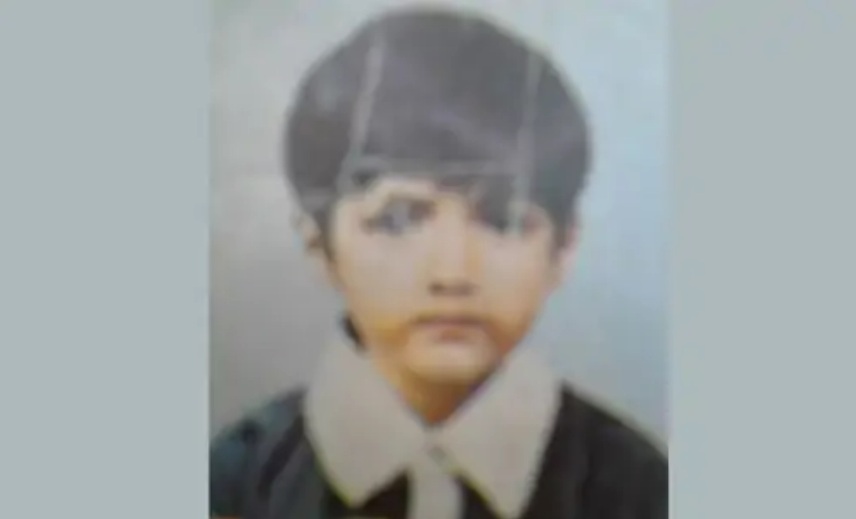
Ratan Singh’s five-year-old son, Gautam — fondly called Golu — was kidnapped and brutally murdered in 2001. The incident, once etched deeply into Bihar’s collective memory as a symbol of lawlessness, has resurfaced after Prime Minister Narendra Modi mentioned it in his Muzaffarpur rally this week while attacking the Lalu Prasad Yadav-led RJD regime.
For Ratan Singh and his wife Pramila, the Prime Minister’s words tore open wounds that never truly healed. “He was talking about Golu,” Ratan told his wife as they watched the rally on television. “It all came rushing back — the screams, the police’s indifference, the helplessness.”

The Day That Changed Everything
It was September 20, 2001 — an ordinary morning in Muzaffarpur. Ratan Singh, then a clerk at Punjab National Bank, sent his three children — Golu and his sisters Isha and Shikha — to school in a rickshaw as usual at 6.30 am.
As they reached Jail Road, a white Maruti van screeched to a halt. Armed men jumped out, snatched Golu from the rickshaw, and sped away, leaving the rickshaw driver and the sisters screaming in shock.
Within minutes, panic spread. Ratan and Pramila rushed to Mithanpura police station and filed a complaint. But the police response was sluggish. Despite ransom calls to the family demanding money, the investigation dragged on. The family waited in despair.
The Horror Unfolds
Five days later, on September 25, 2001, Golu’s body was found in a decomposed and mutilated state in Madhopur Chaur under Hathauri police limits. The horror was beyond words.
“When I saw the clothes and bracelet, I knew it was him,” recalls Ratan Singh. “His face was unrecognisable. Only bones remained. My child was gone.”
The discovery triggered widespread outrage. The gruesome murder — and the police’s inability to prevent or solve it quickly — became a rallying point for citizens who had long suffered under a climate of fear and impunity.
Streets Erupt in Fury
On September 26, Muzaffarpur exploded. Nearly one lakh people took to the streets. It wasn’t a political protest — it was raw public rage. Mobs attacked police stations, set vehicles and government offices on fire, and clashed with security forces.
Police opened fire to control the situation. Eleven people, including a 10-year-old boy, were killed. For two days, the city remained under curfew. The District Magistrate and Superintendent of Police had to take refuge inside the Sadar police station.
Order was finally restored after the government airlifted IPS officer Ravindra Kumar Singh to replace the then-SP Nayyar Hasnain Khan.
Justice, But Too Late
Eight people were arrested for Golu’s kidnapping and murder. After years of trial, four accused — Ram Shobhit Paswan, Sunil Kumar alias Bablu, Vinod Rai, and Uday Sah — were sentenced to life imprisonment in 2009.
But for Ratan Singh, justice remains hollow. “What justice?” he asks quietly. “No one can bring my son back.”
The Shadow of Fear
Golu’s death became a grim symbol of Bihar’s “kidnapping industry.” Between 2001 and 2004, 1,527 abduction cases were officially registered across the state. In 2004 alone, there were 411 cases — and countless more went unreported. Doctors, businessmen, even schoolchildren — no one was safe.
Former journalists who covered the case recall how police investigations were often compromised. “Criminals received tip-offs before every raid,” says veteran journalist Vibhesh Trivedi. “By the time police arrived, the accused had already vanished. That’s how broken the system was.”
Golu’s Home Still Echoes with Silence
Across from Ratan Singh’s current home stands an old house with six rooms — abandoned and gathering dust. “That’s where we used to live when Golu was alive,” he says. “We left it because every corner reminded us of him.”
The walls may be silent, but the memories are not.
PM Modi Revives an Old Wound
During his recent Muzaffarpur rally, Prime Minister Modi said, “Those who are 20–25 years old today may not know about the Golu case. In this city, a child was kidnapped in broad daylight and brutally murdered. This was the reality of jungle raj.”
For Ratan Singh, those words reopened a chapter he never wanted to revisit. “People have forgotten, but I remember everything,” he says. “I live with it every single day.”
A City That Still Remembers
Two decades later, the people of Muzaffarpur still recall the anger, the fear, and the unity that tragedy brought. Golu’s murder was not just about one child. It was about an entire society confronting the collapse of law and order — and demanding accountability from those in power.
But for one grieving father, the story never ended. “My Golu’s story is written in blood,” Ratan Singh says. “And that story will never fade.”