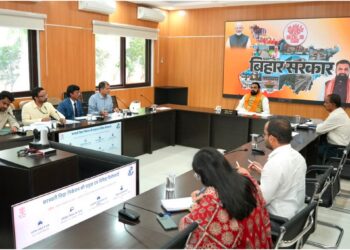
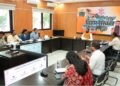
Patna: A high-level delegation from the Ministry of Rural Development, Social Security and Community Empowerment of the Government of Sri Lanka, along with representatives from the Asian Development Bank (ADB), concluded their “Immersion and Learning Exchange (ILE) program” in Bihar today with a debriefing session at the Secretariat Building in Patna. The visit aimed to study Bihar’s successful “Sustainable Livelihoods Scheme” (SJY) and its impact on poverty alleviation.

The session commenced with a welcome address by Abhilasha Kumari Sharma, Additional Chief Executive Officer of Jeevika, followed by an overview of the program and the objectives of the Sustainable Livelihoods Scheme by Himanshu Sharma, Chief Executive Officer of Jeevika.
Sri Lankan Delegation Impressed by Ground-Level Impact

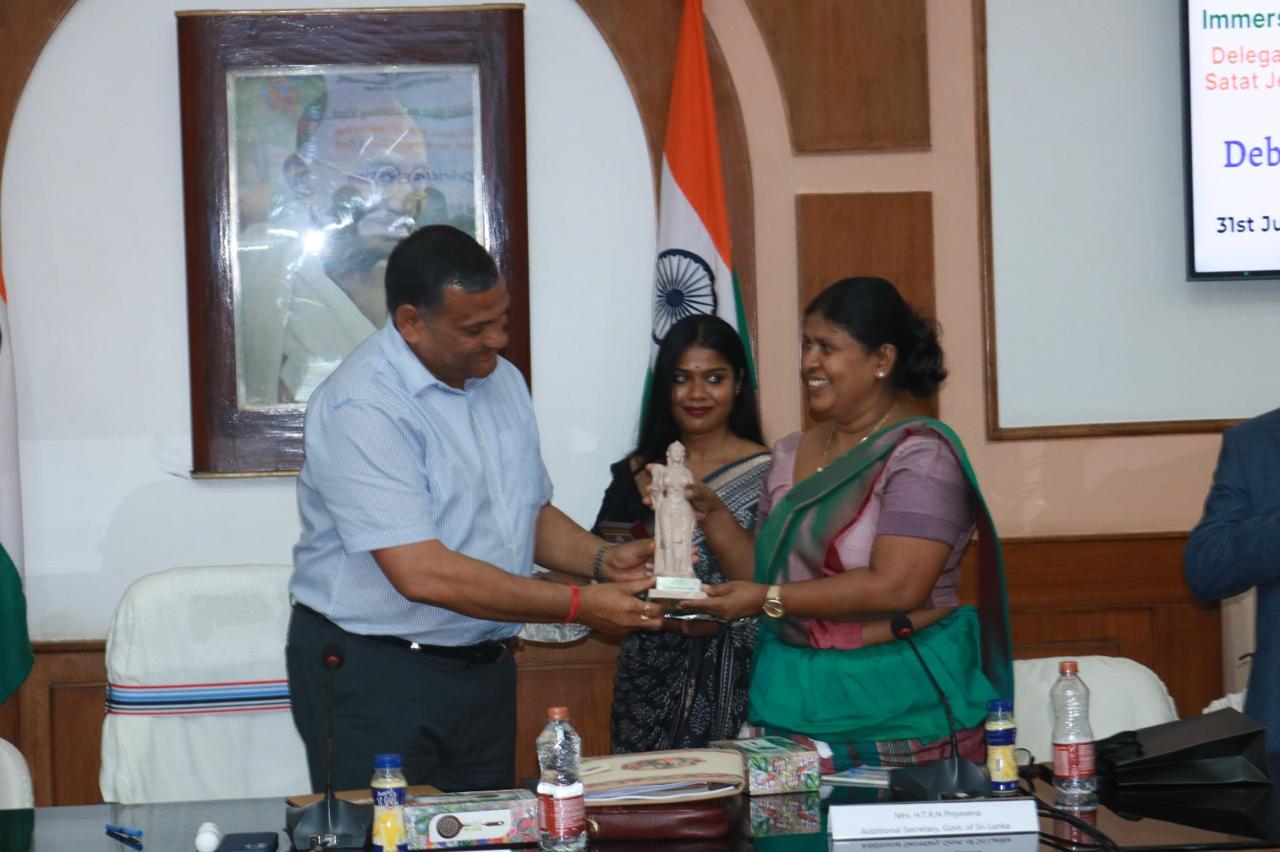
The 28-member delegation had previously visited Gaya district under the ILE program, observing firsthand the livelihood initiatives adopted by beneficiaries of Bihar’s poverty alleviation scheme.
Addressing the debriefing session, H.T.R.N. Piyasen, Additional Secretary, Ministry of Rural Development, Social Security and Community Empowerment, Government of Sri Lanka, shared her positive experience. She lauded the ground-level impact of the Sustainable Livelihoods Scheme and expressed gratitude to Jeevika for facilitating the visit. Piyasen highlighted key features and learnings from SJY that could be instrumental in addressing poverty in Sri Lanka, also noting similarities with Sri Lanka’s own livelihood schemes.
Bihar Officials Emphasize Shared Learning and Global Impact
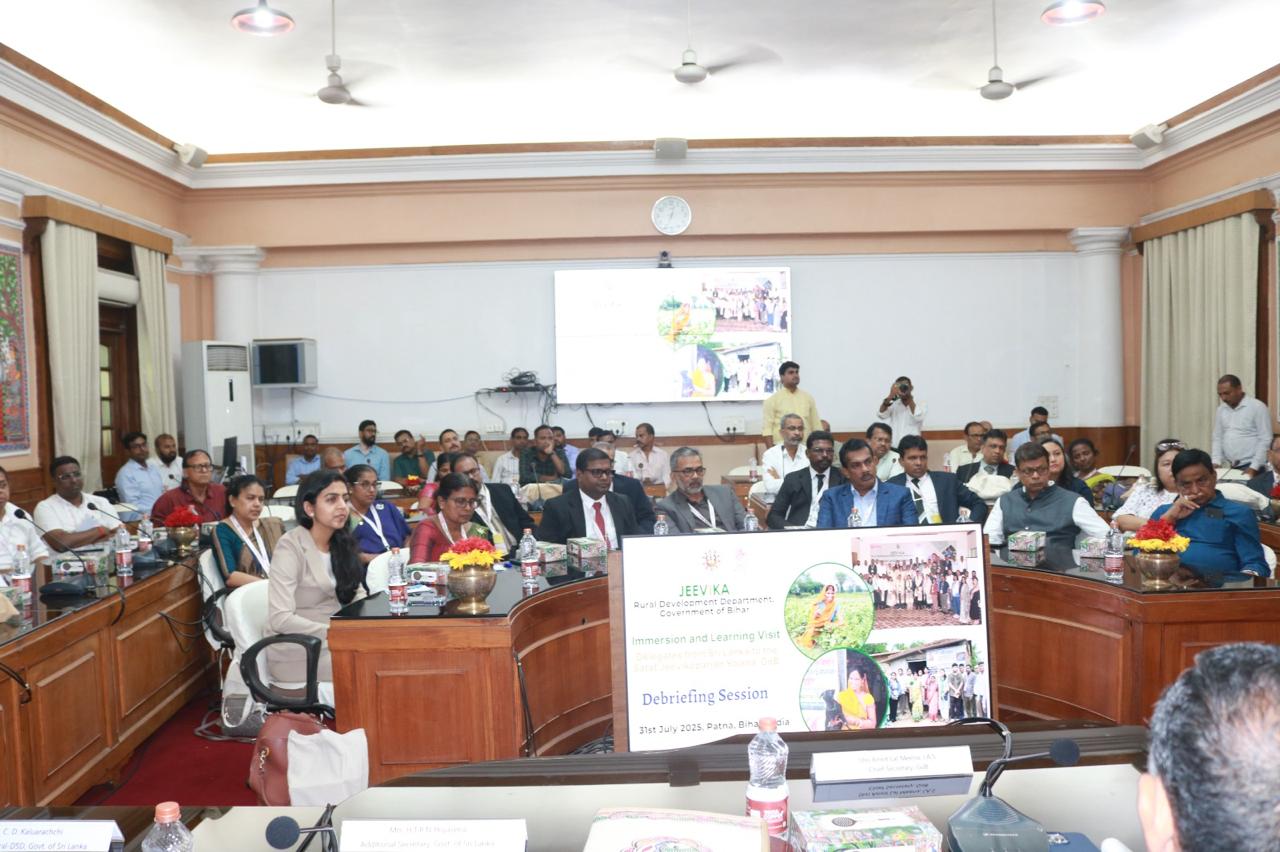
Lokesh Kumar Singh, Secretary, Rural Development Department, Bihar, underscored the transformative power of the scheme. “The Sustainable Livelihoods Scheme running in Bihar has brought about a change in the lives of millions of poor families. It is a matter of pride for us that a friendly nation like Sri Lanka wishes to understand and learn from this model. We hope that this experience will further strengthen cooperation between the two countries and will also help in eradicating poverty from the global platform,” he stated.
Pratyaya Amrit, Development Commissioner, Bihar, welcomed the delegates by emphasizing the cultural similarities between Sri Lanka and Bihar. He praised Jeevika’s remarkable work in empowering socially and economically marginalized families, highlighting that the Jeevika model is built on the collective power of women, transparency, and participation. “This shared experience with the Government of Sri Lanka gives us an opportunity to present local innovations at the global level,” he added, suggesting that Sri Lankan community professionals could also visit Bihar to observe its working style.
Amrit Lal Meena, Chief Secretary, Bihar, elaborated on the journey of the Bihar Government’s “Sustainable Livelihood Scheme,” launched in 2018 to uplift extremely poor families. He noted that the scheme has benefited 2.1 lakh families and has gained national and international recognition for its success in poverty alleviation. He also mentioned the recent formation of ‘Jeevika Nidhi,’ a cooperative union for financial assistance to women’s self-help groups, and the inauguration of the Buddha Samyak Darshan Museum cum Smriti Stupa in Vaishali, a point of pride for both nations.
A Collaborative Fight Against Poverty
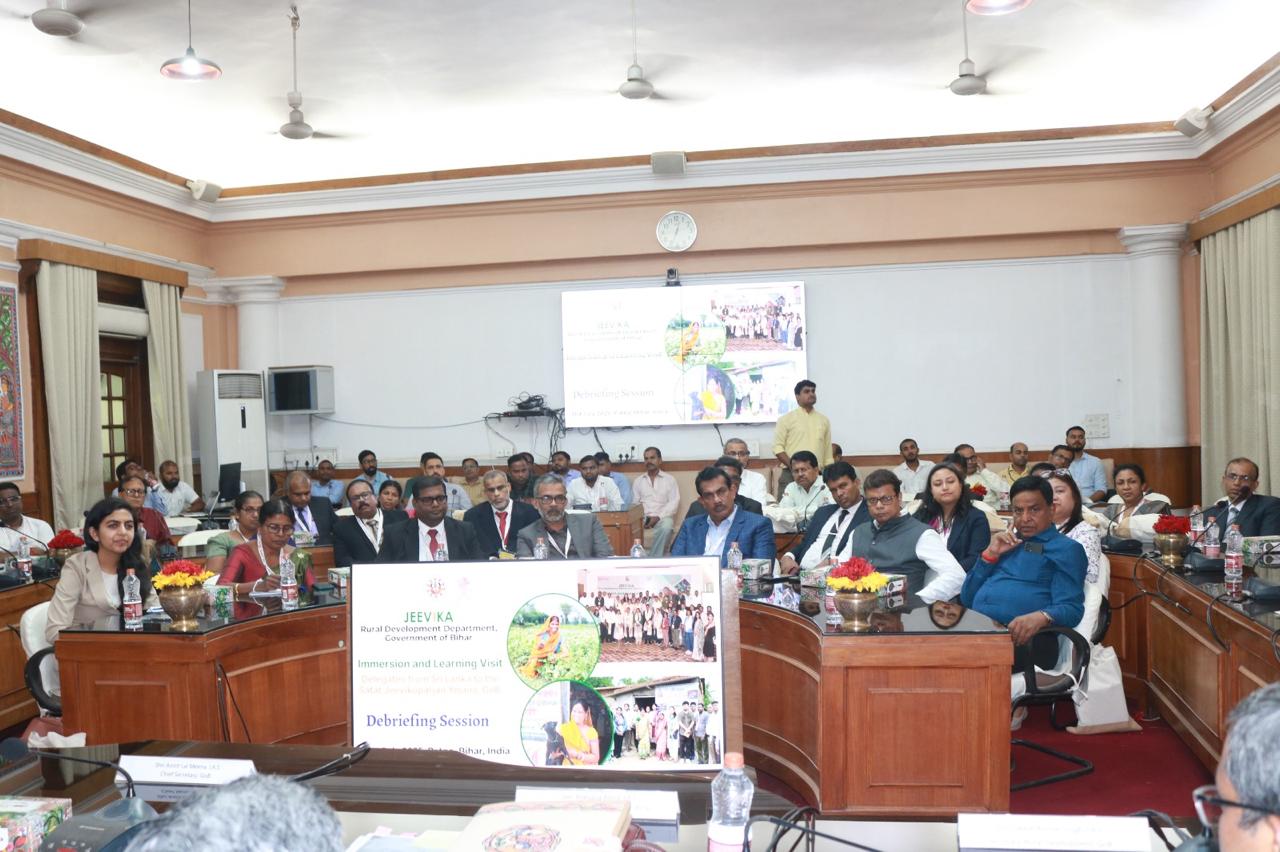
The successful session concluded with Rajesh Kumar, Special Officer, Jeevika, extending his thanks. He drew a parallel between the spiritual connection of Buddha uniting Sri Lanka and India, and the potential for both countries to collaborate in the fight against poverty through the Sustainable Livelihood Scheme. He suggested reciprocal visits for learning and cooperation in implementing such programs.
The Immersion and Learning Exchange (ILE) program, jointly coordinated by Jeevika, BRAC International, and Bandhan Konnagar, facilitates visits from representatives of various countries and Indian states to learn about the “Sustainable Livelihoods Scheme (SJY)” and its strategies for poverty alleviation. Previously, delegations from Indonesia, the Philippines, South Africa, and Ethiopia have visited Bihar to gain insights into the scheme and explore its implementation in their respective regions.