Patna: Patna Museum, which had remained closed for two years, reopened to the public on Tuesday in a new avatar, featuring state-of-the-art galleries, digital displays, and immersive experiences. Entry tickets have been priced at Rs 50 for adults and Rs 25 for children—nearly half the price of admission to the Bihar Museum. The museum will remain closed every Monday.

The reopening comes ahead of the Bihar Museum Biennale, scheduled to begin on August 7, which will be inaugurated by Chief Minister Nitish Kumar. As part of the event, foreign exhibitions will be displayed in the temporary gallery of the Patna Museum.


Revamped structure with high-tech additions
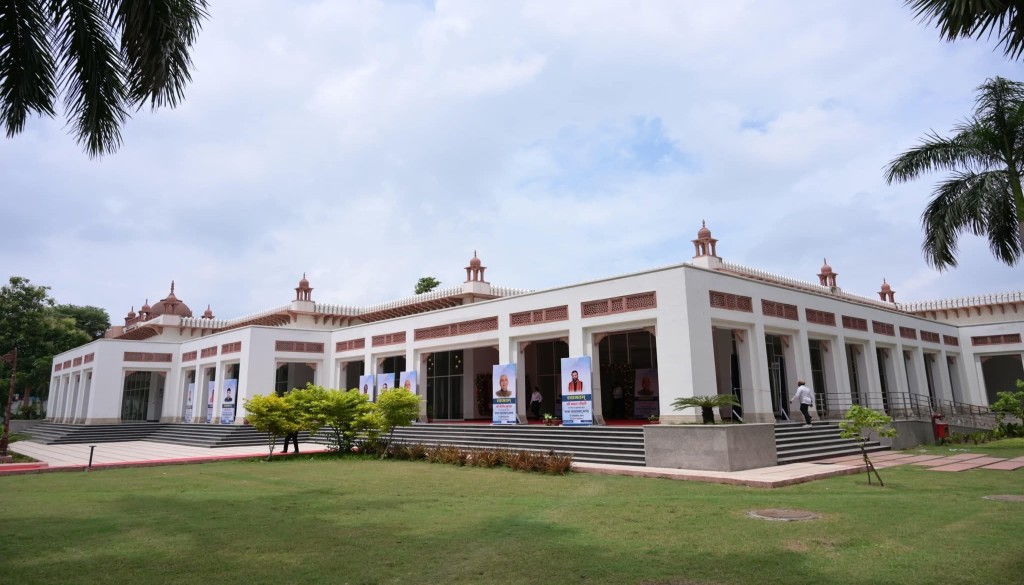
Inaugurated by Chief Minister Nitish Kumar on July 27, the new Patna Museum building has been developed at a cost of Rs 158 crore. It features two major galleries—the Ganga Gallery and the Patali Gallery—as well as a sculpture garden, all enhanced with digital effects, 3D visuals, and interactive elements.
A standout feature is a holographic installation of Acharya Chanakya in the Patali Gallery, developed using artificial intelligence. Designed by technicians from Dubai, the life-size hologram is capable of answering questions in Hindi and English, with plans to expand support to Maithili, Bhojpuri, and other foreign languages for international visitors.
Ganga Gallery: An immersive cultural journey
The Ganga Gallery traces the river’s 445-km journey through Bihar—from Shahabad to Santhal—depicting its cultural, spiritual, and ecological significance. Visitors enter through a 3D visual of the Ganga emerging from the locks of Lord Shiva. The floor mimics the river with flowing digital projections, allowing guests to “walk” on water.
Seven cultural regions—Shahabad, Magadh, Kosi, Ang, Tirhut, Mithila and Seemanchal—are represented through replicas, traditional dance art like Jhijhiya and Bidesia, and iconic crafts such as Madhubani, Manjusha and Tikuli paintings. A 53-foot-long fossilised tree, said to be 200 million years old and brought from Asansol in 1927, remains one of the museum’s most prominent artefacts.

Patali Gallery: Exploring the Magadh legacy
Dedicated to the ancient Magadh region, the Patali Gallery features a massive entrance gate leading to a historical journey from Rajgir to the grandeur of Pataliputra. The gallery includes a 16-foot digital replica of the city of Pataliputra and interactive artefacts showcasing accounts by travellers like Megasthenes and Fa-Hien.
The Chanakya hologram is located here, offering a conversational experience where visitors can ask questions and receive AI-generated responses in four to five lines. The feature aims to blend ancient wisdom with modern technology, creating an educational yet engaging interaction.

Sculpture Garden and museum facilities
The newly constructed sculpture garden, or Murti Vatika, houses 102 statues across two sections—Hinduism and Buddhism. While one part displays deities such as Shiva, Vishnu, and Surya, the Buddhist section features a central statue of Buddha surrounded by related figures and artefacts from different religions and periods.
The museum building consists of three blocks. The southern block features a cafeteria, reception, auditorium (105-seat capacity), event hall, and the temporary gallery area. The northern block includes the museum’s administrative offices, conservation laboratory, and a storage area for its extensive collection.
Visitors can also explore ancient relics from archaeological sites like Chirand and Pand, with QR codes available for additional information. One of the highlights is a digital version of Ashtadhyayi, the ancient Sanskrit grammar treatise by Maharishi Panini, which allows readers to flip virtual pages and read its content interactively.