Patna: The story of India’s exploration of the skies – from the observations of ancient astronomers to the touch of a rover on the moon – has been brought together under one roof at the Sri Krishna Science Centre.

Launched on Saturday to mark National Space Day, the exhibition Space Heritage in India opened with the unveiling of 36 panels chronicling the nation’s milestones in space science. Inaugurated by Dr Arun Kumar, president of Science for Society Bihar, the exhibition seeks to inspire students and the public by weaving together history, technology and imagination.
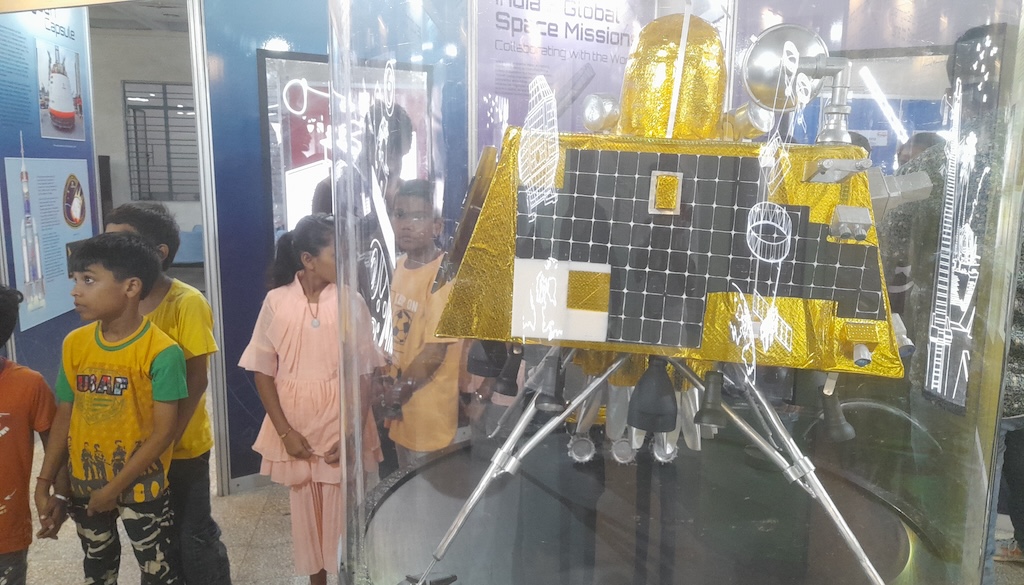
A striking highlight is the model of Vikram Lander and Pragyan Rover, symbols of the Chandrayaan-3 mission that placed India among the few nations to achieve a successful lunar landing. Alongside, themed galleries explore “The Modern Era of Space Science,” “Missions That Changed History,” and “India and the Future of Space.”

“The exhibition gives prominence to Chandrayaan-3 and India’s modern space efforts,” said Srinu Appikonda, project coordinator at the centre. “It will remain open for three months, and we hope it sparks curiosity among young visitors.”
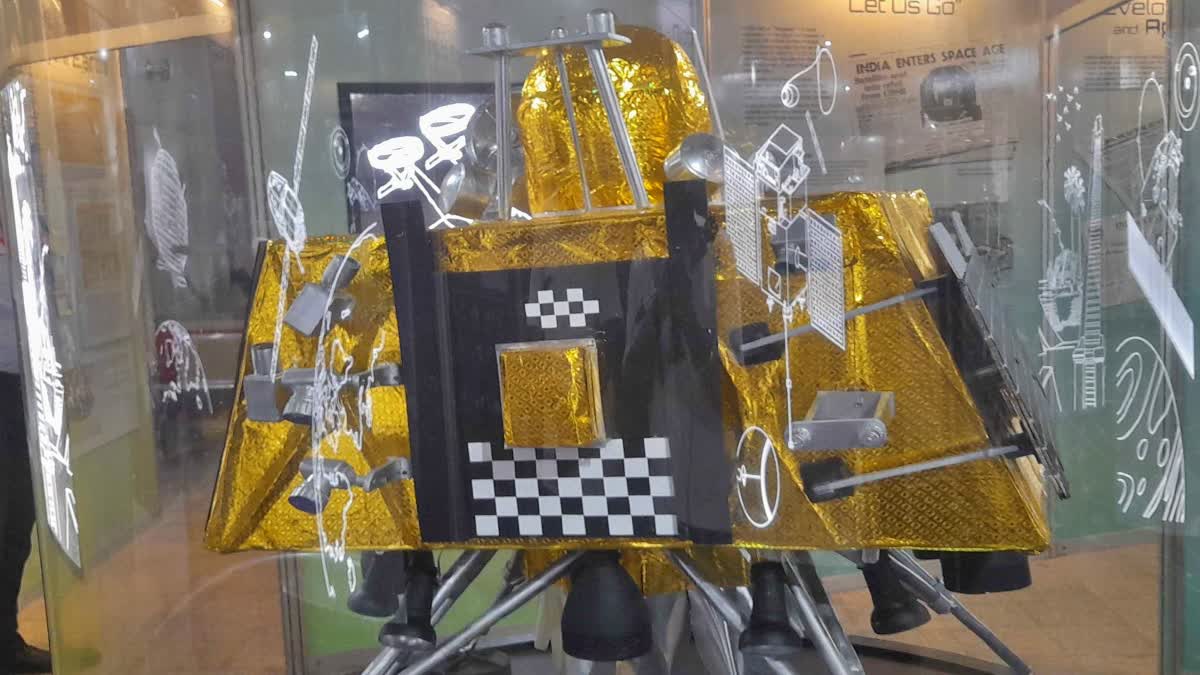
Panels trace India’s scientific continuum from Aryabhatta, the 5th-century mathematician and astronomer, through centuries of sky-watching, to contemporary scientists such as Shubhanshu Shukla. Posters, murals and models are used to simplify complex ideas, offering a tactile learning space for students.
For many children, the exhibition is more than a display. Shivam Kumar, a class VII student, said: “I learnt about Aditya L-1, Chandrayaan and other missions here. I want to become an engineer, and this exhibition has increased my knowledge further.”
The Patna showcase is part of a nationwide initiative, with similar exhibitions running in regional science centres across India, including in Mumbai, Kolkata and Guwahati. Together, they aim to celebrate not only ISRO’s technological achievements but also India’s enduring relationship with the stars.